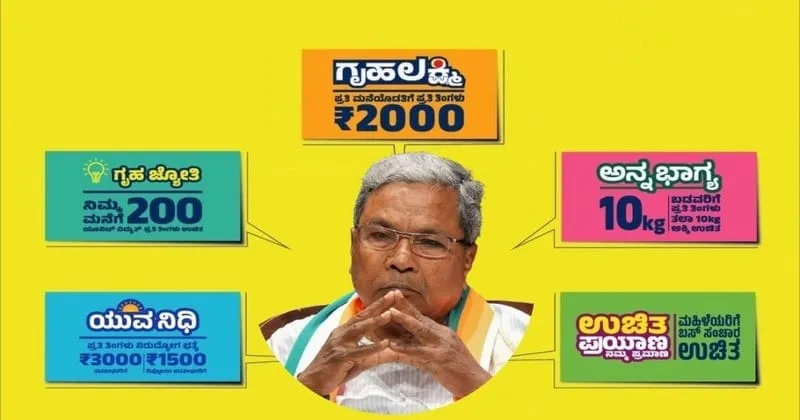
The Karnataka Congress government is facing scrutiny after it emerged that Rs 94.40 lakh was spent on producing promotional reels featuring beneficiaries of state-run guarantee schemes, bypassing the standard tendering process. The revelation comes from documents obtained under the Right to Information (RTI) Act, which indicate that Idea Lab, a private company, was directly granted a 4G exemption, despite multiple companies being capable of undertaking such video production.
This expenditure forms part of a larger effort by the state government to promote its welfare programs. Over Rs 35 crore has already been spent on conventions and events for the beneficiaries of guarantee schemes, and this latest initiative seeks to amplify their experiences through social media and other digital platforms. The production plan involves creating 60 reels per month, each ranging from 20 to 60 seconds, with a total projected cost of Rs 94.40 lakh over an eight-month period.
According to the RTI-obtained file, tenders were not called for the production of these reels. LK Ateeq, the Additional Chief Secretary to the Government in the Economic Department, had recommended a 4G exemption, arguing that the work was “creative” and thus not amenable to a conventional tendering process. The file also notes that Chief Minister Siddaramaiah approved the proposal, allowing Idea Lab to proceed with the production.
The Finance Department initially raised objections to the exemption. Officials sought clarifications on why Idea Lab had been chosen, whether other institutions could provide similar services, how the cost of Rs 94.40 lakh was deemed reasonable, and what specific benefits the exemption would provide. Despite these concerns, the exemption was sanctioned at the recommendation of the Additional Chief Secretary, citing the creative nature of the project as justification.
It is noteworthy that there was no specific grant allocated for this project in the government’s action plan. Instead, the expenditure was drawn from the budget for government program promotion, information, and communication for the financial year 2023-24, which totals Rs 5000 lakh. Of this, Rs 1 crore was earmarked for the production of guarantee reels. The proposal submitted to Chief Minister Siddaramaiah covered five guarantee schemes and sub-measures, outlining the production of promotional materials for social media and television dissemination.
Idea Lab’s responsibilities include conducting interviews with beneficiaries, producing 60 reels of one-minute duration per month, and delivering the content to the government’s Information and Public Relations Department. The proposal claimed that the company possesses the technical expertise and staff required to meet the project’s demands. The monthly cost for these reels is Rs 11.80 lakh, amounting to Rs 94.40 lakh for the full eight-month duration.
Critics have questioned the necessity of this expenditure, particularly in light of the government’s ongoing financial struggles. The state had borrowed over Rs 60,000 crore to fund its guarantee schemes, which had previously drawn strong objections from the Comptroller and Auditor General (CAG). Allocating nearly a crore of rupees for promotional reels has been seen by some as prioritising publicity over substantive welfare implementation.
The lack of a competitive tendering process has also raised concerns about transparency and accountability. Bypassing tender requirements prevents scrutiny of cost-effectiveness and raises questions about favouritism in awarding contracts. Opposition parties and civil society groups have argued that this decision undermines public trust and highlights a tendency to focus on image-building rather than policy delivery.
Furthermore, observers have pointed out that while the government invests heavily in promotion, several of the guarantee schemes continue to face implementation challenges. Questions have been raised about whether the Rs 94.40 lakh could have been better spent addressing logistical or operational gaps in the welfare programs, ensuring that beneficiaries receive tangible support rather than merely featuring in promotional content.
The controversy underscores the need for clearer guidelines on the use of public funds for promotional purposes and the circumstances under which exemptions from tendering processes can be granted.