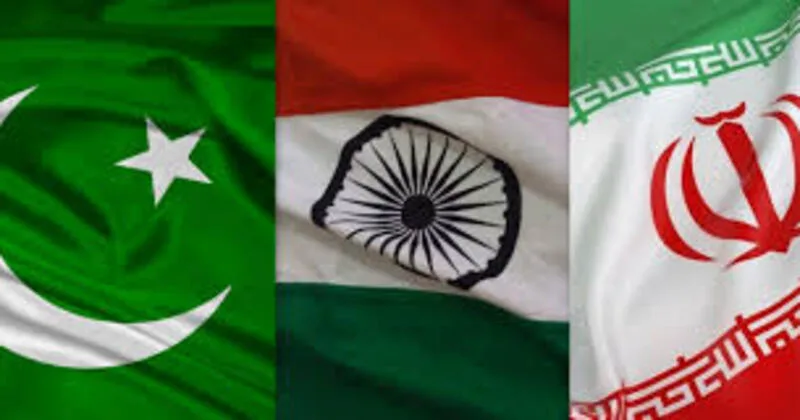
Guns have fallen silent at the Afghan-Pak border after deadly clashes between the Taliban-led Afghan government and Pakistan. The ceasefire maintaining this silence at the border is quite fragile, as the conflict in the Afghan-Pak region has surpassed the expectations of strategic patience and restraint, leading to an almost loss of face between Islamabad and Kabul. The so-called strategic depth has now become a mere symbolic strategy for Pakistan with no substantive value. In such a scenario, New Delhi has the opportunity to recalibrate its Afghan strategy to develop its own strategic depth.
The camaraderie and dual strategy
The Taliban enjoyed Pakistan’s patronage for decades, from the Afghan-Soviet period until 1999, when the Taliban became part of Pakistan’s strategy against India. They allowed the Pak-based terror group LeT to operate from the Afghanistan-Pakistan border, using Kabul as a training and logistical base to carry out terror activities in India. This approach proved successful in destabilizing J&K from the late 80s to the 90s. Khost, Jalalabad and Kandahar provinces became key training centers for the terror organizations. After 9/11, the Taliban was ousted by the US’s war on terror, especially through the CIA’s Operation Jawbreaker. Even after this ousting, Pakistan managed to reorganize its strategic depth approach via the Haqqani network. The Haqqanis and core leadership were redeployed to the FATA region, particularly North Waziristan, with significant help from Pakistan’s ISI.
While Pakistan publicly supported the US in its War on Terror(WoT), covertly it nurtured and strengthened the Haqqanis through criminal syndicates and financial organizations in the Persian Gulf. Pakistan revived its connections in Afghanistan when the ISI’s S Division, responsible for managing terror proxies, established a network of operations to strengthen and link the Haqqanis with other terror groups, training LeT and Jaish in the FATA regions. The Haqqanis’ first attack against India was the bombing of the Indian Embassy in Kabul in July 2008, followed by a second attack on the embassy in October 2009. Up till 2011, Haqqani, through Pakistan’s ISI, continued to strike India’s strategic positions, including consulates and infrastructure projects. This resulted in India scaling back its presence and missions, impacting its strategic and tactical footprints in Afghanistan.
Pakistan’s dual strategy of providing public support to the US and conducting covert terror activities yielded favorable results on two fronts. First, it helped Pakistan maintain plausible deniability by exploiting Haqqani’s complex web of operations and its connections with other terror groups, which makes attribution difficult. Additionally, Pakistan argued that it lacks control over the tribal areas. Second, it enabled Pakistan to sustain its strategic depth even after losing Taliban influence in Afghanistan. Later, Pakistan engaged the Haqqanis to moderate the TTPs, which were becoming a serious threat to Pakistan. Till 2021, Pakistan focused on a hybrid strategy emphasizing political work, logistical and financial support of Haqqanis and terror proxies.
Breaking strategies and camaraderie
The fall of Kabul in 2021 was celebrated in Pakistan, and fears of intense Pak-Afghan relations resurfaced. However, Pakistan soon realised that they were not dealing with the old Taliban; it was confronting a new version of the Taliban with altered strategic realities. The new Taliban sought autonomy and legitimacy, becoming increasingly assertive, which led to border clashes, economic and political tensions and most importantly, the TTP factor. Pakistan expected the Taliban to moderate the TTP as well. Still, it did not receive the desired response from Kabul, which resulted in the collapse of the ceasefire between TTP and Pakistan.
Pakistan’s ISI’s last hope was relying on its most trusted group—the Haqqanis, who used to moderate and negotiate with the TTP. However, that too failed because the Haqqanis lost influence due to conflicts with the Taliban, especially after clashing with the Taliban’s supreme leader, Hibatullah Akhundzada, over issues like taxation in Haqqani-controlled areas and the treatment of women. The Haqqanis, considered relatively moderate, oppose Akhundzada’s hardline policies. Sirajuddin Haqqani, the leader of the Haqqani network, is now at ideological and political odds with Akhundzada. Losing the Haqqanis, ongoing conflict with the Taliban, and the threat from TTP have nearly ended Pakistan’s strategy of and the recent deadly clashes with full-scale offensives have officially marked the end of Pakistan’s strategic depth in Kabul. However, Pakistan has a plan to adapt to the new reality, but it’s a difficult task, especially as India is also preparing to carry out its own influence campaign in Kabul to limit Pakistan’s remaining options.
Old but a failed playbook
The strategic reallocation of Taliban and Haqqani core leadership in the FATA region, along with the opening of cross-border Jihadist networks, gradually turned into blowback for Pakistan. The sense of autonomy and hardline ideological framework flowing through the Global Jihadist network was breeding in the FATA region. Al-Qaeda perhaps played a significant role in the formation of TTP and persuading jihadist groups. The formation of Tehreek-e-Nafaz-e-Shariat-e-Mohammadi (TNSM), an Islamic militant organisation formed in 1992, aiming to overthrow the Pakistan government, resurged after 2001 under the leadership of Sufi Mohammad, but by 2002, the Pakistan government under Pervez Musharraf ordered a crackdown that led to Mohammad’s arrest. However, the group continued to resurge under Mohammad’s son-in-law, Maulana Fazlullah, who took control of the movement, became notorious and started “Mullah Radio,” a pirated FM radio broadcasting Sharia law. The most significant incident occurred in 2003 when Al-Qaeda carried out two failed assassination attempts on Pervez Musharraf by operating from South Waziristan. Other groups, like Lashkar-e-Jhangvi, carried out Shia mosque bombings in Quetta in 2003.
By 2004, local tribal militants in Shakai Valley began to grow under Al-Qaeda’s influence. The local tribal militant leader Nek Mohammad, under Al-Qaeda’s influence, transformed the local jihadist movement into a global network. This led Central Asian jihadist movement leaders, such as Tahir Yuldashev (leader of the Islamic Movement of Uzbekistan), to move into South Waziristan—introducing Central Asian militant tactics to local tribal militants. This alarmed not only Pakistan but also the US, as it could resurge and sustain a global jihadist network. The US began to pressure Pakistan, which was already under strain from the War on Terror, and reached an agreement with local tribal militants- the Shakai Valley Agreement of 2004— to lay down arms and expel Al-Qaeda and Uzbek militants. However, Nek Mohamad double-crossed the Pakistani military establishment by continuing to house Uzbeks and Al-Qaeda members and maintaining cross-border terror operations.
The turnaround
Pakistan’s ISI developed a turnaround strategy in collaboration with the US, recognising that it had lost proxy control and influence. This led to strengthening the US-Pakistan counter-terrorism partnership, during which the CIA conducted its first drone strike in Pakistan, killing Nek Mohamad in 2004. Pakistan’s ISI continued providing intelligence on tribal militant leaders, and the US initiated drone strike operations that caused substantial damage to tribal militants and Al-Qaeda’s operational areas in Pakistan. By 2007, US focus steadily declined as Pakistan’s counter-terror efforts were no longer a US priority. However, in 2007, TTP was formed and began operating in Pakistan. Between 2008 and 2014, several comprehensive agreements were negotiated and signed between TTP and the Pakistan military, but all failed due to ideological and tactical differences.
After 2011, the US’s Operation Neptune Spear in Pakistan to kill Osama Bin Laden significantly harmed the US-Pakistan counter terrorism partnership and operational trust, which caused Pakistan to become less prominent in US intelligence and cross-border operations in the Afghanistan-Pakistan region.
But the Taliban’s return to power in 2021 rekindled US-Pakistan cooperation, with the first notable example being Pakistan assisting the US in a drone strike to eliminate Al-Qaeda’s leader, Al-Zawahiri, in Afghanistan. The transfer and arrest of ISIS-K terrorist Mohammad Sharifullah, responsible for the Abbey Gate bombing in Afghanistan, further shifted US counter terrorism cooperation with Pakistan. Moving into 2025, Pakistan faces threats from two fronts: the Taliban and TTP. Air strikes in Kabul, when the Taliban’s Foreign Minister was in Delhi, perhaps marked the first sign of Pakistan demonstrating its ability to counter the Taliban, just as it did decades earlier against Al-Qaeda. Pakistan’s continued air strikes and ground operations in Afghanistan may have been deliberate efforts to rebuild the US-Pakistan cooperation that existed from 2004 to 2007. For the US, weakening the Taliban to increase operational influence in Afghanistan might be beneficial; the obsession with Bagram Air Base during Trump’s Presidency is one example.
India’s Strategy
Moving beyond minimal cooperation there is a valuable opportunity that will help India build its strategic depth against Pakistan, not just tactically but also strategically, by boosting its Look West and Central Asian connection policies. This approach will also strengthen counter-terror operations in the Afghan-Pak region. The recent decision to upgrade the technical mission of India’s in Kabul to Embassy reflects a step towards moving beyond a minimal functional relationship with the Taliban. Besides diplomatic and political benefits, India could revise its double squeeze strategy, which aims to distract Pakistan and keep its machinery engaged along both eastern and western borders, ultimately weakening Pakistan economically and militarily and most importantly creating costs for US engagement with Pakistan—creating a triple gamble and tension for Pakistan must be one of the core strategies of India’s strategic depth in Afghanistan.