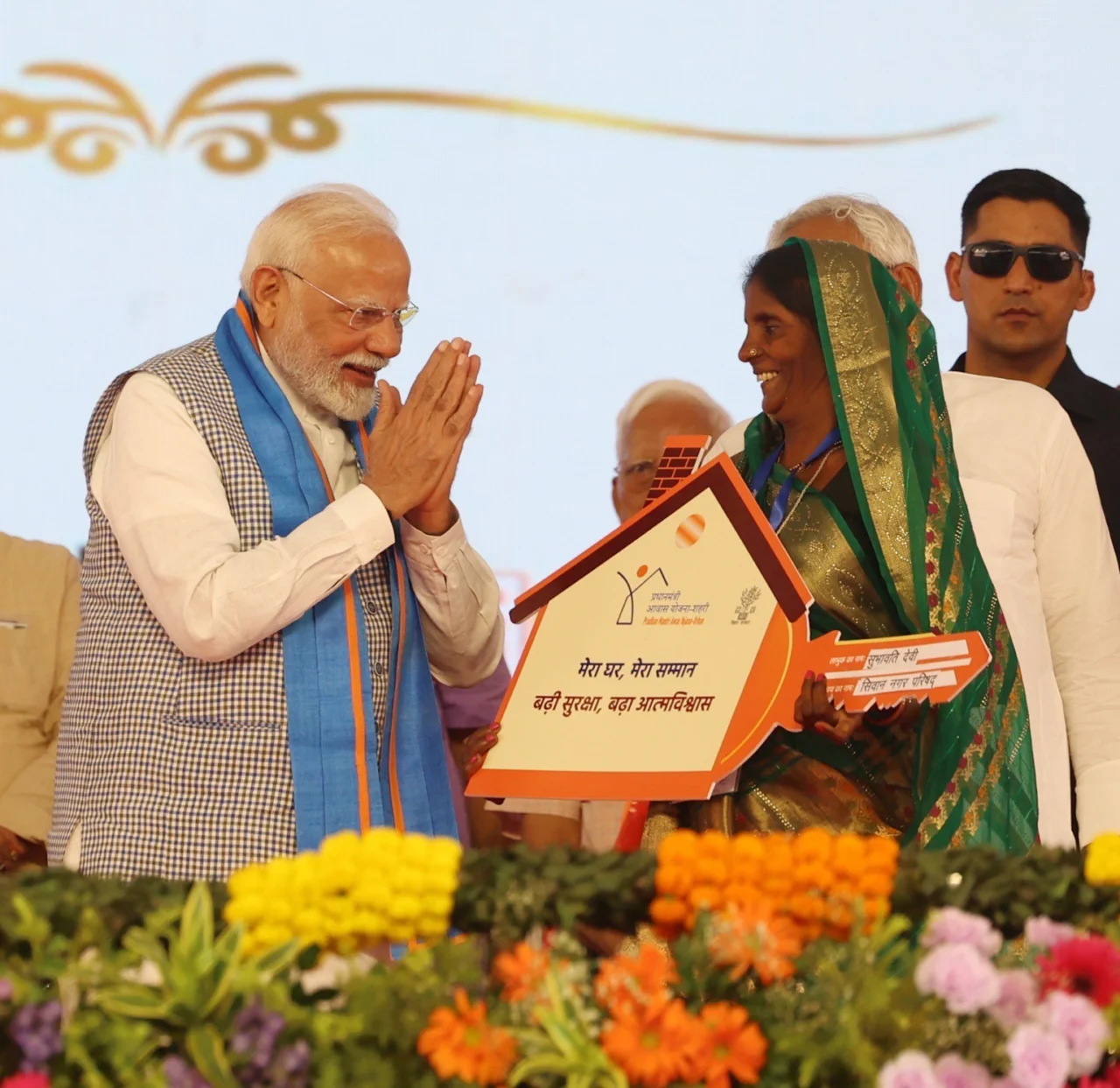
PMAY-U 2.0 Housing Sanctions Cross 20.80 Lakh After Fresh Approvals (A representative image)
The Union Government has approved more than 1.93 lakh additional houses under the Pradhan Mantri Awas Yojana-Urban 2.0 (PMAY-U 2.0), taking the total number of houses sanctioned under the scheme to 20.80 lakh. The latest approvals are aimed at extending access to permanent housing for eligible urban families, particularly those belonging to the Economically Weaker Section (EWS).
The approvals were granted during the 10th meeting of the Central Sanctioning and Monitoring Committee (CSMC), held in New Delhi on Friday. The meeting was chaired by Satendra Singh, Secretary in the Department of Urban Development under the Ministry of Housing and Urban Affairs (MoHUA).
The newly sanctioned houses fall under two key components of PMAY-U 2.0: Beneficiary Led Construction (BLC) and Affordable Housing in Partnership (AHP). The approvals cover eligible EWS families across 11 states.
According to the Ministry of Housing and Urban Affairs, the latest decision takes the scheme’s total sanctions to 20.80 lakh houses. The government has also highlighted the scale of women’s ownership and the participation of beneficiaries from different social groups as part of its broader effort to improve access to affordable urban housing.
Uttar Pradesh received approval for the largest number of houses in the latest round, with 73,182 units sanctioned. Bihar followed with 52,866 houses, while Telangana received approval for 18,120 houses.
West Bengal was approved for 16,559 houses, followed by Gujarat with 14,290. Andhra Pradesh received approval for 6,560 houses, while Chhattisgarh was allocated approvals for 4,670 houses.
The remaining approvals included 3,126 houses in Odisha, 3,116 in Karnataka, 1,003 in Mizoram and 29 in Sikkim.
The state-wise distribution is as follows:
1. Uttar Pradesh: 73,182 houses
2. Bihar: 52,866 houses
3. Telangana: 18,120 houses
4. West Bengal: 16,559 houses
5. Gujarat: 14,290 houses
6. Andhra Pradesh: 6,560 houses
7. Chhattisgarh: 4,670 houses
8. Odisha: 3,126 houses
9. Karnataka: 3,116 houses
10. Mizoram: 1,003 houses
11. Sikkim: 29 houses
The approvals reflect the participation of states with different housing requirements and implementation capacities. However, the sanction of houses is one stage in the process. The subsequent progress of construction, completion and delivery will determine how quickly eligible families can move into their homes.
The latest approvals have been made under the Beneficiary Led Construction and Affordable Housing in Partnership components of PMAY-U 2.0.
Under the Beneficiary Led Construction component, eligible beneficiaries receive assistance to construct a permanent house. This approach places the beneficiary at the centre of the construction process and is intended for families who meet the scheme’s eligibility requirements and have the necessary conditions to build a house.
The Affordable Housing in Partnership component supports the provision of affordable housing through partnerships involving relevant public or other eligible agencies. It is intended to increase the availability of housing for eligible families through planned housing projects.
The two components provide different routes for expanding access to permanent homes. Their implementation depends on eligibility checks, project approvals and compliance with the scheme’s requirements.
The Ministry’s latest announcement confirms that the additional houses have been approved under these two components. It does not provide a separate state-wise breakdown between BLC and AHP in the information released.
The 10th CSMC meeting also focused on measures to speed up the implementation of PMAY-U 2.0. Discussions centred on timely approvals, effective monitoring and ensuring that housing benefits reach eligible beneficiaries.
The meeting was attended by Kumar Ravikant Singh, Joint Secretary and Mission Director, Housing for All; Sanjeet, Joint Secretary and Financial Adviser; Vaibhav Rundwal, Director, Housing for All; other officials of the Ministry; and Mission Directors and representatives from the participating states.
The committee’s role in sanctioning and monitoring housing proposals is significant because the scheme involves coordination between the Union Government and state-level implementing agencies. Timely scrutiny of proposals and follow-up on approved projects are important for moving from administrative sanctions to actual housing delivery.
The Ministry has emphasised the need to make implementation more effective. This includes monitoring progress and addressing delays that could prevent eligible households from receiving the intended benefits within a reasonable period.
While the fresh approvals expand the number of families covered by the scheme, implementation remains a key measure of progress. Sanctions, construction and completion represent distinct stages, and the overall impact depends on the movement of approved houses through these stages.
Launched in September 2024, PMAY-U 2.0 aims to provide financial assistance to one crore additional urban poor and middle-class families to construct or purchase a permanent, or pucca, house.
The scheme provides assistance of up to Rs 2.50 lakh per family, subject to the applicable component rules and eligibility conditions. It covers eligible families belonging to the Economically Weaker Section, Low Income Group (LIG) and Middle Income Group (MIG).
According to the information provided by the Ministry, eligible households can have an annual family income of up to Rs 9 lakh. Assistance is intended to help eligible families meet their housing needs, whether through construction or purchase under the relevant scheme component.
The objective is to expand access to secure housing among urban households that may otherwise face difficulties in acquiring a permanent home. Housing affordability remains a significant concern for families in cities, where the cost of land, construction and residential property can make home ownership difficult.
By extending financial assistance through defined components, PMAY-U 2.0 seeks to support eligible households in obtaining a permanent dwelling. The scheme’s overall target of one crore additional urban families also places emphasis on the scale of housing requirements across the country.
The latest approvals bring the total number of sanctioned houses under PMAY-U 2.0 to 20.80 lakh. This figure represents progress towards the scheme’s stated objective, although it should not be treated as the number of houses already completed or occupied.
Women’s ownership is a central feature of PMAY-U 2.0. The scheme prioritises women-led development by providing for ownership or co-ownership of houses by women in the family.
Of the 20.80 lakh houses sanctioned under PMAY-U 2.0, around 20.16 lakh have been allotted to women under individual or joint ownership. This represents approximately 97 per cent of the total sanctioned houses, according to the Ministry.
The provision is intended to strengthen women’s participation in household asset ownership. A house registered in a woman’s name or jointly with other family members can provide a formal stake in a significant family asset.
The ownership provision also gives the scheme a social dimension beyond the construction of housing units. It links the delivery of housing assistance with the participation of women in property ownership.
The figures released by the Ministry indicate that women account for the overwhelming majority of houses sanctioned under the scheme. However, the announcement does not provide a separate breakdown of the number of houses registered solely in women’s names and those registered jointly.
The scheme’s coverage also includes beneficiaries from several social categories. According to the figures released by the Ministry, 1.81 lakh houses have been sanctioned for senior citizens.
A further 3.61 lakh houses have been sanctioned for Scheduled Caste beneficiaries, while 1.06 lakh houses have been sanctioned for Scheduled Tribe beneficiaries. Other Backward Classes beneficiaries account for 9.14 lakh sanctioned houses.
These figures indicate the scheme’s reach among groups that may face distinct barriers in accessing affordable housing. The provision of permanent housing can help eligible households secure a stable place to live, while reducing dependence on temporary or inadequate accommodation.
The figures should be understood as overlapping dimensions of the scheme’s coverage rather than separate categories that can automatically be added together. For example, a beneficiary may belong to more than one of the groups listed. The Ministry’s announcement does not provide further details on the extent of any overlap.
The inclusion of senior citizens and beneficiaries from Scheduled Castes, Scheduled Tribes and Other Backward Classes reflects the scheme’s emphasis on extending housing support across different sections of the eligible population.
The broader Pradhan Mantri Awas Yojana-Urban programme has recorded progress beyond PMAY-U 2.0. Across PMAY-U and PMAY-U 2.0, the government has sanctioned more than 1.27 crore houses, of which 1.01 crore have been completed.
The figures cover the wider urban housing programme and should be distinguished from the 20.80 lakh houses sanctioned specifically under PMAY-U 2.0.
The difference between total sanctions and completed houses highlights the importance of implementation after approval. Housing projects may require time for beneficiary verification, construction, infrastructure provision and completion before families can occupy their homes.
The government’s emphasis on timely approvals and effective monitoring is therefore relevant to the next stages of the programme. Continued coordination between the Centre, states and implementing agencies will be important to ensure that approved housing proposals progress towards completion.
For beneficiaries, the practical outcome is not merely the approval of a housing proposal but the availability of a safe and permanent home. The pace of construction and the delivery of assistance will remain important indicators of the programme’s performance.
The approval of more than 1.93 lakh additional houses marks another step in the implementation of PMAY-U 2.0. With total sanctions reaching 20.80 lakh, the scheme continues to expand its coverage among eligible urban families across participating states.
Uttar Pradesh and Bihar account for the largest shares of the latest approvals, followed by Telangana and West Bengal. The distribution across 11 states demonstrates the scheme’s reach, while the emphasis on women’s ownership and beneficiaries from different social groups reflects its stated inclusion objectives.
The next stage will involve translating these sanctions into completed homes. Timely implementation, effective monitoring and coordination with states will be essential to ensure that eligible families receive the intended assistance.
Across the broader PMAY-Urban programme, more than one crore houses have already been completed out of over 1.27 crore sanctioned. As PMAY-U 2.0 progresses, the completion of approved units will be a key measure of how effectively the scheme advances its objective of expanding access to affordable, permanent housing in urban India.
