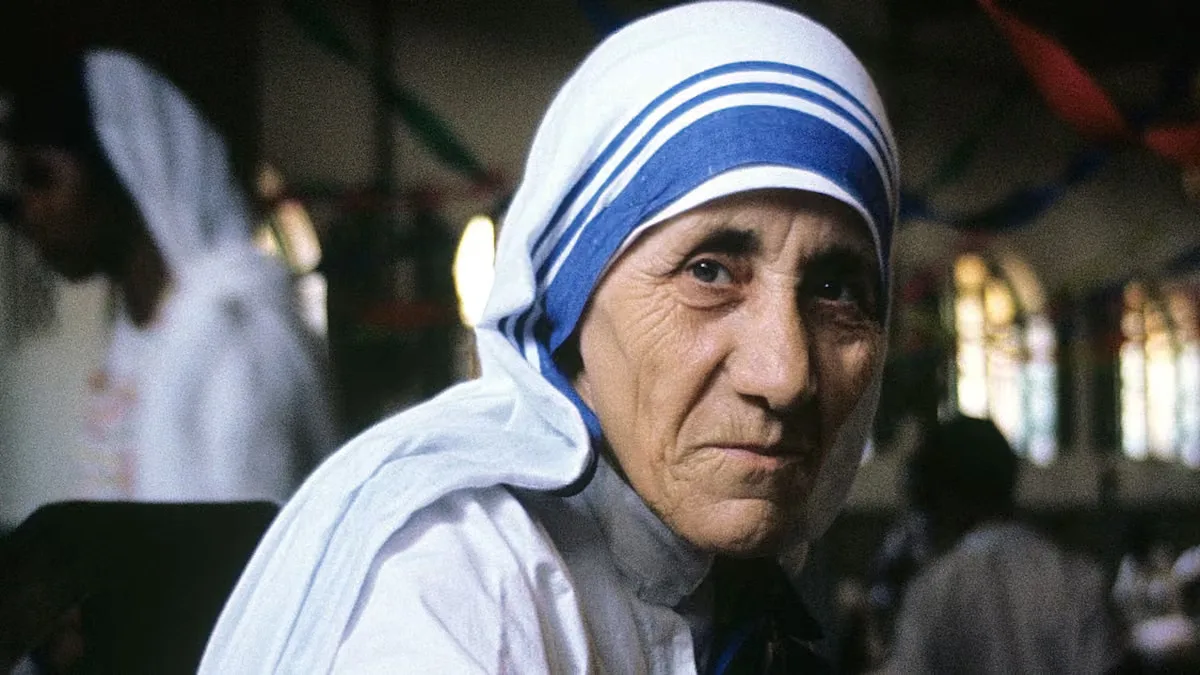
A recent episode of The Joe Rogan Experience has reignited long-standing controversies surrounding Mother Teresa, the Nobel Peace Prize winner and Catholic saint, after guest Cody Tucker described her as a “scumbag” who “never did anything good”. In episode 2566, released around October 15, 2026, historical content creator and author Cody Tucker told host Joe Rogan that Mother Teresa housed dying patients in poor conditions in Calcutta while directing large donations towards the Vatican rather than patient care.
Tucker attributed this approach to her belief that suffering brought people closer to God. Rogan expressed surprise at the claims during the discussion. Clips of the exchange quickly spread online, prompting strong reactions, particularly from Catholic commentators who accused Tucker of repeating outdated or incomplete criticisms without sufficient context.
Critiques of Mother Teresa’s Missionaries of Charity homes are not new. In 1994, Robin Fox, then editor of the medical journal The Lancet, visited the Home for the Dying Destitutes in Calcutta (now Kolkata). He described medical care as “haphazard”, noting that nuns and volunteers without formal training, often made treatment decisions. Diagnostic tests were rarely used and strong painkillers were absent from the formulary.
Fox observed that a patient was initially treated for fever with basic medication before a visiting doctor diagnosed malaria. He contrasted the approach with modern hospice standards. A 2013 review by Canadian academics in the journal Studies in Religion examined much of the existing literature and raised questions about care practices, political associations, financial management of donations and the influence of a theology that found spiritual value in suffering.
Earlier critics, including Christopher Hitchens in his book The Missionary Position and related documentary work, similarly argued that the order prioritized spiritual goals over medical intervention and questioned the use of funds.
Defenders emphasize important historical realities. India’s Narcotic Drugs and Psychotropic Substances Act of 1985 severely restricted medical morphine access. Human Rights Watch later reported that medical morphine consumption in India fell by roughly 97 per cent between 1985 and 1997, leaving even major hospitals short of strong analgesics. The absence of powerful pain relief in Missionaries of Charity facilities therefore reflected broader national constraints rather than a unique policy of withholding treatment.
The defenders also reiterate homes functioned more as places of last resort for people rejected by hospitals than as acute-care medical centers. Mother Teresa framed her mission around providing dignity, love and spiritual comfort rather than operating as hospitals. Claims that donations were systematically funneled to the Vatican at the expense of patient care remain contested. The Missionaries of Charity have faced repeated questions about financial transparency over decades.
Catholic voices online have pushed back sharply against Tucker’s characterization. Commentators argued that the podcast discussion recycled selective criticisms while ignoring the extreme poverty and limited medical infrastructure of mid-to-late 20th-century Calcutta, as well as the order’s ongoing work.
Some accused the exchange of lacking basic fact-checking. Others noted that volunteers and observers who spent time in the facilities described them as modest but far from the “torture chambers” alleged in stronger critiques. As clips continue to circulate, the episode has once again placed Mother Teresa’s complex legacy under public scrutiny for shortcomings in medical practice and institutional accountability.
