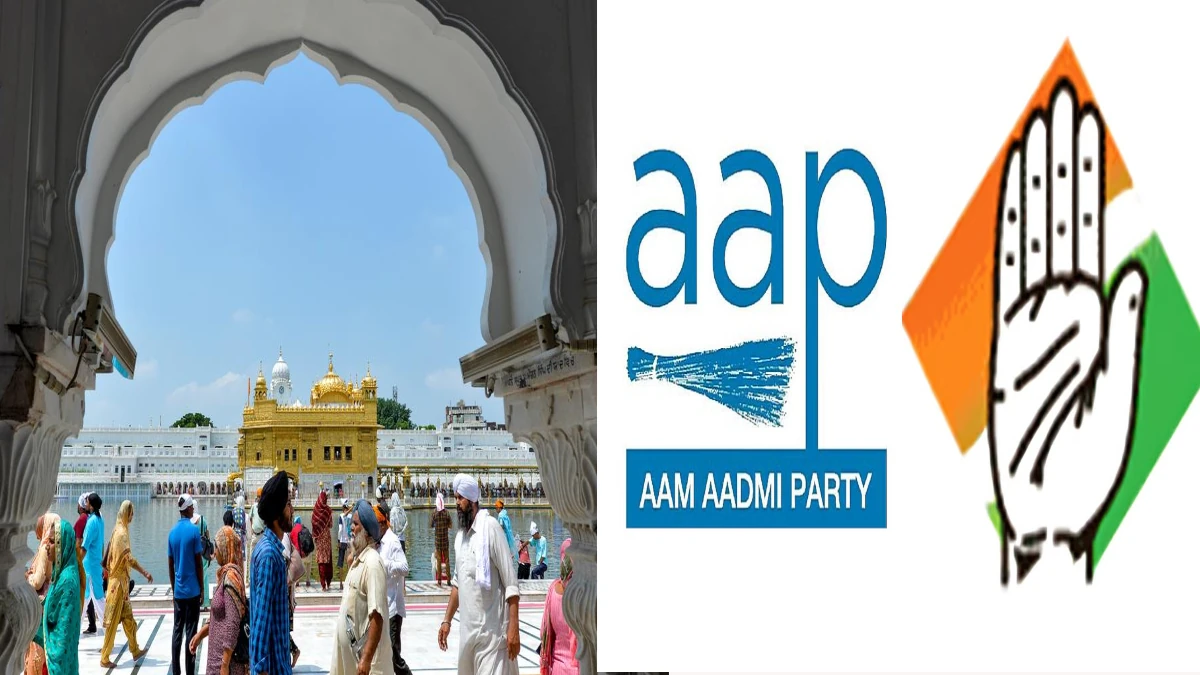
Gurdwaras across Bharat have always been spaces of deep faith, community service, and spiritual unity. However, over the past decade between 2016 and 2026, mainstream political entities-most notably the Indian National Congress and the Aam Aadmi Party (AAP)-have increasingly faced criticism for using these sacred premises to advance their own political agendas. Beyond their traditional spiritual role, gurdwaras in various states have frequently been turned into centres for political posturing, party mobilisations, and public narratives during elections, agitations, and political conflicts. This trend of using holy spaces for partisan advantage has raised sharp concerns among devotees and religious custodians nationwide, triggering ongoing debates over preserving the sanctity and code of conduct of gurdwaras from daily politics.
This report documents 10 major incidents between 2016 and 2026 showing how the Indian National Congress and the Aam Aadmi Party (AAP) have engaged with gurdwaras, religious sentiments, and community outreach for political purposes.
AAP Protesters Enter Gurdwara Bangla Sahib Amid Police Crackdowns
On October 10 2026, at Gurdwara Bangla Sahib in New Delhi, supporters of the AAP-linked Cockroach Janta Party entered the holy premises during a police crackdown while protesting against Chief Election Commissioner Gyanesh Kumar. While gurdwara representatives initially prevented police entry on the grounds that the individuals were unarmed and not shouting slogans inside, DSGMC President Harmeet Singh Kalka sharply criticised AAP leadership for playing dirty politics. He alleged that protesters degraded the shrine’s sanctity by bringing placards, raising political slogans, and attempting to force their way into the Darbar Hall.
Delhi Gurdwaras Used as Political Refuge Following Police Action
On July 20 2026, across prominent New Delhi shrines including Gurdwara Bangla Sahib, Gurdwara Rakab Ganj Sahib, and Gurdwara Sis Ganj Sahib, AAP-linked Cockroach Janta Party supporters sought shelter after police dispersed their agitation at Jantar Mantar. The religious complexes provided meals, drinking water, first aid, and bedding to the fleeing agitators. This situation dragged sacred religious spaces into an ongoing political clash as political demonstrators turned holy premises into temporary safe havens during street confrontations with law enforcement.
AAP Launches Priest and Granthi Scheme Ahead of Delhi Elections
On December 31 2024, at Sant Sujan Singh Ji Maharaj’s Gurdwara in New Delhi, the AAP government launched the registration for the Pujari Granthi Samman Yojana, offering an Rs18,000 monthly grant to temple priests and gurdwara granthis. Announced by former Chief Minister Arvind Kejriwal just before the Delhi Assembly elections, the move faced strong criticism from BJP MP Bansuri Swaraj, who accused AAP of blatant voter appeasement and exploiting religious platforms for political gain right before voting.
Rahul Gandhi’s Golden Temple Visit Right Before Punjab Bypolls
On November 18 2024, at Sri Harmandir Sahib in Amritsar, Punjab, Congress leader Rahul Gandhi offered prayers and performed sewa by serving water to devotees just hours after campaign activity ended for four Punjab Assembly by polls. Coming shortly after Congress won seven Lok Sabha seats in the state, this high-profile visit to Sikhism’s holiest shrine right before polling day served as a tactical display of religious devotion aimed at influencing voter sentiment across the region.
Rahul Gandhi Launches Congress Punjab Campaign from Golden Temple
On January 27 2022, at Sri Harmandir Sahib in Amritsar, Punjab, Rahul Gandhi formally kicked off the Congress party’s Punjab Assembly election campaign by visiting the shrine alongside party candidates and state leaders. After offering prayers and eating at the community langar, the delegation transitioned directly to political rallies. The strategic visit placed a central Sikh shrine at the core of the party’s electoral outreach to secure public support ahead of the state assembly polls.
Congress Attempts Control Over SGPC Religious Body
On July 18 2019, in Punjab, senior Congress leaders, including MLA Harminder Singh Gill, publicly declared the party’s plan to contest Shiromani Gurdwara Parbandhak Committee elections to break the Akali Dal’s influence over Sikh shrines. By directly inserting itself into the management elections of the body that governs the Golden Temple and other historical gurdwaras, Congress converted sacred gurdwara administration into an arena for party rivalries and political dominance.
Arvind Kejriwal’s Apology Sewa After Manifesto Controversy
On July 18 2016, at Sri Harmandir Sahib in Amritsar, Punjab, AAP convener Arvind Kejriwal performed sewa by washing utensils to seek forgiveness following heavy public backlash. The controversy arose after AAP published its election manifesto displaying its broom election symbol alongside the image of the Golden Temple and comparing the document to the Guru Granth Sahib. The ritual penance took place right before the 2017 elections as part of damage-control efforts to rebuild political standing among Sikh voters.
Arvind Kejriwal’s Campaign Outreach at Takht Sri Harmandir Sahib
On January 2 2017, at Takht Sri Harmandir Sahib in Patna, Bihar, AAP national convenor Arvind Kejriwal attended the 350th birth anniversary celebrations of Guru Gobind Singh Ji. Occurring barely a month before the critical 2017 Punjab Assembly elections, this visit to one of Sikhism’s highest temporal seats was utilised as a political platform to cultivate favour with the Sikh electorate ahead of state voting.
Amarinder Singh Uses Gurdwara Visit to Make Campaign Promises
On January 15 2017, at Mehraj Gurdwara in Bathinda district, Punjab, Punjab Congress chief Captain Amarinder Singh paid respects at the holy shrine before immediately addressing an election rally on the premises. He used the occasion to vow strict action on sacrilege incidents and drug syndicates while attacking opposition leaders, tying deep religious sensitivities directly to Congress’s political promises and electoral messaging.
Kejriwal Promises Holy City Status After Golden Temple Visit
On September 9 2016, at Sri Harmandir Sahib in Amritsar, Punjab, AAP chief Arvind Kejriwal visited the Golden Temple and announced that an AAP government would grant holy city status to Amritsar and Anandpur Sahib. He coupled his religious visit with promises to ban meat, alcohol, and tobacco near the walled city, using holy shrines as a backdrop to pitch policy promises directly aimed at consolidating Sikh votes for the upcoming state assembly polls.
The frequent involvement of political parties in sacred religious spaces undermines the rich spiritual traditions and time-tested sanctity of gurdwaras across Bharat. When political entities prioritise electoral strategies, voter outreach, and party motives over religious code of conduct, it creates unnecessary friction and hurts the sentiments of millions of devoted followers. Gurdwaras have historically stood as places of selfless devotion, spiritual peace, and community unity, and preserving them from daily partisan influence is essential to safeguard their revered place in the society.