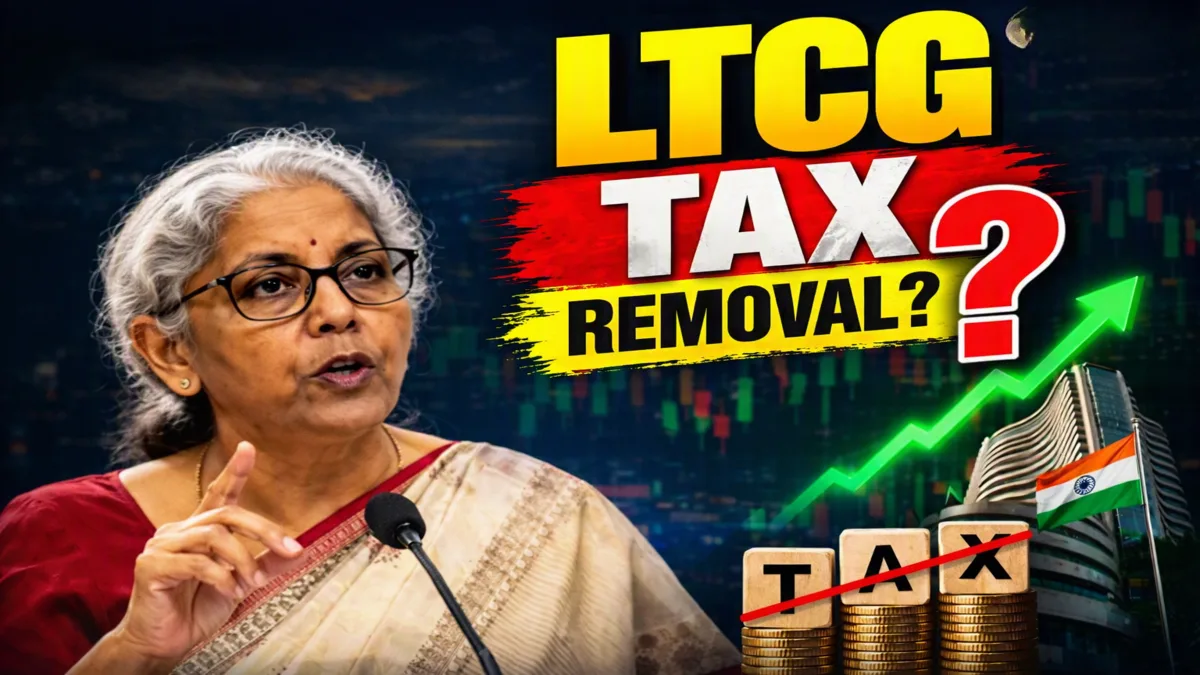
NEW DELHI: The Indian stock market saw a sharp rise on Tuesday, October 13, with the Sensex gaining over 1,100 points and the Nifty rising by nearly 359 points. One of the main reasons behind this positive movement was the Finance Minister’s remarks on Long-Term Capital Gains (LTCG) tax and Securities Transaction Tax (STT).
Speaking at the Bloomberg New Economy Forum in New Delhi, Sitharaman welcomed discussions around these taxes and expressed her willingness to listen to the concerns of investors. Although she did not promise any reduction, her openness to reviewing the existing tax structure was received positively by the market.
At a time when investors are looking for greater confidence and stability, such a response from the government carries importance.
Why Does This Matter to Investors? For an ordinary investor, the issue is quite simple. When someone invests in shares and earns a profit after holding them for a long period, a part of that profit is paid to the government as tax.
Currently, eligible long-term gains from listed shares and equity mutual funds are taxed at 12.5 per cent on annual gains exceeding Rs 1.25 lakh. Investors also pay Securities Transaction Tax on certain stock market transactions.
Over the years, investors and market experts have raised concerns about the combined impact of these taxes. Some believe that reducing the burden could encourage people to invest more and remain invested for longer periods.
If the government eventually decides to provide relief, investors could benefit from better returns after taxes. However, any such benefit will depend on the nature of the changes introduced.
One encouraging aspect of the Finance Minister’s remarks is the government’s willingness to hear different opinions before making a decision.
Economic policies affect millions of people, from small retail investors to large institutions. Therefore, listening to concerns from different sections of the market is an important part of responsible policymaking.
The government has previously emphasised the need for a simpler and more balanced tax structure. Its approach has been to bring greater consistency in how different types of investments are taxed.
The latest remarks suggest that discussions around the present system remain open.
This willingness to engage with investors is a positive sign. It shows that tax policies need not remain unchanged and that there is room for discussion as economic conditions evolve.
India has emerged as an important destination for global investors, supported by its large domestic market, growing businesses and long-term economic potential.
However, foreign investors also compare India with other markets when deciding where to invest their money. Taxation is one of several factors that influence these decisions.
In recent times, foreign investors have withdrawn significant funds from Indian equities. Global uncertainty, market valuations and currency movements have also influenced these flows.
A more competitive and predictable tax structure could help make Indian markets more attractive to both domestic and international investors.
Greater investment can support businesses looking to raise capital, expand operations and create employment opportunities. While lower taxes alone cannot guarantee these outcomes, a well-designed policy could contribute to a healthier investment environment.
Balancing Investor Expectations with Economic Responsibility! There is another side to this discussion. Taxes are an important source of government revenue, helping fund infrastructure, public services and development programmes.
Any reduction must therefore be considered carefully.
The government’s challenge is to encourage investment while maintaining the resources needed for national development.
Finance Minister Sitharaman has also stressed the importance of fiscal discipline and responsible management of public finances. This is particularly relevant when the country is seeking to maintain economic stability amid global uncertainty.
The sharp rise in the Sensex reflects how positively investors responded to the possibility of tax relief. The rally was also supported by gains in technology stocks and other market factors.
For now, the discussion is at an early stage, and investors should not assume that a tax reduction is certain.
Nevertheless, the Finance Minister’s remarks offer a welcome opportunity to reconsider how India’s investment environment can be made more attractive.
As preparations for the next Union Budget continue, investors will be watching closely.
The bigger message is that a government willing to listen, review and improve its policies can help build greater confidence in India’s economic future. Whether this discussion leads to a tax cut remains to be seen, but opening the door to dialogue is itself a constructive step.
