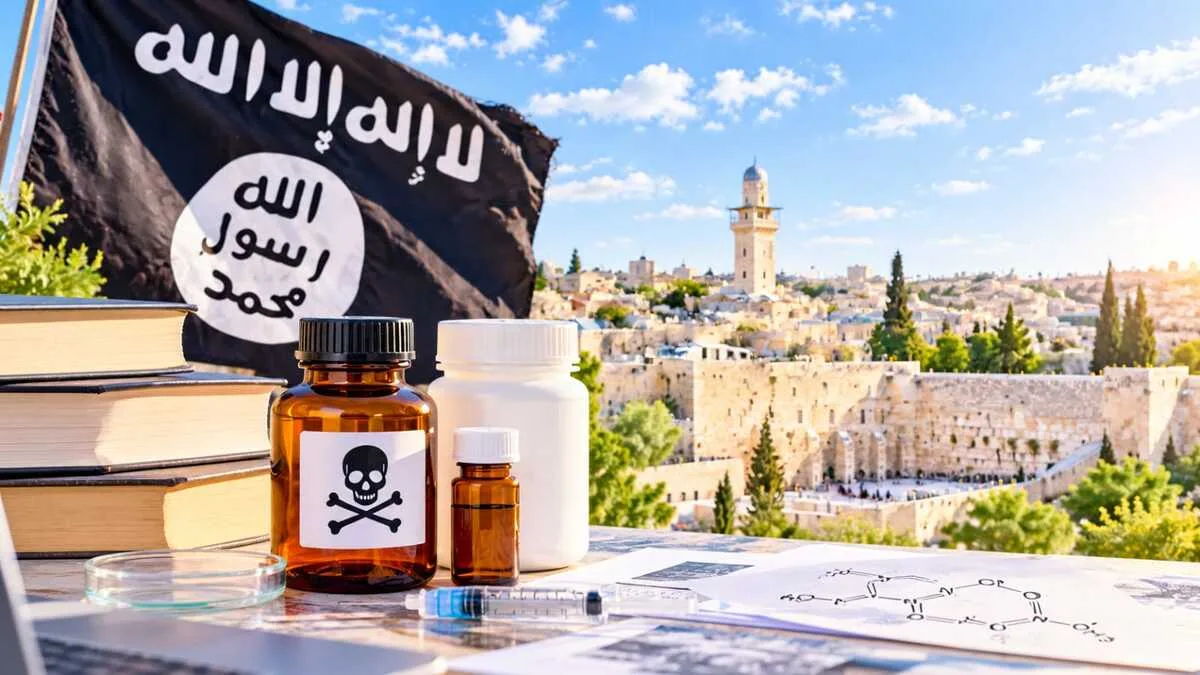
Mohammed Shalbi’s case brings ISIS-linked online radicalisation into focus, with prosecutors citing the October 7 massacre as a factor in his ideological shift towards terrorism.
Israeli prosecutors have indicted Mohammed Shalbi, a 22-year-old pharmacy student from East Jerusalem, over allegations that he planned multiple terrorist attacks involving lethal poisons and explosives targeting Jewish civilians and security personnel. The indictment, filed with the Jerusalem District Court on October 8, 2026, accuses him of preparing a terrorist act constituting murder and receiving training for Islamic terrorist purposes.
According to the State Attorney’s Office, Shalbi’s plans included an explosives attack against enforcement personnel and a subsequent plot intended to cause mass casualties among Jewish civilians. Investigators said that his ideological radicalisation was influenced by the October 7 massacre and the ensuing Israel-Hamas War.
Shalbi, a third-year pharmacy student at Al-Quds University in Abu Dis, also worked as a pharmacy assistant. He resides in Beit Hanina, an east Jerusalem neighbourhood.
According to the indictment, Shalbi began developing an explosives attack plan in early 2025 after becoming angry over parking tickets issued to worshippers who parked near a mosque in Beit Hanina. He intended to plant an explosive device at a location where enforcement personnel regularly stood. The plan was ultimately abandoned after the personnel stopped visiting the area, prosecutors said.
Shalbi subsequently began preparing for a larger terrorist attack, expressing an intention to kill “a lot of Jews”. Prosecutors said that he consumed material associated with Hamas and the Islamic State (ISIS), joined Telegram groups linked to terrorist organisations, including an ISIS-affiliated group, and downloaded dozens of files containing instructions for manufacturing explosives and lethal poisons.
The indictment states that Shalbi used his pharmaceutical knowledge and access to chemicals to explore methods of carrying out attacks. He copied two poison formulas into a notebook, describing substances capable of causing death through physical contact, inhalation or ingestion. Prosecutors further said that he later deleted the downloaded files and his phone’s search history to conceal his activities.
As part of the preparations, Shalbi travelled to Ramallah on two occasions to purchase chemicals and equipment. According to the indictment, he divided the purchases into separate transactions to avoid attracting suspicion and subsequently stored the materials in his bedroom.
The prosecution also said that Shalbi conducted a chemical experiment in his home’s bathtub, igniting a mixture he had prepared to test the materials. According to the State Attorney’s Office, these activities amounted to self-training and instruction intended to facilitate the commission of a terrorist offence.
The indictment charges Shalbi with preparation for an act of terrorism constituting murder and receiving training for terrorist purposes. Prosecutors have requested that the Jerusalem District Court order his continued detention until the conclusion of the legal proceedings.
The case centres on allegations of Islamic radicalisation, online extremist material, poison-based terrorism and explosives preparations targeting Jewish civilians and Israeli security personnel.
