The Union Ministry of Health and Family Welfare, in collaboration with the Ministry of Youth Affairs and Sports and the Ministry of Defence, will launch JOSH (Joint Squad for Health) Teams on October 8 at Bharat Mandapam in New Delhi. The initiative is aimed at strengthening community participation in the national campaign to eliminate tuberculosis and making young people an active part of the grassroots response.
The first phase of the programme will cover 55 districts across 11 states, where the teams will work at the block, ward and community levels. The focus will be on spreading awareness about tuberculosis, encouraging people to seek timely diagnosis and treatment, and addressing the myths and stigma that still surround the disease.
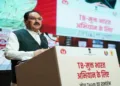
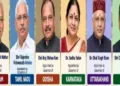
The national launch will be led by Union Minister for Health and Family Welfare and Chemicals and Fertilizers J.P. Nadda. Union Minister for Labour and Employment and Youth Affairs and Sports Mansukh Mandaviya, Minister of State for Defence Sanjay Seth and Delhi Chief Minister Rekha Gupta are also expected to attend the event.
JOSH teams to take TB message to communities
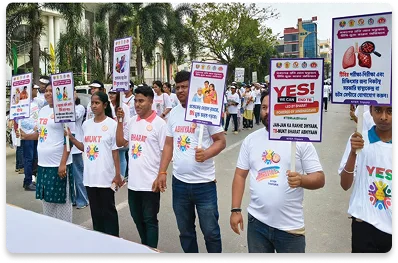
The JOSH Teams have been planned as a youth-led platform that can take the message of the TB Mukt Bharat Abhiyaan beyond hospitals and health centres and into local communities.
The teams will bring together Class-I officers, MY Bharat volunteers and NCC cadets. By combining administrative support with the large youth networks of MY Bharat and NCC, the government aims to create a stronger community-level outreach mechanism for the TB elimination campaign.
The teams will engage with people in villages, wards and other local areas and provide information about the symptoms of tuberculosis, ways to prevent its spread, the importance of early diagnosis and the need to complete the prescribed treatment.
The programme is also expected to focus on misconceptions related to TB. Despite being a preventable and treatable disease, tuberculosis continues to carry social stigma in many communities. People may sometimes delay testing or treatment because of fear, lack of information or concerns about how they will be treated by others.
Through direct interaction with communities, JOSH Teams will seek to address these concerns and encourage people to approach health facilities when they experience symptoms associated with TB.
Youth to play larger role in TB elimination
A major feature of the initiative is the emphasis on youth participation. The government intends to use the reach and energy of young volunteers to support awareness and social mobilisation activities at the grassroots.
MY Bharat volunteers and NCC cadets already have networks and experience in community-level activities. Their involvement is expected to help the TB campaign reach sections of the population that may not always be reached through conventional health communication programmes.
The initiative also gives young people a more structured role in public health activities. Instead of being limited to awareness campaigns, the teams will be involved in community engagement and mobilisation around the national TB elimination goal.
At the local level, their work could include communicating basic information about TB, encouraging people with symptoms to get tested and helping spread awareness about the importance of completing treatment.
The approach is based on the idea that public health programmes are more effective when local communities themselves become part of the response. In this case, youth volunteers are being positioned as an important link between government programmes and people at the grassroots.
New IEC material to be unveiled
The launch event will also see the unveiling of new Information, Education and Communication (IEC) materials for the TB campaign. These materials are expected to support the teams in communicating important information about tuberculosis in a simple and accessible manner.
A video showcasing key milestones of the TB Mukt Bharat Abhiyaan will also be presented during the event before the formal launch of the JOSH Teams.
The use of dedicated communication material is significant because awareness remains an important part of TB elimination. Information about symptoms, testing and treatment needs to reach people in a form that they can easily understand and use.
The campaign will therefore combine government-led health messaging with direct interaction through youth volunteers and community workers.
AI chatbot ‘Khushi Avatar’ to support awareness
Another feature of the launch will be the introduction of an AI-powered chatbot called Khushi Avatar. The chatbot is intended to strengthen public awareness, community engagement and participation in the national TB elimination effort.
The use of artificial intelligence in the campaign indicates an attempt to combine traditional grassroots mobilisation with newer digital tools. Such platforms can potentially make information about TB more accessible and help people engage with campaign-related information through digital channels.
The chatbot will form part of the wider communication effort around TB elimination, while JOSH Teams will focus more directly on community-level outreach.
Together, the two approaches are expected to expand the ways in which information about tuberculosis can reach citizens.
Programme builds on Jan Bhagidari
The JOSH initiative is also linked with the government’s broader emphasis on Jan Bhagidari, or people’s participation, in public health programmes.
The government has been seeking greater involvement from communities, elected representatives, health workers and volunteers in the effort to eliminate tuberculosis. The recognition of TB Mukt Panchayats has been one part of this approach.
In 2025, 67,933 Panchayats across 697 districts were recognised as TB Mukt, according to the government. The achievement was attributed to the combined efforts of health workers, local representatives, communities and volunteers.
The JOSH Teams are expected to build further on this community-led model. By involving young people in the campaign, the government wants to strengthen the social mobilisation component of TB elimination and encourage more citizens to participate.
Health, youth and defence ministries join hands
The launch also represents a broader whole of government approach towards TB elimination. The Health Ministry will provide the public health and tuberculosis framework, while the Ministry of Youth Affairs and Sports and the Ministry of Defence will support the participation of MY Bharat volunteers and NCC cadets.
Bringing together different ministries is intended to expand the reach of the campaign and make TB elimination a wider social objective rather than only a health-sector responsibility.
The participation of Class-I officers, elected representatives, youth volunteers and NCC cadets is also expected to provide greater coordination at the local level. Their combined presence can help connect government programmes with communities and improve awareness about available TB services.
Focus on early diagnosis and treatment
One of the key objectives of the JOSH Teams will be encouraging people to recognise TB symptoms and seek medical help without delay. Early diagnosis is important not only for the treatment of patients but also for reducing the possibility of transmission within communities.
The teams will also stress the importance of completing treatment. Interrupting treatment can create complications and make disease control more difficult. Community-level awareness can therefore play an important role in encouraging patients to stay connected with the healthcare system.
The government hopes that greater awareness, reduced stigma and stronger community participation will help improve the overall response to TB.
The launch of JOSH Teams marks another effort to make India’s TB elimination campaign more people-centred. With the first phase covering 55 districts across 11 states, the initiative will test how youth networks and coordinated government action can be used to strengthen awareness at the grassroots.
If the model proves effective, greater youth participation could become an important part of India’s wider efforts to achieve a TB-free future.