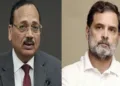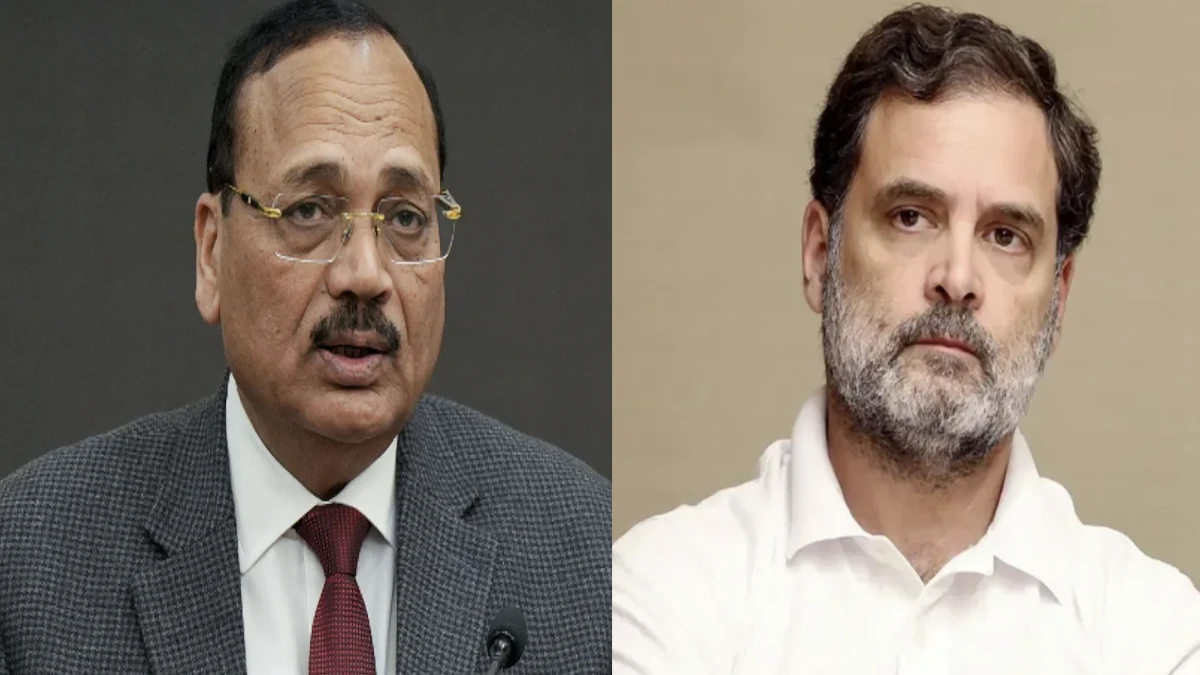
NEW DELHI: In a setback to Rahul Gandhi and the Congress-led INDI bloc’s campaign over alleged electoral irregularities, Chief Justice of India (CJI) Justice Surya Kant has declined the opposition leaders’ request for a meeting to submit a memorandum, directing them to pursue their grievances through established judicial procedures.
The Supreme Court is not a political darbar where leaders can seek an audience to advance their political campaigns.
According to a report, Justice Surya Kant conveyed his decision through email, stating that a meeting would be inappropriate because the issues raised were already sub judice. The response reportedly clarified that the judiciary could not intervene in the functioning of the government through its administrative role and advised the leaders to approach the court through the appropriate legal process if they sought protection of their fundamental rights.
For Rahul Gandhi, who has repeatedly raised allegations of “vote chori” against the electoral system, the refusal is a reminder that political stature does not confer special access to the country’s highest judicial office. Whether a petitioner is an ordinary citizen or a senior political leader, grievances concerning matters before the court must be pursued through the prescribed legal channels.
Rahul Gandhi’s political campaign meets the wall of due process
Gandhi and Congress president Mallikarjun Kharge had sought an appointment with the CJI ahead of the INDIA bloc’s proposed “Chalo Delhi–March for Democracy”. The opposition delegation intended to submit a memorandum raising alleged electoral irregularities, objections to the Special Intensive Revision (SIR) of electoral rolls and a demand for the resignation of Chief Election Commissioner Gyanesh Kumar.
The opposition also plans to demand a halt to the SIR exercise and a return to paper ballots, with Congress calling on participants to assemble at the Connaught Place–Barakhamba Road junction at 1.30 pm for the proposed march.
But a political march and a judicial proceeding are two different things. Leaders are free to mobilise supporters, question public authorities and raise concerns about elections. They cannot, however, expect the judiciary to entertain their demands through a special administrative meeting when the issues are already under judicial consideration.
From Rashtrapati Bhavan to the Supreme Court
The request to meet Justice Surya Kant followed the INDI bloc’s meeting with President Droupadi Murmu, where opposition leaders submitted a memorandum containing four major demands: the resignation of the Chief Election Commissioner, scrapping Assembly elections held over the preceding two years, suspension of the SIR exercise and restoration of paper ballots.
The memorandum also sought the restoration of 13.30 crore voters allegedly removed from electoral rolls.
After the meeting, Gandhi expressed surprise that the President had asked the opposition to provide evidence for its “vote chori” allegations rather than dismissing them outright. He subsequently promised to produce what he described as a “mountain” of evidence.
BJP hits back at Rahul Gandhi
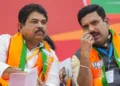
The BJP has slammed Gandhi’s remarks following his meeting with the President, accusing him of dragging a constitutional office into a political confrontation. BJP national spokesperson Sambit Patra said that the President’s decision to receive a memorandum did not mean she had endorsed the allegations contained in it.
The distinction is equally relevant to the opposition’s attempt to meet the CJI. Access to a constitutional authority, where granted, does not validate the claims presented, and a request for intervention does not establish that the institution concerned has acted unlawfully.
SIR remains a matter for judicial scrutiny
The controversy comes amid ongoing legal challenges concerning the Election Commission of India’s electoral-roll revision exercise and certain decisions of the Chief Election Commissioner.
According to the supplied report, a Supreme Court bench led by Justice Surya Kant upheld the Election Commission’s authority to conduct the SIR exercise in May 2026. The bench is also hearing petitions challenging certain decisions of the CEC, with petitioners alleging that they were taken without the concurrence of the other Election Commissioners.
These proceedings must be allowed to run their course. The fact that petitions have been filed does not, by itself, prove the allegations, just as the refusal of a meeting does not determine the merits of the underlying disputes. The proper course is to present evidence, make legal arguments and abide by the court’s decisions.