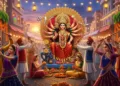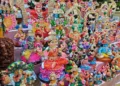

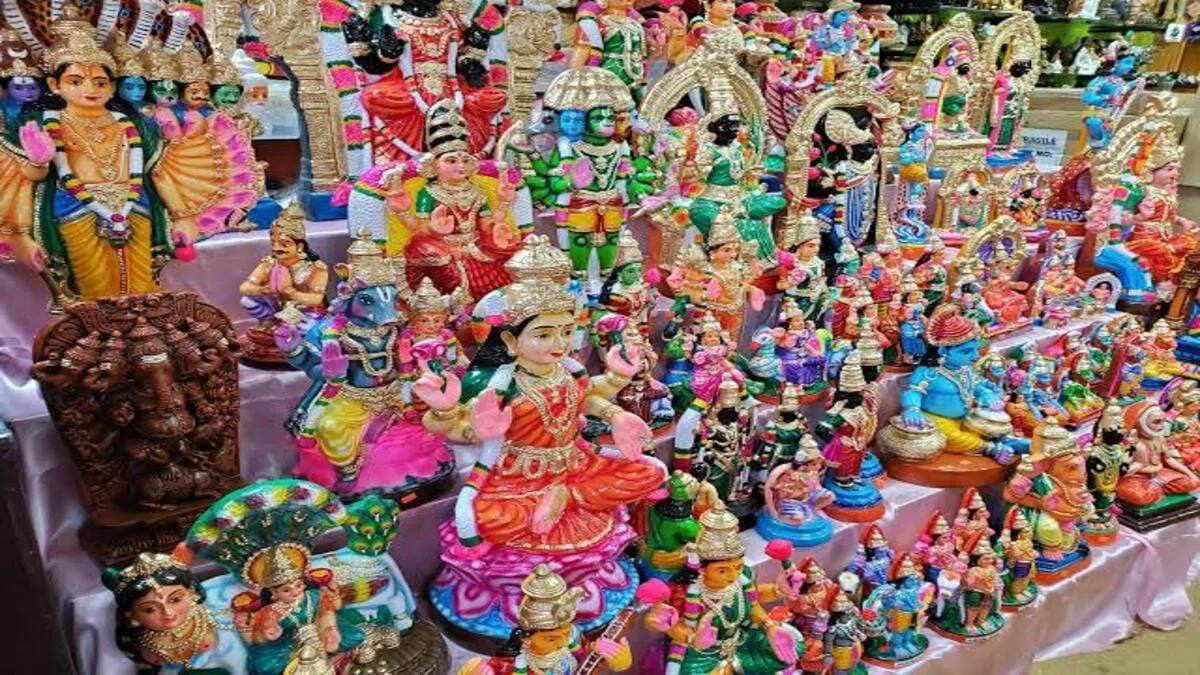
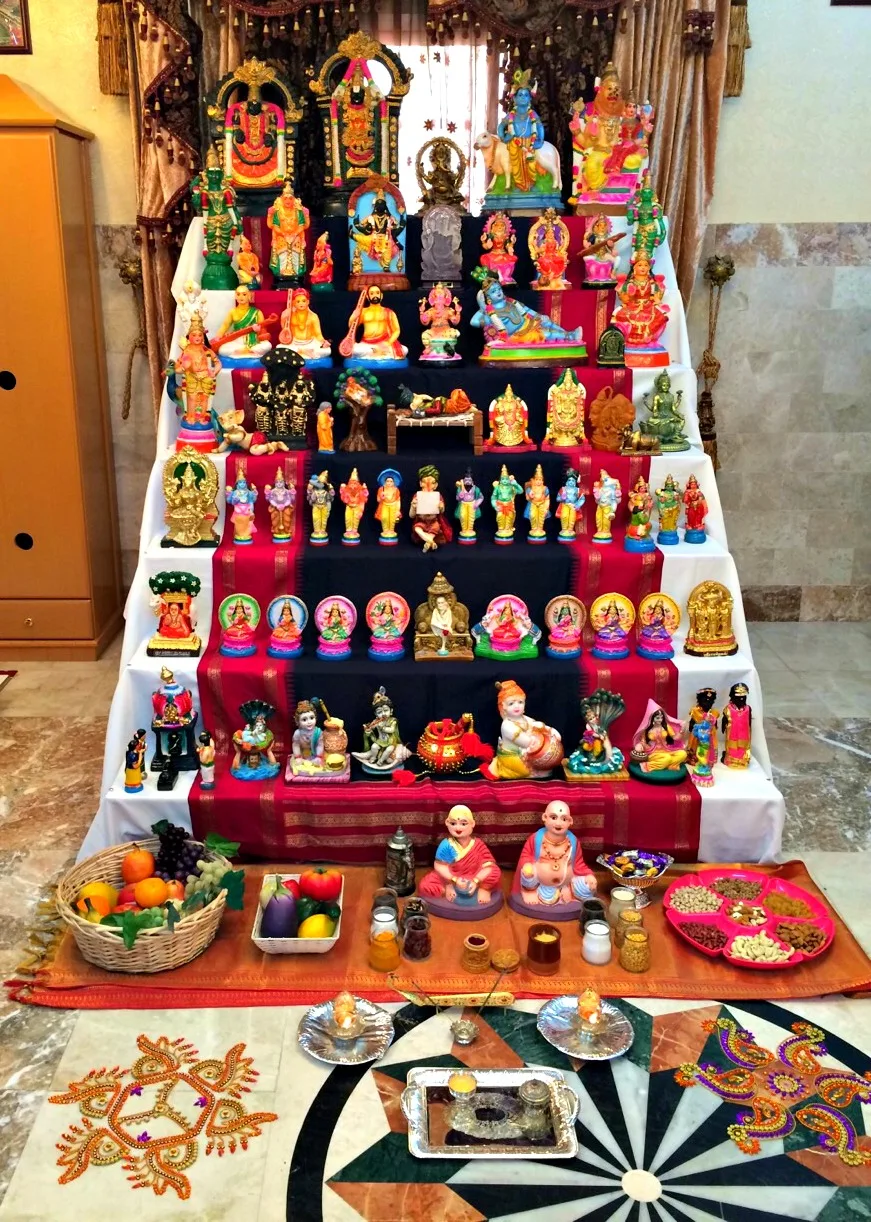
During Navaratri, homes across parts of South Bharat transform into colourful miniature worlds as rows of dolls depicting Bhagwan, kings, musicians, animals, village life and scenes from the Ramayana and other Hindu traditions are carefully arranged on decorated steps. Known as Bommai Kolu or simply Golu in Tamil, and as Bommala Koluvu in Telugu, the tradition turns the home into a space of devotion, storytelling and artistic expression.
The dolls may appear small, but behind every figurine lies a long chain of craftsmanship. Clay has to be shaped, wood carved, figures assembled, surfaces finished and colours carefully applied. In many cases, the skills required to make these dolls have travelled from one generation to another, allowing traditional artisan communities to remain connected to the festivals and stories of Hindu civilisation.
A festival where dolls tell stories
Bommai Kolu is traditionally organised during the nine days of Navaratri. Families arrange dolls and figurines on a series of steps, often called padi. The display can include divine figures, animals, musicians, dancers, wedding scenes, village settings and representations of everyday life. The arrangement therefore becomes more than a collection of dolls. It becomes a visual narrative.
At the centre are often representations associated with the Hindu divine tradition, while the lower levels may contain scenes from society and everyday life. Families create themes according to their traditions, imagination and the dolls they have inherited or collected over the years.
The practice is particularly associated with Tamil Nadu and Andhra Pradesh, while related doll-display traditions are found in Karnataka and among some communities in Keralam.
The very word Bommai means doll in Tamil, while Golu refers to the ceremonial display. In Telugu, the corresponding tradition is known as Bommala Koluvu. The different names reflect regional expressions of a broader Hindu festival tradition.
When the home becomes a miniature world
One of the most fascinating aspects of Kolu is the way households combine devotion with creativity.
A typical display may contain murtis of Bhagwan Ganesha, Maa Durga, Maa Lakshmi, Maa Saraswati, Bhagwan Vishnu, Bhagwan Krishna, Bhagwan Ram and other divine figures. Alongside them may be miniature representations of sages, kings, village communities, musicians, dancers and traditional occupations.
A Ramayana scene may show Bhagwan Ram, Maa Sita, Lakshman and Hanuman. Another section may depict Krishna’s childhood. A different group of dolls could represent a traditional wedding, a marketplace or a village festival. This creates a form of storytelling without a written page.
Children growing up around the display learn the stories associated with the figures almost naturally. Grandparents explain the characters, parents arrange the dolls and younger members of the family often participate in decorating the steps. Thus, the Kolu tradition becomes an informal means of transmitting cultural memory from one generation to another.
The artisans behind the dolls
While families receive much of the attention during Navaratri, the craftsmen who create the dolls remain the largely unseen custodians of this tradition. Across South Bharat, artisans work with different materials and techniques to produce dolls used in Kolu displays. Clay, wood and other traditional materials are shaped into figures before being painted and decorated.
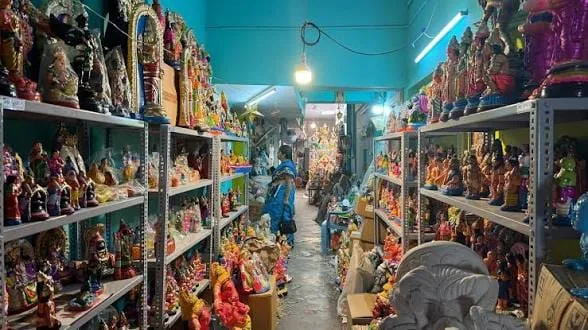
In Tamil Nadu, traditional clay dolls have been produced in several artisan centres. These figures can range from divine and mythological characters to dancers, musicians, vendors and representations of ordinary life. Their purpose is not merely decorative: each figure can become part of a larger narrative constructed on the Kolu steps.
The artisan’s work requires considerable patience. A figure must first be given its basic form. Details are then added, the surface is prepared and colours are applied. Facial expressions, clothing, ornaments and other small details can transform an otherwise simple figure into a recognisable character. For artisans, therefore, the Navaratri season is not simply a period of increased demand. It is also a period when their traditional skills become visible inside thousands of Hindu homes.
Kondapalli Bommalu and the Ramayana connection
Among the most recognisable traditional dolls associated with South Indian festive displays are Kondapalli Bommalu from Andhra Pradesh.
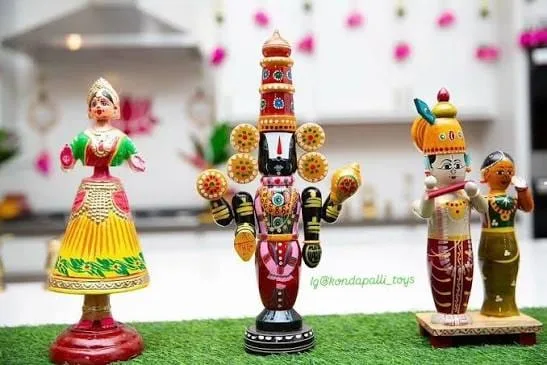
Kondapalli, near Vijayawada, has a centuries-old wooden toy-making tradition. Government handicrafts documentation describes the craft as approximately 400 years old and identifies the primary material as the lightweight Tella Poniki wood. The dolls are carved, assembled and painted, with themes drawn from Hindu mythology as well as village life and occupations. The craft received Geographical Indication recognition in 2006.
The range of subjects is particularly suited to Kolu. Kondapalli craftsmen have traditionally produced figures representing Hindu deities and mythological narratives, including the Dasavatharam and scenes involving Bhagwan Ram, Maa Sita, Lakshman and Hanuman. They also create figures depicting farmers, women engaged in household activities, musicians, animals and other scenes from rural life. This combination of sacred stories and everyday life gives the dolls a distinctive character. A Kolu display can therefore move from the divine world to the human world through a series of handcrafted figures.
The distinctive Thanjavur dolls
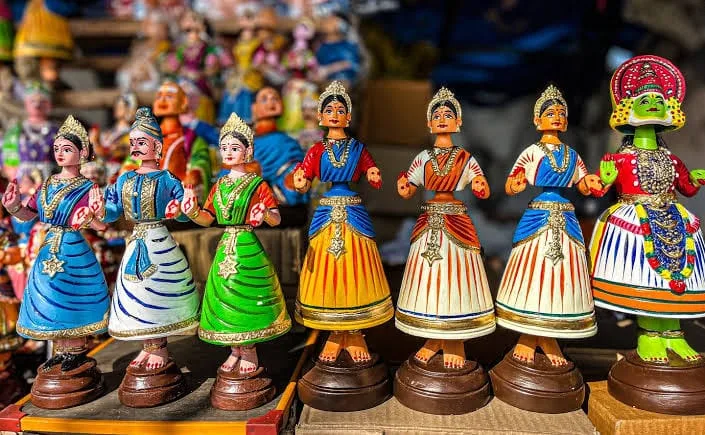
Another much-loved presence in Kolu displays is the Thanjavur Thalaiyatti Bommai, or the famous Thanjavur dancing/bobbing dolls. These dolls are recognised for their distinctive movement. Their bodies are carefully balanced so that the head or upper portion moves gently when touched. India’s official tourism material identifies the Thanjavur bobblehead doll as an old local craft and notes its association with Navaratri displays in Tamil households. Creating such a doll is not simply a matter of painting a figure. The balance of the different sections is important. The base, body and upper portion have to work together so that the characteristic movement is achieved. For generations of families, these dolls have become inseparable from the visual identity of Navaratri Kolu.
Marapachi dolls: A tradition passed from mother to daughter
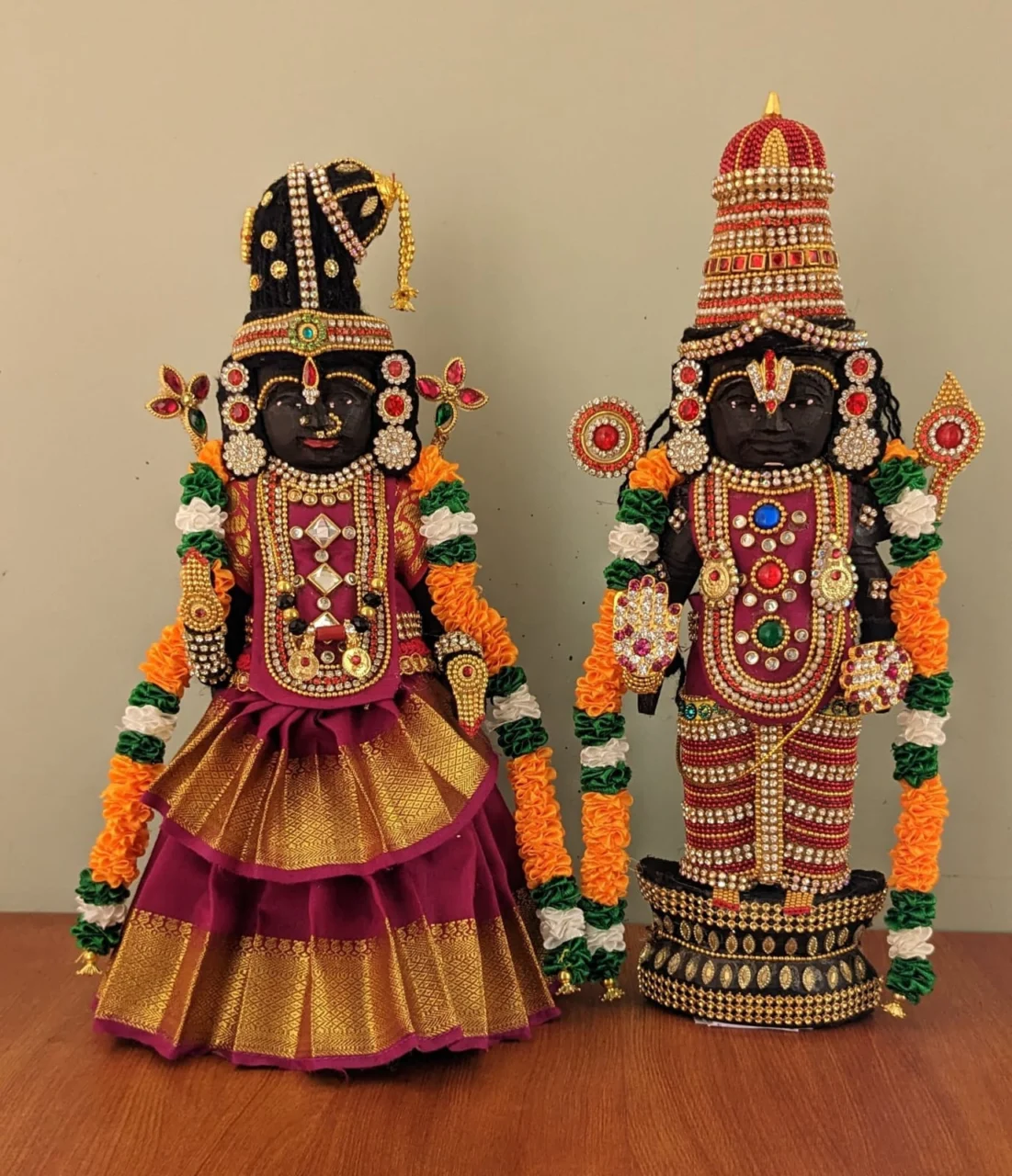
Among the most traditional objects found in many Kolu displays are Marapachi Bommais, wooden dolls traditionally presented as a pair. Their significance goes beyond their appearance. In many families, Marapachi dolls are treated as heirlooms and are passed down through generations. The practice of handing them from mother to daughter gives the dolls a special place in the household’s Navaratri tradition. Such heirlooms illustrate an important aspect of Kolu culture: not every doll is purchased anew each year. Some have memories attached to them.
A doll may have been part of a grandmother’s Kolu, then a mother’s display and later a daughter’s. Small imperfections, faded colours or signs of age can therefore make an old doll more valuable to a family rather than less valuable. The doll becomes a physical link between generations.
More than decoration
The essence of Bommai Kolu lies in the combination of devotion, art and storytelling. The dolls are arranged in a manner that allows families to create a visual representation of their cultural world. The display can include divine figures at the top, followed by sants, kings, occupations, animals and scenes from everyday life.
Women and children have traditionally played an important role in arranging the dolls, decorating the display and welcoming visitors. For children especially, the experience can become an early introduction to Hindu stories, characters and traditions.
The journey of a Kolu doll is therefore much longer than it appears. It begins in an artisan’s workshop.
A piece of wood or clay is transformed through skilled hands into a character. The figure is painted and finished before reaching a shop or household. During Navaratri, it is placed alongside dozens or hundreds of other figures, becoming part of a larger story. At the end of the festival, the dolls are carefully packed away.
Some return to the same shelves the following year. Others are handed down within families. New dolls may be added to old collections, allowing the Kolu display to evolve without losing its connection with the past. In this way, the tradition remains both old and contemporary.
Preserving a craft in an age of mass production
Traditional doll-making faces the same challenge confronting many Indian handicrafts: the availability of inexpensive, mass-produced alternatives.
Machine-made dolls can be produced rapidly and sold at lower prices, while handmade figures require time, skill and careful finishing. Yet the demand for traditional Kolu dolls continues to provide a market for artisan communities. The continued popularity of crafts such as Kondapalli Bommalu demonstrates how traditional handmade objects can retain cultural value even in a modern marketplace. Government handicrafts documentation describes the craft not merely as a commercial product but as an important expression of inherited cultural knowledge. For the artisans, every new generation of buyers can therefore help keep an old craft alive.
As Navaratri arrives each year, the steps are once again assembled, the dolls are brought out of storage and the lamps are lit. Behind that familiar festive scene stands an entire network of artisans whose hands continue to give physical form to India’s stories.