AI-generated Image
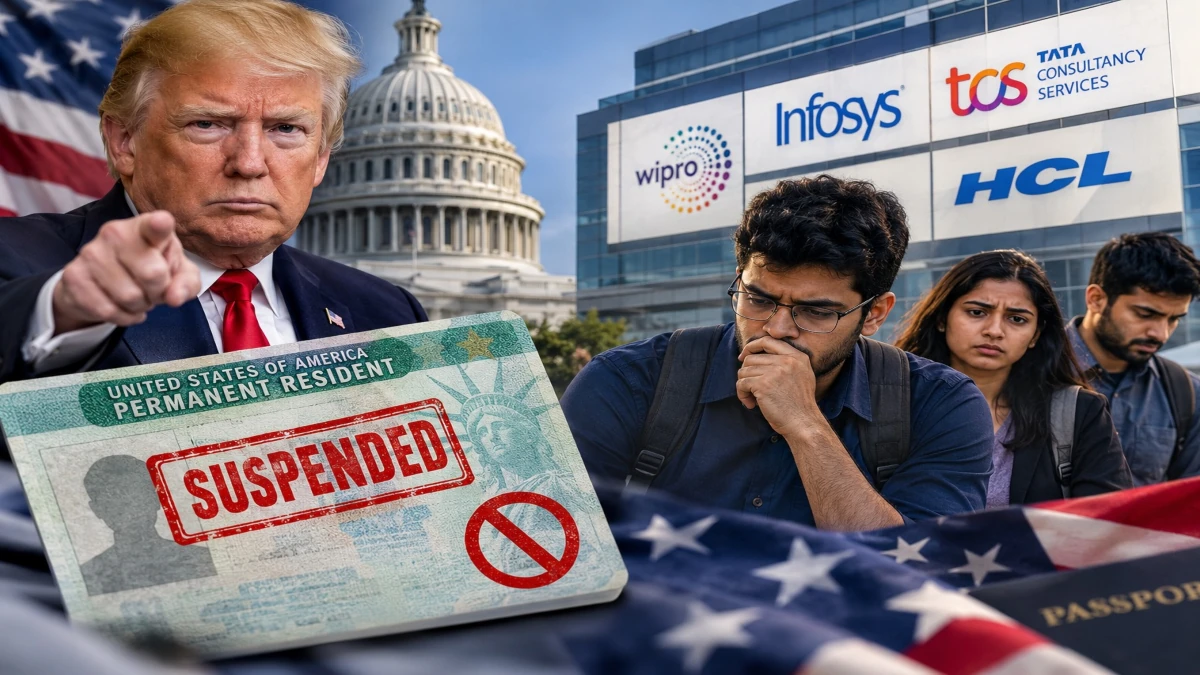
WASHINGTON: The Donald Trump administration has launched a sweeping crackdown on the US employment-based Green Card programme, suspending major Indian IT and outsourcing companies, including Infosys, Tata Consultancy Services (TCS), Wipro and HCL, from processing labour certification applications amid allegations of abuse of the system.
The action, announced by US Labour Secretary Keith Sonderling, also targets Cognizant and Capgemini, while Microsoft and Adobe have been suspended amid active federal investigations. Nine universities, including Harvard, Yale and Stanford, are also facing scrutiny over allegations that they brought in foreign workers or international students in ways that could undercut American wages.
The move puts some of the biggest names in the global technology industry under pressure and threatens to deepen uncertainty for Indian professionals seeking permanent residency in the United States.
At the centre of the action is the Permanent Labour Certification Program (PERM), a key step in several employment-based Green Card categories. Under the programme, employers must demonstrate that qualified, willing and available American workers cannot be found for a particular position and that hiring a foreign worker will not adversely affect the wages and working conditions of similarly employed US workers.
Sonderling made the administration’s position clear, stating that the Labour Department would neither accept new applications nor process pending permanent labour certifications involving the targeted companies while the suspensions remain in effect.
The measure could disrupt the immigration plans of Indian technology workers who depend on employer sponsorship to move from temporary work status to permanent residency. Pending applications could be delayed, while employees preparing to begin the PERM process may have to wait before their employers can submit new applications.
Importantly, the action does not automatically cancel existing H-1B visas or prohibit the affected companies from employing H-1B workers. Its immediate impact is on the PERM labour certification process, not on all forms of employment-based immigration.
Microsoft has emerged as a central target of the administration’s allegations. Sonderling accused the technology giant of abusing the system, describing the action as an effort to stop what he characterised as the displacement of capable American workers.
US Vice President JD Vance also criticised the company, alleging that Microsoft laid off 6,000 American workers last year while receiving approvals for 6,300 H-1B visas and nearly 3,000 Green Cards.
Vance argued that the figures raised questions about whether the H-1B programme was being used for its intended purpose: bringing highly skilled foreign professionals into positions that American workers could not fill.
The administration’s rhetoric signals a tougher approach to employers that rely heavily on foreign talent. However, the allegations and the figures cited by officials do not, by themselves, establish that every visa approval represented a replacement for a laid-off American worker.
For Indian professionals working in the US, the consequences could extend beyond paperwork and processing delays. A prolonged suspension could disrupt long-term residency plans, complicate career decisions and increase uncertainty for employees whose immigration status depends on employer sponsorship.
The impact could be particularly significant for Indian nationals, who account for a substantial share of employment-based immigration. According to the figures cited in the supplied report, approximately 37 per cent of Indians who obtained Green Cards in fiscal year 2023 did so through employment-based preferences, where PERM is an important step for several categories.
For workers already waiting for permanent residency, any prolonged interruption could mean further uncertainty over their future in the US. Affected companies may also face higher legal, compliance and administrative costs as they respond to the suspensions and investigations.
The scale of the action means its effects could reach beyond individual applicants, potentially affecting workforce planning and the way multinational technology companies manage their US operations.
The crackdown extends beyond the corporate sector. Nine universities, including Harvard, Yale and Stanford, are being investigated over allegations that foreign recruitment practices may have undercut American wages.
Labour Department Inspector General Anthony D’Esposito said subpoenas had already been served, indicating that the scrutiny is moving beyond public statements and into formal investigative steps.
The inclusion of major universities alongside prominent technology companies underscores the administration’s wider effort to examine the use of foreign talent across sectors.
The suspension marks another escalation in the Trump administration’s effort to tighten scrutiny of employment-based immigration and challenge what it says are abuses of programmes intended to protect American workers.
For Indian IT companies, the immediate challenge will be navigating the restrictions and determining how they affect employees awaiting labour certification. For Indian professionals, the key concern is whether a temporary suspension becomes a prolonged obstacle to permanent residency.
