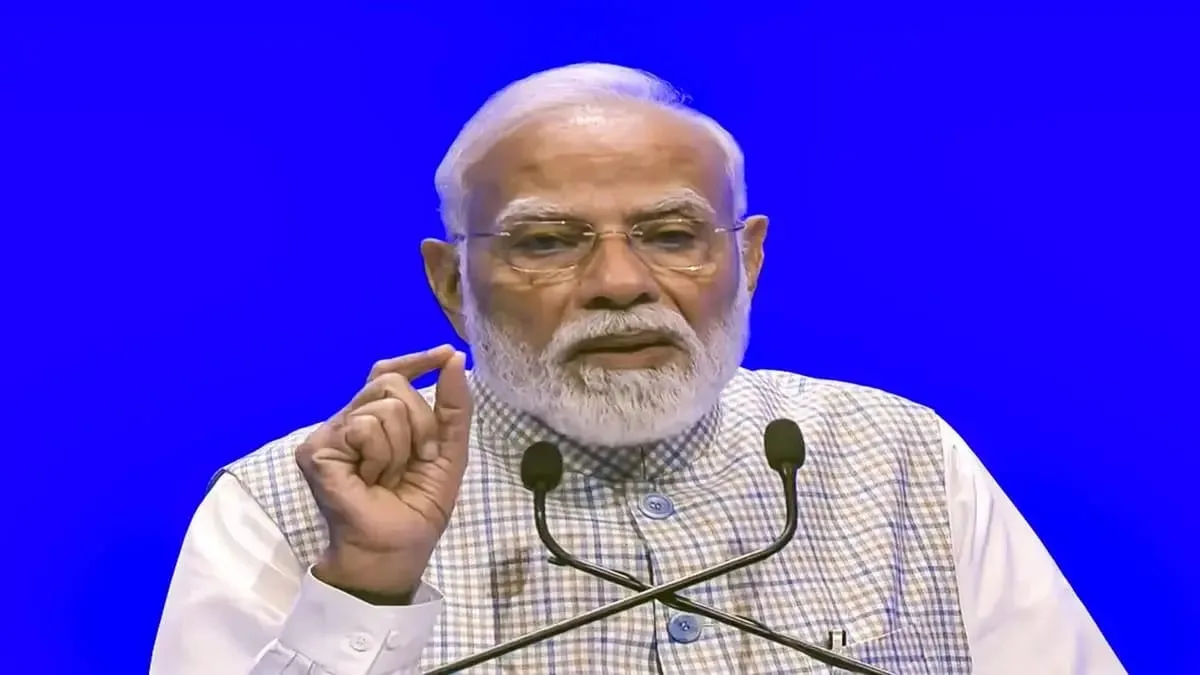
PM Modi highlighted India’s digital transformation, 5G expansion and shift from technology consumer to creator at the IMC 2026
NEW DELHI: Prime Minister Narendra Modi on October 8 highlighted India’s rapid digital transformation, describing the Digital India initiative as a major effort towards the democratisation of technology and asserting that mobile phones and digital connectivity have emerged as important tools for governance, economic growth and innovation.
Addressing the 10th edition of the India Mobile Congress (IMC) at Yashobhoomi in the national capital, PM Modi said the government had worked to bridge the digital divide by expanding telecom infrastructure, improving affordability and placing the mobile phone at the centre of its Digital India vision.
PM Modi said the mobile phone had moved beyond being merely a means of communication and had become an important instrument for delivering government services.
He highlighted the Direct Benefit Transfer (DBT) system, under which he said Rs 50 lakh crore had been transferred directly into beneficiaries’ bank accounts linked to their mobile phones. According to the Prime Minister, the system resulted in savings of about Rs 5 lakh crore by preventing funds from falling into “wrong hands”.
He also cited the PM-KISAN Samman Nidhi, saying more than Rs 4 lakh crore had been transferred directly to farmers. He noted that beneficiaries receive mobile notifications when payments are credited to their accounts.
PM Modi said digital delivery had reduced the need for travel and waiting while lowering costs and improving convenience for citizens.
Highlighting India’s expansion of telecom infrastructure, PM Modi said 5G connectivity had reached every district in the country, with more than 5.5 lakh base stations operating the network. He added that mobile internet speeds had increased tenfold compared to 2022.
He recalled that 5G was launched in India from the India Mobile Congress platform in 2022, while the following year the focus had shifted from 5G rollout to “5G reach-out”.
The Prime Minister said the expansion of towers in remote areas, optical fibre networks and affordable data had significantly expanded India’s digital ecosystem.
Union Minister for Communications Jyotiraditya Scindia, speaking at the event, said the cost of 1 GB of data had fallen from Rs 268 in 2014 to around Rs 8 today. He said the decline in data costs had expanded opportunities for Indians to connect, create and innovate.
PM Modi stressed that India was now moving from being a technology “Consumer to Creator”, with a growing focus on developing products, designs, technologies and intellectual property within the country.
“In recent years, India has embarked on the journey from Consumer to Creator. Now India is moving towards that goal, where the product and its design will also be in India; its technology and IP will also be in India,” he said.
He highlighted reforms in the telecom sector, including the modernisation of decades-old laws through the Telecommunications Act. He also referred to steps to rationalise structural burdens such as adjusted gross revenue and bank guarantees.
The Prime Minister said the Gati Shakti Sanchar portal had helped accelerate Right of Way approvals through digital processes. He further highlighted the development of India’s semiconductor ecosystem, noting that commercial production had begun at five locations. He said the next phase of the India Semiconductor Mission would focus on developing the entire semiconductor supply chain.
PM Modi also highlighted the growing gaming ecosystem, saying more than 500 million people in India were estimated to be connected to gaming in some form.
He pointed to the participation of young people from Tier 2 and Tier 3 cities in gaming, e-sports, gaming content creation and new gaming businesses.
He said the mobile phone had effectively become both a gaming console and a creation studio, contributing to the emergence of new sectors and a growing generation of creators.
Alongside India’s digital expansion, PM Modi stressed the importance of strengthening security frameworks. He identified phone security and network security as key priorities and also raised concerns over the growing challenge of deepfakes.
Calling for a global framework to address deepfakes, the Prime Minister urged governments, technology companies, telecom operators and financial institutions to work together to develop mechanisms capable of preventing fraud before it reaches the public.
PM Modi said the India Mobile Congress had evolved into an important platform reflecting India’s progress and aspirations in the telecom sector.
The 2026 edition is built around four key pillars — Srishti: Building the Future; Samvardhan: Fueling Growth; Sashakt: Expanding Opportunities; and Suraksha: Strengthening Trust. The event focuses on next-generation digital infrastructure, technology-led economic growth, inclusive digital access and secure digital ecosystems.
IMC 2026 covers nine established sectors, including 5G and 6G, next-generation AI networks, semiconductors, non-terrestrial networks, cyber security, quantum communication, enterprise transformation, circular economy and ESG, and electronics manufacturing. Four new domains — smart mobility, stadium experiences, industrial robotics and transport technology — have also been added.
The event is expected to attract more than 1.5 lakh attendees from over 100 countries, along with more than 500 partners and exhibitors, over 600 startups and 900 thought leaders. It will feature more than 2,000 technology use cases and over 120 sessions. Scindia also highlighted the Bharat 6G Alliance, saying it has brought together 90 institutions and has established 7,700 patents, including 4,400 international patents. PM Modi said India’s technological journey would require continued innovation and the crossing of new milestones as the country works towards the goal of a Viksit Bharat.
