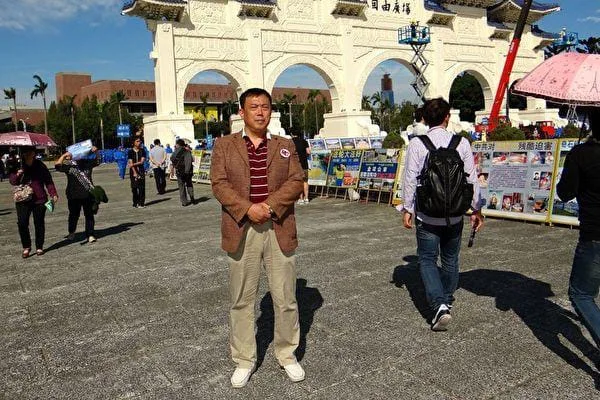
Chinese human rights activist Shi Tingfu dies in prison
Chinese human rights activist Shi Tingfu, 67, died in prison on 22 September, only months before he was due to complete a three-year sentence imposed by Chinese authorities after he assisted farmers seeking redress for grievances involving the Xinjiang Production and Construction Corps (XPCC).
Shi died at about 5 p.m. at Shahe Prison in Wensu County, Xinjiang, according to the Washington-based nonprofit Chinese Human Rights Defenders (CHRD). Prison authorities informed his family that he had suffered a heart attack. His death came roughly four months before his scheduled release in January 2027.
The circumstances surrounding Shi’s death have raised questions within his family. His son, Shi Jing, received a telephone call from the prison on the evening of 22 September informing him that his father had died and that the body had been transferred to a funeral home.
Shi Jing had visited his father shortly before his death and said he appeared to be in good health. According to the family, Shi had not complained of feeling unwell and had no known history of heart disease.
After receiving the news, Shi Jing travelled to the prison to seek information about his father’s final hours and to make arrangements concerning the funeral.
Shi’s imprisonment stemmed from his efforts to assist farmers in the Aksu area of Xinjiang who were seeking redress over grievances involving the XPCC, a regional paramilitary organisation under the Chinese Communist Party (CCP).
According to CHRD, Chinese authorities detained Shi in January 2024 after accusing him of helping the farmers and providing information about their grievances to overseas media organisations.
Chinese authorities also accused Shi of “spreading and promoting terrorism and extremism”. CHRD said the accusation affected his timely access to legal assistance.
Shi was ultimately convicted of “picking quarrels and provoking trouble”, a broadly worded offence that has frequently been used by the Chinese regime against political dissidents, activists and critics of the CCP. He was sentenced to three years in prison and was subsequently transferred to Shahe Prison in Wensu County.
His case was part of a longer history of confrontation with Chinese authorities. CHRD said Shi had previously supported persecuted human rights lawyers and the families of political prisoners. He had also been repeatedly detained and subjected to police brutality, arbitrary detention and torture.
The XPCC, which was involved in the grievances raised by the farmers Shi assisted, has faced international scrutiny. The United States has sanctioned the organisation over serious human rights violations, including forced labour.
Following Shi’s death, CHRD called on Chinese authorities to release his medical records and provide details of the treatment he received while imprisoned. The organisation also called for an independent investigation into the circumstances surrounding his death.
CHRD said it could not establish whether inadequate medical treatment contributed to Shi’s death. However, its request came shortly after the organisation published a report examining allegations of torture and mistreatment involving prisoners of conscience in China.
The report, titled “Swept Under the Rug: Systemic Failures to End Torture in the People’s Republic of China,” examined 209 alleged torture cases recorded between 2016 and 2025. According to CHRD, 35 per cent of those cases involved allegations of inadequate medical care, making it the most frequently reported form of mistreatment in the cases examined.
The organisation said 16 people had died in detention in circumstances that its report linked to inadequate medical care. CHRD did not state that Shi’s death was one of those cases.
The Chinese authorities have not publicly released detailed medical information concerning Shi’s final hours. His family continues to seek information about the circumstances surrounding his death.
Shi was scheduled to be released in January 2027. Instead, the human rights activist died in Chinese state custody less than four months before the end of his sentence, leaving questions over the treatment he received during his imprisonment and the circumstances that preceded his death.
