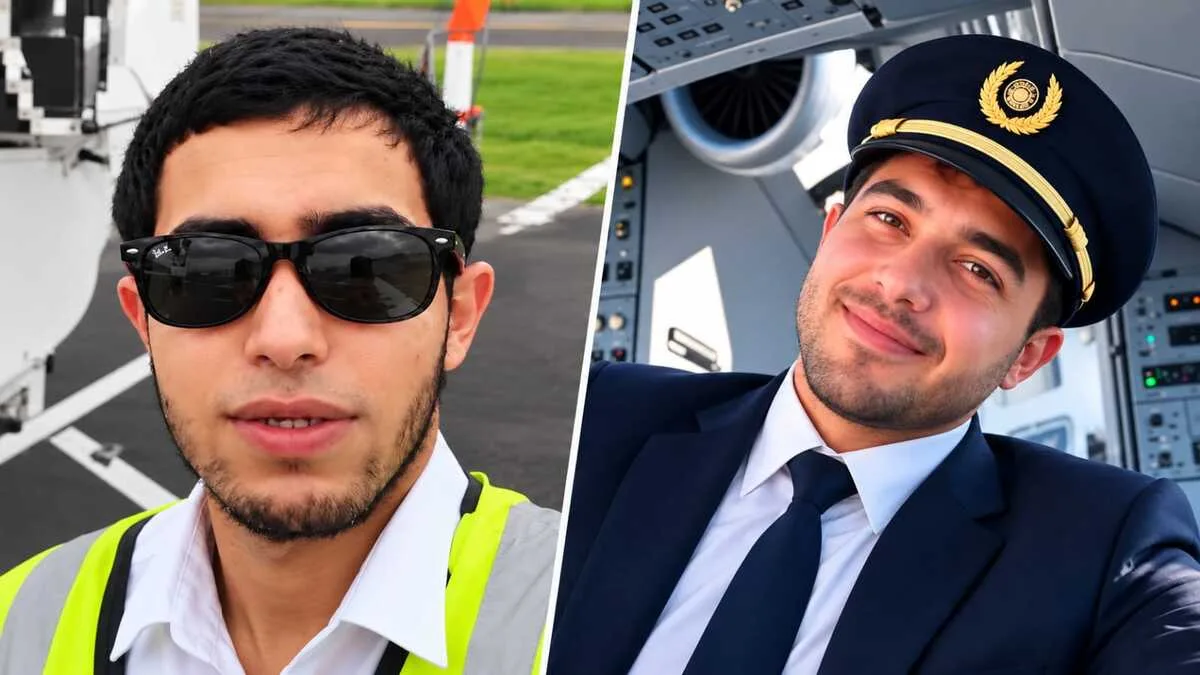
Hamam Al-Hammami’s extremist past and reported security concerns at Oman Air now under scrutiny after Flydubai cockpit attack
JERUSALEM: The name and photograph of the co-pilot accused of trying to sabotage a Flydubai flight to Tel Aviv have emerged, identifying him as Hamam al-Hammami, an Omani national who had previously been removed from flight training at Oman Air amid concerns over Islamic radical views. His recruitment by Flydubai despite that history has raised serious questions about aviation security and the screening of airline personnel.
The incident occurred on September 30 aboard Flydubai flight FZ1073, which was travelling from Dubai to Tel Aviv with 174 people on board. During the flight, al-Hammami attacked and stabbed the Indian captain, Smit Machchhar, before attempting to take control of the aircraft. During the struggle, the Boeing 737 plunged by roughly 14,000 feet in less than 30 seconds, creating a potentially catastrophic situation for everyone aboard.
Despite being injured and bleeding, Captain Machchhar managed to open the cockpit door, allowing passengers and crew members to intervene. Passengers, including off-duty Flydubai pilots travelling on the aircraft, helped overpower and restrain the attacker. Two reserve pilots subsequently took control of the aircraft and diverted it to Tabuk in northwestern Saudi Arabia, where it landed safely.
The incident has been described by Israeli officials as an apparent attempt to crash the aircraft. Israeli Prime Minister Benjamin Netanyahu said the co-pilot had apparently undergone radical Islamist indoctrination and may have intended to destroy the aircraft with its passengers. However, the precise motive and whether anyone else was involved remain subjects of the ongoing investigation.
The background of al-Hammami has become a central focus of the investigation. Reports indicate that he was born in the United Arab Emirates to an Omani father and a Syrian mother and had previous aviation experience. He worked for Oman Air for several years before concerns about his views emerged during his training. He was removed from flight training in 2024 and subsequently moved to another role, according to reports.
The circumstances surrounding his subsequent employment have intensified scrutiny. Reports say al-Hammami later obtained aviation-related employment and eventually joined Flydubai, where he had been working for about eight months before the incident. His previous association with Oman Air and the concerns raised there have prompted questions about whether information about his removal from flight duties was communicated to other airlines and aviation authorities.
His online activity has also come under examination. Reports about social-media accounts linked to him describe posts and videos that contained extremist material. One reported LinkedIn post included cockpit footage and images associated with al-Qaeda figures, while another featured an AI-generated image involving Islam’s holy sites. The accounts have since been deleted. These materials are now being examined as investigators seek to establish his motives and whether the attack was planned in advance. There have also been allegations that his online activity contained references interpreted as hostility towards Jews and indications of a possible 9/11-style attack.
The incident has raised broader questions about the effectiveness of airline recruitment and security procedures. Flydubai pilots undergo security screening and regular medical assessments, while additional psychological evaluation is reportedly associated with progression to captaincy. It remains unclear what specific psychological or security assessments al-Hammami underwent before being assigned to the Dubai-Tel Aviv route.
The UAE has launched an investigation into whether the incident was connected to terrorist activity, while Israeli and Saudi authorities are also examining the attack. Israeli security agencies are investigating whether al-Hammami acted alone or whether a wider conspiracy existed. Reports indicate that Israeli officials were expected to question him following his transfer to the UAE.
Flydubai has faced questions over how a pilot previously flagged as a security concern could obtain employment and gain access to the cockpit of a sensitive international route. The airline has not publicly confirmed all findings concerning al-Hammami’s past. The investigation will therefore focus not only on the attempted attack itself but also on whether information about his previous history was properly shared and assessed before he was allowed to fly commercially.
The Dubai-Tel Aviv service was subsequently suspended following the incident, adding another layer to the security concerns surrounding the route.
