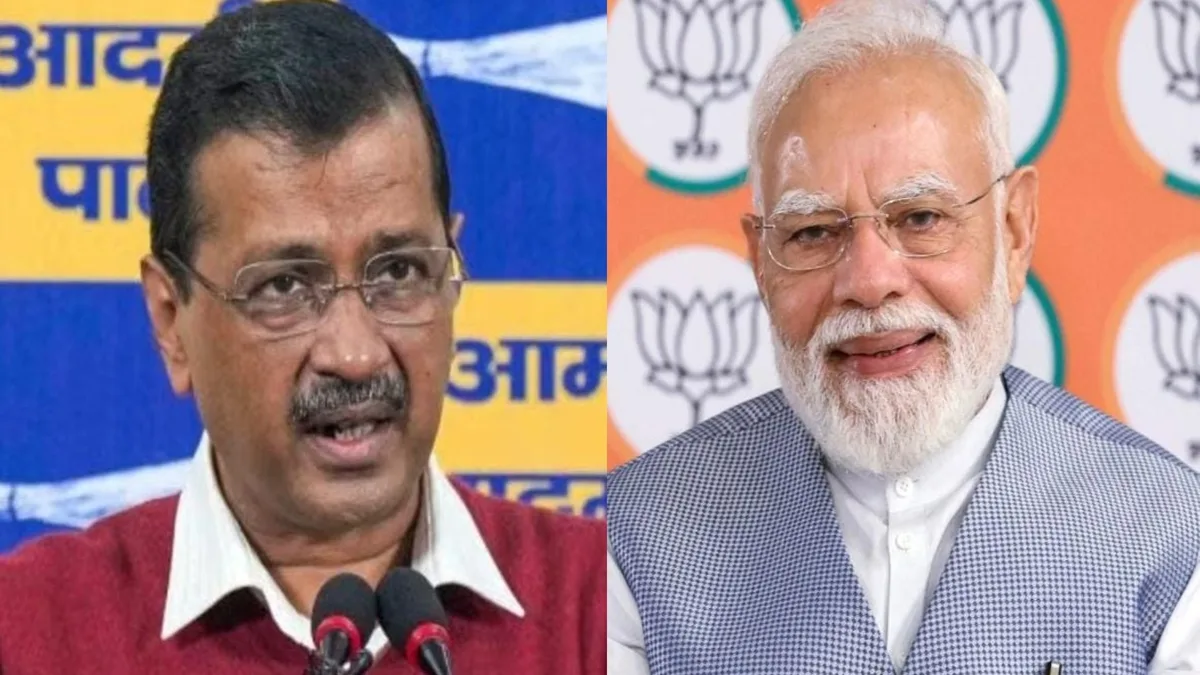
Gujarat High Court upheld privacy protections for PM Narendra Modi’s educational records while dismissing Arvind Kejriwal’s appeal
The Right to Information Act was enacted to make public authorities accountable. But the right to know, the Gujarat High Court has now reiterated, does not erase the statutory protection accorded to personal information merely because the individual concerned occupies public office.
A Division Bench of Chief Justice Sunita Agarwal and Justice D N Ray on September 29 dismissed Arvind Kejriwal’s appeal arising out of the long-running controversy over disclosure of Prime Minister Narendra Modi’s educational qualifications. The Court also left undisturbed the Rs 25,000 costs imposed on Kejriwal by a Single Judge in 2023.
The case had an unusual beginning. The proceedings before the Central Information Commission did not originate from a conventional RTI application addressed to Gujarat University seeking the Prime Minister’s degree. During another proceeding concerning information relating to Kejriwal’s Electoral Photo Identity Card, correspondence concerning the Prime Minister’s educational qualifications came before the CIC. The Commission proceeded to direct Delhi University and Gujarat University to search for and disclose information relating to the degrees.
That procedure itself became one of the central issues before the High Court. The Division Bench held that Section 6(1) of the RTI Act requires a person seeking information to make the prescribed request before the appropriate Public Information Officer. The CIC could not convert correspondence or submissions arising in an unrelated proceeding into an RTI application and then issue disclosure directions on its own. The Court held that such an exercise fell outside the Commission’s statutory authority.
The judgment is equally significant for what it says about privacy. Relying upon earlier Supreme Court decisions, including CBSE v. Aditya Bandopadhyay, ICAI v. Shaunak H Satya and the Constitution Bench judgment in CPIO, Supreme Court of India v. Subhash Chandra Agarwal, the High Court treated educational and professional records as personal information. It also referred to K.S. Puttaswamy v. Union of India, which recognised privacy as an aspect of liberty and dignity. Such information is not incapable of disclosure. The RTI framework itself recognises circumstances in which a larger public interest may justify access to otherwise protected material.
But that public interest must be demonstrated. The Court held that the Prime Minister’s public position, public curiosity concerning his educational qualifications and the assertion that some information was already available in the public domain did not, by themselves, satisfy that statutory threshold. The CIC, it found, had not recorded reasons demonstrating a larger public interest warranting disclosure of the university records.
That distinction is important.
Transparency legislation is strongest when it compels disclosure concerning governmental decision-making, expenditure of public money, exercise of statutory power and matters genuinely affecting public administration. It does not follow that every piece of personal information relating to every public figure automatically becomes public property.
The High Court’s ruling therefore does not create an exemption peculiar to the Prime Minister. Its reasoning rests on the structure of the RTI Act itself: follow the statutory procedure, identify information to which the Act applies and, where protected personal information is sought, establish the larger public interest required by law.
The appeal was consequently dismissed, leaving both the quashing of the CIC’s disclosure direction and the earlier Rs 25,000 costs intact.
The larger message from the judgment is a useful one for India’s transparency regime. The RTI Act is an instrument of accountability, but accountability operates through law. The right to information and the right to privacy are not competing slogans. Parliament has placed both within a statutory framework, and public curiosity alone cannot substitute the test the law requires.
