
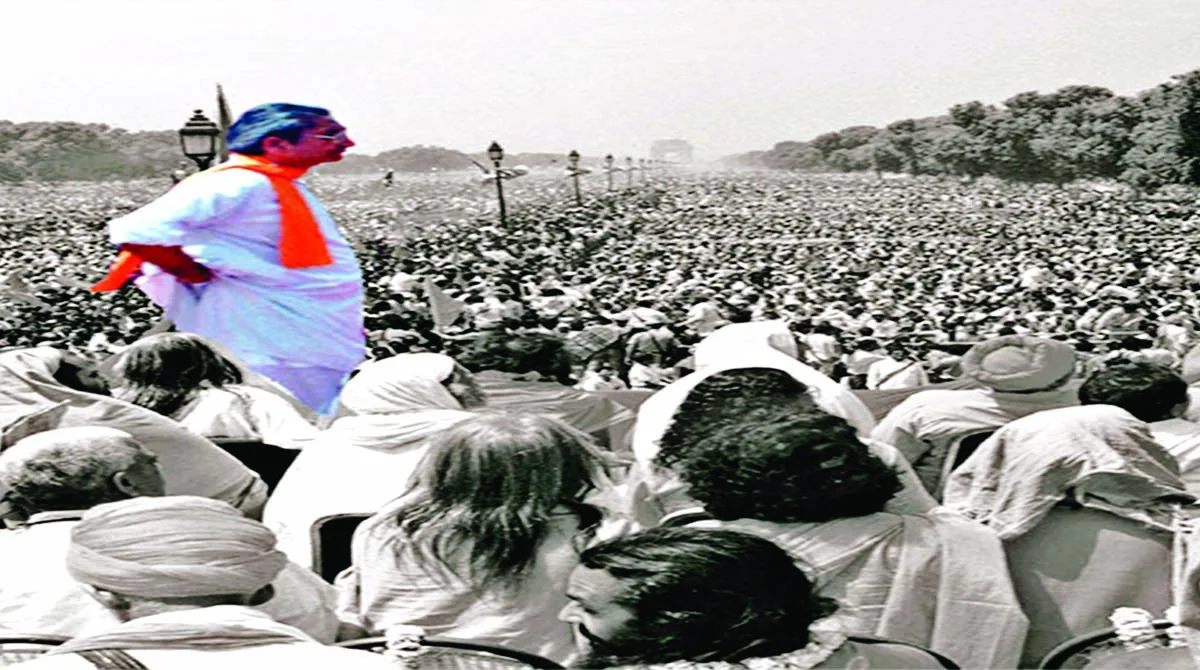
Some people live for a few decades but are remembered for centuries. Ashok Ji was one such personality. He left this temporary world a decade ago, on November 17, 2015, but his presence will be felt for generations through the newly rebuilt Ram Mandir of Bhagwan Sri Ram in Ayodhya. The struggle of Hindus for the Mandir in Ayodhya had continued for centuries. Mir Baqi, a commander of Babur, destroyed the Janmasthan in 1528 and later built a disputed structure on the site. Ashok Ji was among those devoted Hindus who continued the struggle for the Janmasthan of Maryada Purushottam Bhagwan Sri Ram.
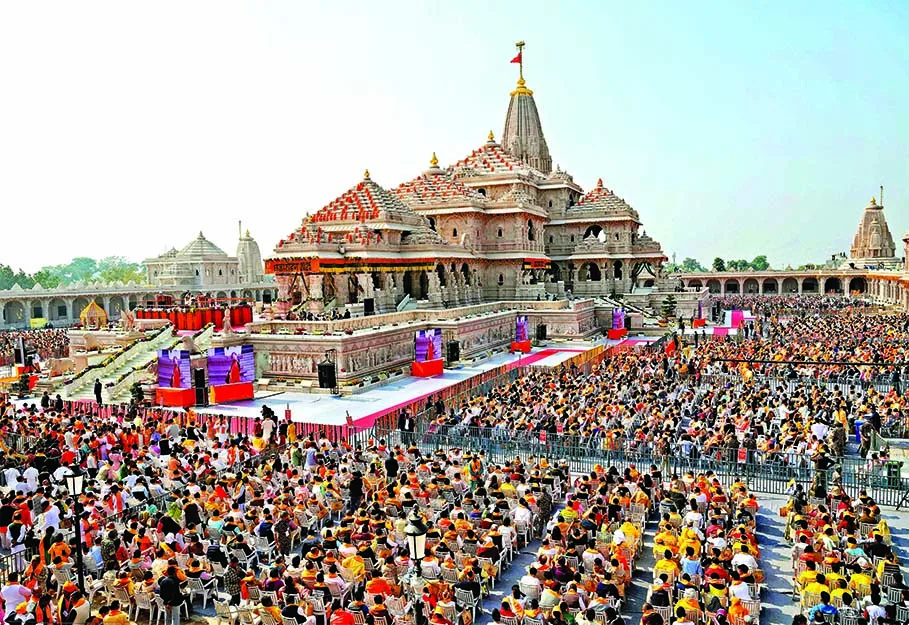
The struggle of Ashok Ji and numerous Hindus, many of whom sacrificed their lives for Prabhu Ram, eventually bore fruit when the Supreme Court, in its 2019 verdict, paved the way for the construction of the Mandir in Ayodhya. Here, it is important to remember that Ashok Ji carried forward a tradition that Hindus had followed through the ages. From the Surya Mandir in Multan to the Somnath Mandir in Gujarat, from Shri Kashi Vishwanath Mandir in Varanasi to the Meenakshi Mandir in Tamil Nadu, Hindus continued to protect their sacred places, preserve their traditions and rebuild Mandirs associated with their deities despite repeated destruction and invasions. The history of Multan, Somnath, Madurai and Kashi contains several examples of this continuity.
Multan: Keeping Tradition Alive
The Western part of Bharat was famous for its Surya Mandir (Sun Mandir). Multan, now in Pakistan after Partition, was known for its Surya Mandir. Several historical accounts of scholars and travellers have documented the Mandir. The Chinese traveller Xuanzang is said to have visited Multan in 641 CE and described its importance as a centre of pilgrimage. Accounts of the Mandir describe a prominent shrine that attracted pilgrims and offerings from across Bharat. He described the Mandir to have a gem-studded golden idol; attracting pilgrims from far and wide. He also recorded that kings and wealthy families from across Bharat regularly sent rich offerings of gems and precious stones to honour the deity.
Al-Biruni, the Muslim scholar who travelled through the region in the 11th century, recorded the continued presence of Hindu practices in the area. He found that Sanatan survived despite Islamic invasion in the region
However, the Mandir was attacked and looted by Muhammad bin Qasim in 712 CE. Al-Biruni, the Muslim scholar who travelled through the region in the 11th century, recorded the continued presence of Hindu practices in the area. He found that Sanatan survived despite Islamic invasion in the region.
Despite the destruction of the Mandir, Hindus continued to worship a wooden image of Bhagwan Surya. Historian Meenakshi Jain, in her book Flight of Deities and Rebirth of Temples: Episodes from Indian History, writes, “Even bereft of political power, Hindus succeeded in re-establishing the temple and image. Al-Idrisi of Morocco, writing around 1130 CE, observed that the Sun god was being worshipped with as much enthusiasm as before.”
The story did not end with the destruction of the Mandir. Surya Mandir was devastated again under Aurangzeb, and a Jami Masjid was constructed on the site. The Surya Mandir was rebuilt again in the early nineteenth century, when the region came under Sikh control.
This courage of Hindus to safeguard their Mandirs in Multan was also reflected in Gujarat when Somnath Mandir was attacked in 1026.
Somnath: A Story of Resilience
Exactly 1,000 years ago, in 1026, Mahmud of Ghazni carried out the first major attack on Somnath Mandir. Since then, Somnath has witnessed about 17 attacks, destruction and reconstruction. This history reflects the continued resilient efforts of Hindus to restore the sacred site.
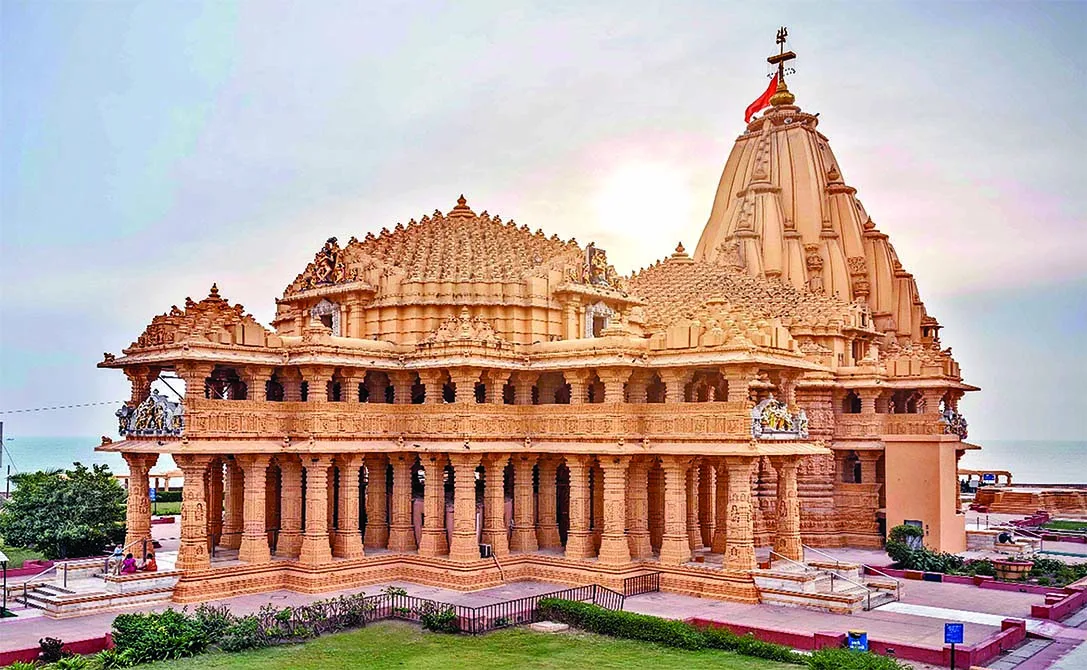
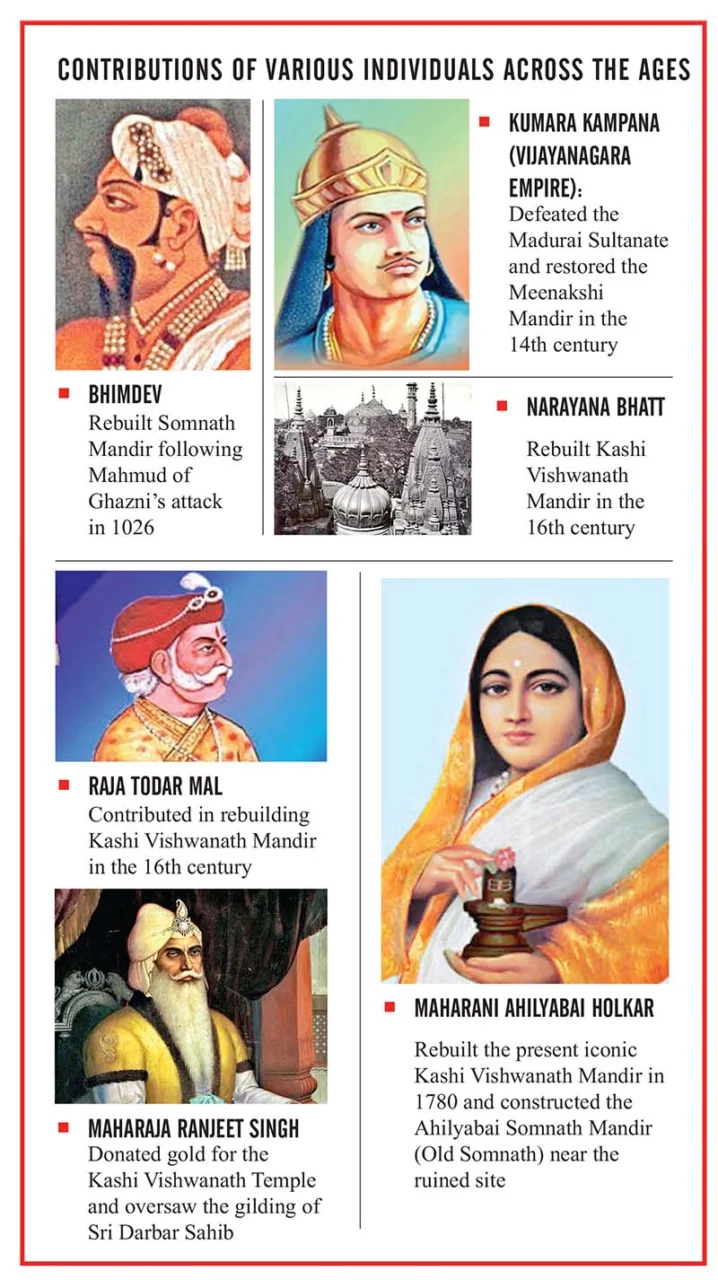
After the attack by Mahmud of Ghazni, King Bhima I (Bhimdev) of the Solanki dynasty of Gujarat restored and rebuilt Somnath Mandir. It is also said that King Bhoja of Malwa from the Paramara dynasty also contributed to it. However, Alauddin Khalji continued the attacks on Somnath in 1308 AD, and Aurangzeb in the 17th century. In the 18th century, Rajmata Ahilyabai Holkar of the Malwa kingdom, known for her judicious leadership, good governance, and selfless service, constructed a new Somnath Madir adjacent to the ruined site in 1782.
After Independence in 1947, Deputy Prime Minister Sardar Vallabhbhai Patel pledged to revive the grand Somnath Mandir. The reconstruction was undertaken with public participation and under the guidance of K M Munshi and the Somnath Trust. The present Mandir was completed in 1951 and consecrated by Bharat’s first President, Dr Rajendra Prasad, on May 11, 1951.
Epigraphic records and inscriptions mention the construction of Somnath Mahadev in all four yugas. Accordingly, in the Satya Yuga, Chandra (Soma) built it of gold; in the Treta Yuga, Ravana built it of silver; in the Dvapara Yuga, Sri Krishna built it of wood; and in the Kali Yuga, King Bhimdev Solanki constructed a stone Mandir.
The history of Somnath, therefore, contains a long record of destruction, reconstruction and continued worship. The attacks on Hindu Mandirs were not limited to the Western or Northern parts of Bharat. Several Mandirs in southern part of Bharat also faced destruction during medieval invasions.
Madurai: Restoring Sacred Worship
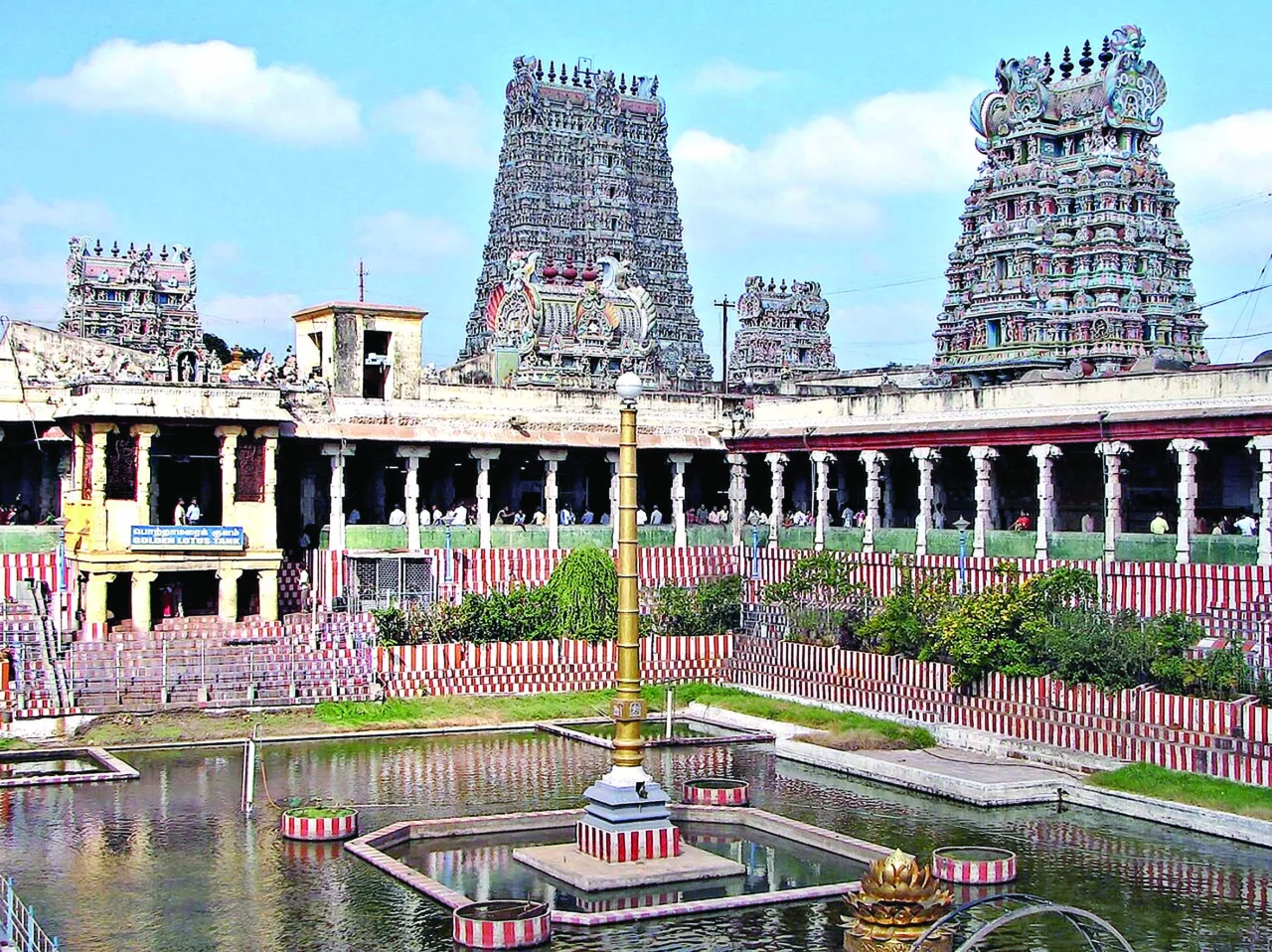
“In the month of Ani of S. 1245 (1323 AD), the Padshah vasal mantri Adi Sultan and Malukka Nemiyar came from Delhi with 60,000 horses, destroyed Siva and Visnu temples and tanks, plundered temple treasuries (sribhandaram), mutilated images and reached Trichinopoly. There also the sthanikas were removed and Mandirs were destroyed,” writes Meenakshi Jain in her book while describing the attack on Meenakshi Mandir. Later, Kumara Kampana, prince of the Vijayanagara Empire and son of King Bukka I, led a military campaign against the Madurai Sultanate between 1363 and 1378. After successfully defeating the Madurai Sultanate, the Mandir was rebuilt.
According to Pandyan Chronicle, “After vanquishing the Muslims, Kampana restored worship in the Madurai temple. Traditional accounts maintained that when the blocked doorway was opened and the earth that covered the deity removed, Kampana was astounded to discover that the lamps were still burning, and the flowers of the deity were as fresh as at the time of the daily morning puja (Devakunjari 1979: 167-168)”
Like other such accounts, the story of Madurai also shows that Mandir revival was not only about rebuilding structures but also about restoring the sacred worship of the deity. This continuity of worship continued for centuries in Kashi as well.
Kashi: Destruction and Revival
As described by English scholar James Prinsep, the ancient city of Kashi was first invaded by Mohammad Ghori in the 12th century. Mohammad Ghori sent his general Qutubuddin to destroy the city, and in this invasion more than 1000 Hindu Mandirs were demolished and vandalised. In the 13th century, the Kashi Vishwanath Mandir was rebuilt. But again it was razed down by Hussainshah Sharqi (1447-58 CE) and Sikandar Lodi (1489-1517 CE).
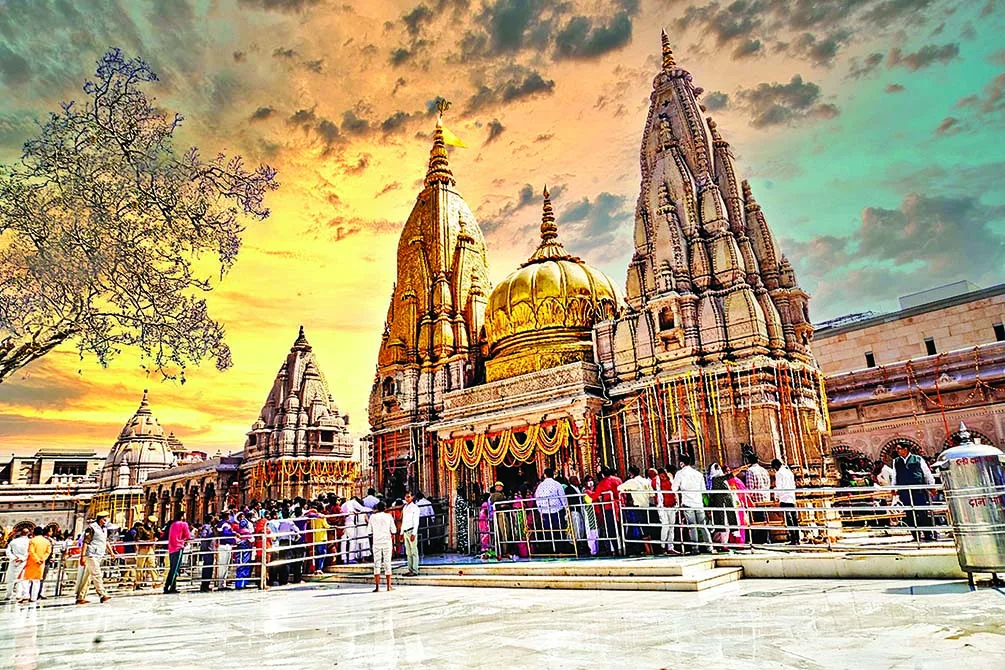
As happened with other Mandirs and the collective strength of Hindus, the Mandir was rebuilt in the 16th century by Narayana Bhatt or Raja Todar Mal. Attacks on Shri Kashi Vishwanath continued, this time by Aurangzeb. As recorded in Maasir-I-Alamgiri, in 1669, he razed the Mandir and built the Gyan Vapi Masjid. Hindus continued to worship Bhagwan Vishwanath, and the present Kashi Vishwanath Mandir was constructed by Maharani Ahilyabai Holkar of Indore in 1780.
Later, Maharaja Ranjit Singh of Punjab donated approximately one ton of gold for the Mandir. The Kashi Vishwanath Mandir’s official portal records that the Mandir’s iconic domes were covered with gold donated by Maharaja Ranjit Singh in 1839.
Sri Darbar Sahib in Amritsar was also attacked on several occasions, particularly during the 18th century. Like other sacred sites, it was rebuilt after repeated destruction.
Sri Darbar Sahib: Repeated Destruction
Sri Darbar Sahib, also known as the Golden Temple, in Amritsar is the holiest shrine of the Sikh community. The sacred premises was targeted multiple times during the 18th century, including by Afghan invaders such as Ahmad Shah Abdali.
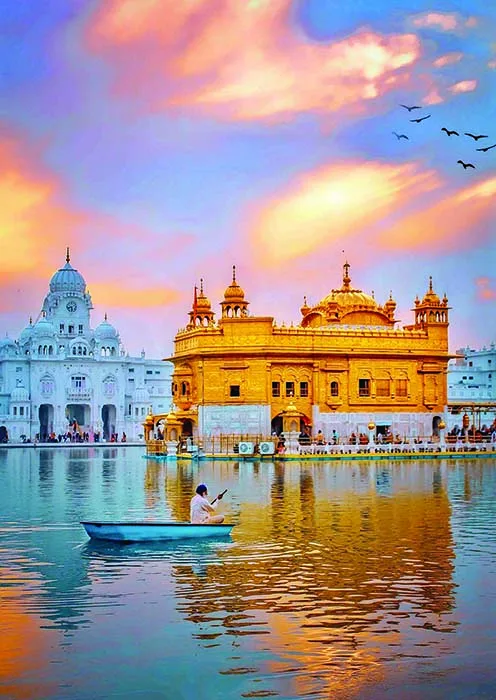
The shrine suffered extensive destruction during these attacks. The Sikh community repeatedly rebuilt and restored Sri Darbar Sahib. Maharaja Ranjit Singh oversaw the gilding of the shrine in the early 19th century, giving rise to the name by which it became widely known as the Golden Temple.
Mandirs in Sanatan Society
In Hindu society, Mandirs have not merely been places of worship or abodes of the deity; they have also played a crucial role in guiding society and shaping its way of life. From providing education and knowledge to offering medical and welfare services, Mandirs have remained important binding forces in society. No wonder that many Mandirs, which served as centres of knowledge, sanskriti and community life, became important institutions and were repeatedly targeted by foreign invaders.
Having said that, these are only a few examples. There are hundreds of Mandirs, from Sri Krishna Janmabhoomi in Mathura, Uttar Pradesh, to Jagannath Puri in Odisha, around which generations of Hindus have sacrificed their lives and preserved traditions and worship. The tradition of reviving Sanatan sanskriti and rebuilding Devalayas is what makes Bharatiya civilisation eternal. Ashok Ji will be remembered as one among those who dedicated his life to the cause of Prabhu Sri Ram.