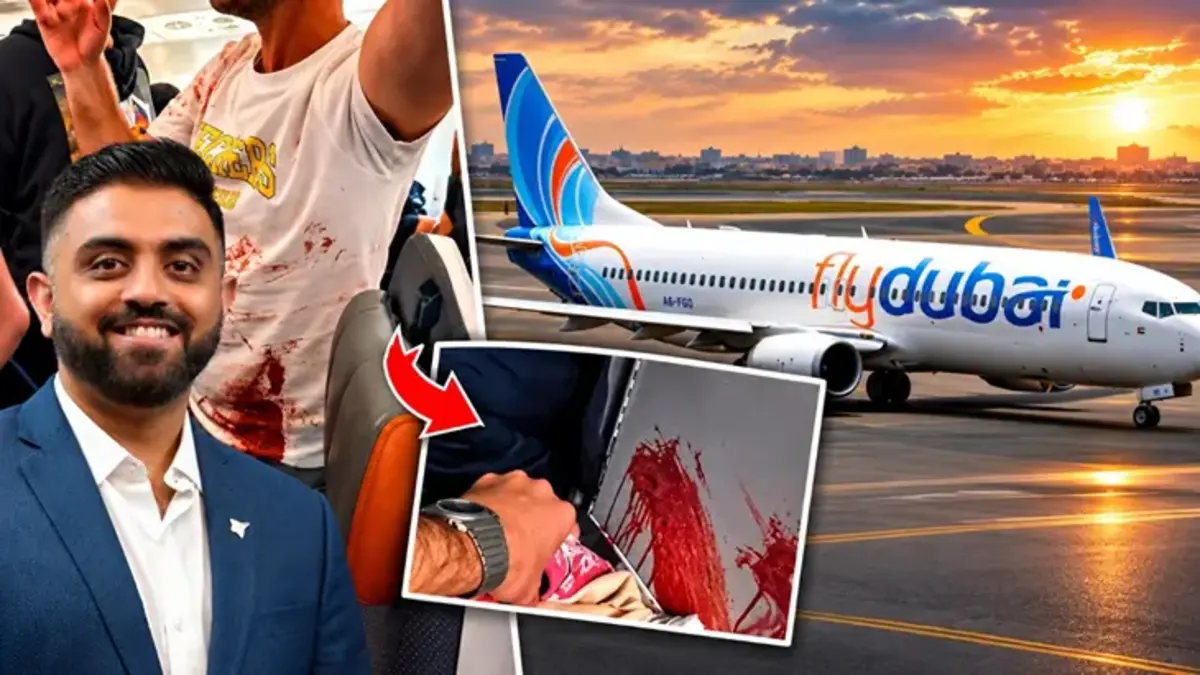
TEL AVIV/DUBAI: As the hijack scare surrounding the Dubai-Tel Aviv Flydubai flight rings the memory of 9/11 tragedy, fellow pilots and passengers recount the behaviour & extremist actions of the Omani pilot who suddenly stabbed the Indian co-pilot and escalated the crisis that pushed hundreds of lives into danger.
The Omani pilot severely assaulted the Indian captain and attempted to interfere with the controls of a flydubai flight to Tel Aviv, thus speculations spike about his true intentions and hidden agenda behind such a notorious action.
Meanwhile, surfacing reports account that the Omani pilot displayed unusually strict and extremist religious behaviour, followed stringent Islamic practices during work hours & prayed excessively throughout the day and even refused to shake hands with women.
The account has emerged as Israeli authorities investigate whether the mid-air crisis aboard Flight FZ1073 amounted to an attempted terrorist attack. The Omani pilot attacker remains in Saudi custody, while investigators are also examining how a bladed weapon entered the cockpit.
https://twitter.com/Trending_Sid/status/2105350096506523904
Omani Islamist pilot prayed excessively & refused to shake hands with women
The most striking new detail surrounding the flydubai Flight FZ1073 crisis concerns the attacker’s conduct before the incident. According to a fellow pilot, the Omani national had joined flydubai around eight months earlier and displayed what the colleague considered unusually strict religious behaviour.
The pilot said that the man “prayed excessively throughout the day and refused to shake hands with women”. Many described the attacker as a “religious extremist”. This Islamic extremist angle adds further concern to the incident amid escalating West Asia conflict between Iran and Israel. Was the Islamist Omani pilot, aiming to harm Israeli passengers?
Omani co-pilot attacked Indian captain
The religious and extremist behaviour have emerged after an extraordinary confrontation inside the cockpit of flydubai Flight FZ1073. The co-pilot, who is of Omani nationality, stabbed Captain Smit Machchhar, an Indian national, before attempting to interfere with the aircraft’s controls. The incident triggered a dramatic descent that terrified passengers.
Accounts cited in the material indicate that the aircraft lost more than 14,000 feet in less than a minute, while other passenger accounts described a descent of approximately 17,000 feet over two minutes. Passengers heard screams such as “Help! Help!” coming from the cockpit. Some passengers also initially believed that the aircraft was crashing.
Passengers aid Captain Smit Machchhar to re-establish the control of the flight
The crisis changed when passengers and crew members moved towards the cockpit. Captain Machchhar, despite being seriously injured, managed to resist the attacker and opened access to the cockpit. Passengers then entered and helped to subdue the co-pilot.
Two additional pilots travelling on the aircraft also assisted in regaining control of the plane. The intervention proved crucial as the aircraft was eventually stabilised and diverted to Tabuk in northwestern Saudi Arabia, for emergency landing. The injured pilots were taken for medical treatment after landing, while the attacker was detained by Saudi authorities.
Was the extremist Omani pilot trying to crash the plane?
One of the central questions now facing investigators is whether the attacker intended to hijack the aircraft, seize control of it and deliberately crash the flight Israeli Prime Minister Benjamin Netanyahu said the co-pilot apparently tried to crash the aircraft with its occupants. Israeli authorities are investigating the possibility that the incident constituted an attempted terrorist attack.
Israel is also investigating whether there was a Iranian conspiracy behind the attempted flight crash by the Omani pilot, who is said to be a religious extremist. This unravels new dimensions of investigation and fuels complexity and greater uncertainity, to the escalating West Asia conflict.
How did the Omani co-pilot get a knife into the cockpit?
The religious-extremist co-pilot had obtained the bladed weapon, which was used to attack the Indian pilot. Aviation security procedures generally prohibit from carrying knives and other sharp objects into the cabin.
Investigators will now have to establish whether the weapon was brought onto the aircraft by the co-pilot, whether it passed through crew security screening, whether it was concealed in his belongings or whether it was already present somewhere inside the aircraft. The incident has significant implications for aviation security, as harmful weapons is not allowed in the aircraft.