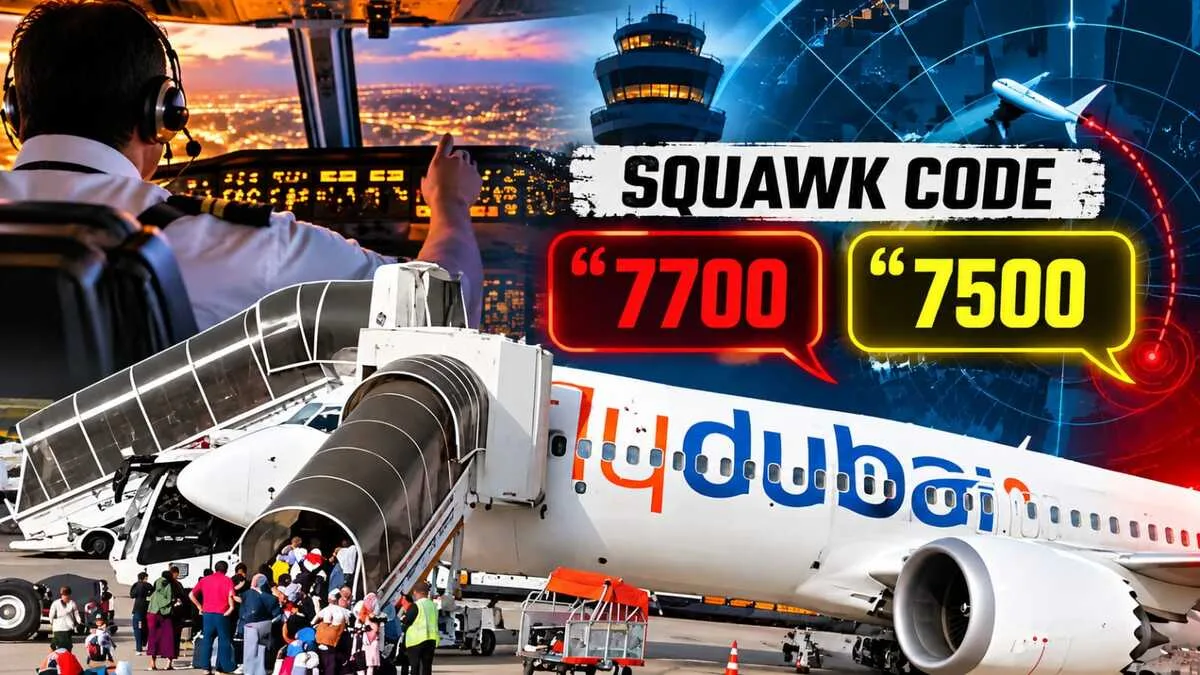
A string of four numbers transmitted from an aircraft can instantly change the response of air-traffic controllers and security authorities. That was demonstrated on September 30, when Flydubai flight FZ1073, travelling from Dubai to Tel Aviv, transmitted 7700 and later 7500 during a violent cockpit incident that forced the aircraft to divert to Saudi Arabia.
A squawk code is a four-digit code entered into an aircraft’s transponder. The transponder sends the code to air-traffic-control radar systems, helping controllers identify and track the aircraft. Most squawk codes are assigned by controllers for routine identification, but certain codes have internationally recognised emergency meanings.
The two codes transmitted by FZ1073 were particularly significant. 7700 means a general emergency. It does not identify one particular type of problem. A pilot can use it when an aircraft faces a serious emergency requiring immediate attention from air traffic control.
🔥🚨 BREAKING — Hero Pilot IDENTIFIED as Indian National Smit Machchhar. After being STABBED, he OPENED the cockpit door so passengers could assist.
After the Omani MUSLIM co-pilot put a knife in him, he was on the floor, bleeding, and he still clicked the cockpit open so the… pic.twitter.com/6gyouXADEd
— The Patriot Oasis™ (@ThePatriotOasis) September 30, 2026
7500 is the code associated with unlawful interference or hijacking. Under aviation procedures, it alerts controllers that an aircraft may be subject to hijacking or another form of unlawful interference. The FAA says that when an aircraft squawks 7500, controllers are required to verify the code and, if confirmed or not denied, treat the situation as a hijacking emergency.
How the two codes transformed the Flydubai incident
Flight-tracking data showed that FZ1073 experienced a dramatic descent over Saudi Arabia after departing Dubai. Media reporting based on Flightradar24 data said the aircraft dropped more than 17,000 feet in less than two minutes before transmitting 7700 and subsequently switching to 7500. The aircraft later diverted and landed at Tabuk Airport in north-western Saudi Arabia.
The emergency signals triggered a major security response in Israel, including the scrambling of fighter aircraft amid fears that the aircraft could have been hijacked. The 7500 transmission was particularly important because it communicated a possible unlawful-interference situation without requiring the crew to make an openly spoken declaration that could further endanger them.
The emergency unfolded alongside a violent confrontation in the cockpit. Israeli officials and international media reported that the co-pilot allegedly stabbed the Indian captain, Smit Machchhar, during the flight. Despite his injuries, Machchhar reportedly fought back and managed to open the cockpit door, enabling passengers and other crew members to intervene. Israeli Prime Minister Benjamin Netanyahu credited him with helping prevent a catastrophe and saving the lives of those aboard.
Passengers and additional Flydubai pilots who were travelling on the aircraft then helped subdue the attacker and regain control of the aircraft. The plane ultimately landed safely at Tabuk, where the injured pilots received medical treatment.
The significance of 7700 followed by 7500 therefore lies in how quickly a seemingly mysterious sequence of numbers can communicate an escalating emergency: 7700 tells controllers that something is seriously wrong; 7500 signals that unlawful interference or a hijacking may be involved. In the Flydubai case, those codes became an immediate link between the cockpit crisis and the security response on the ground.