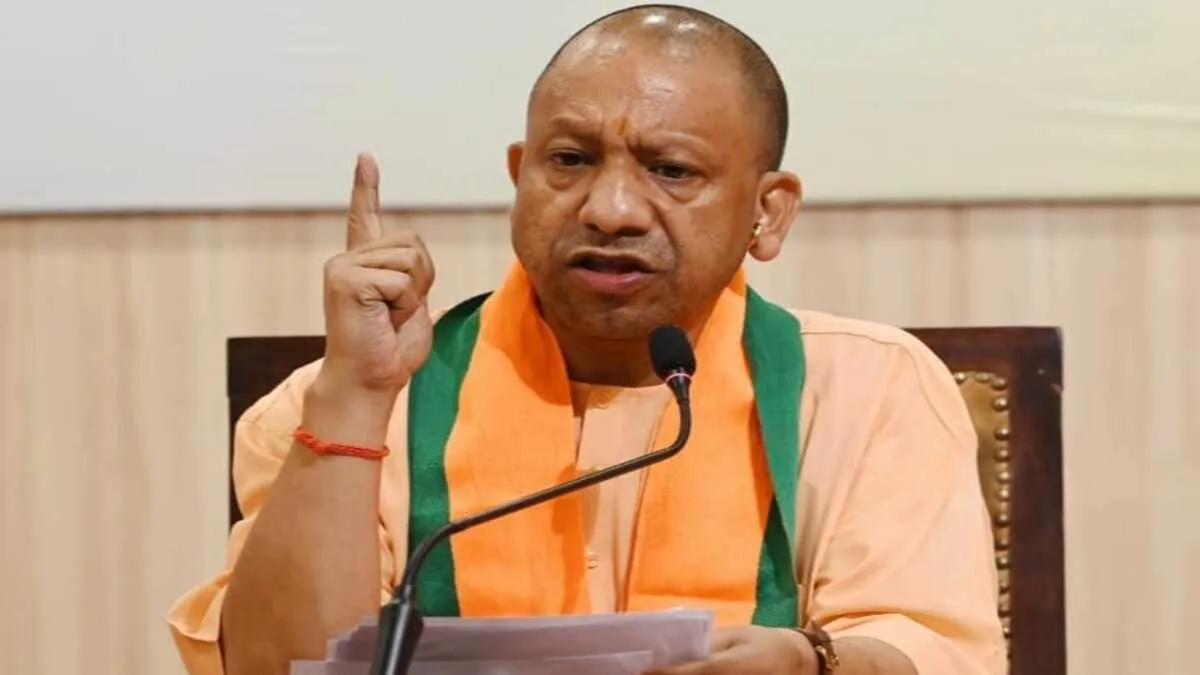
LUCKNOW: Uttar Pradesh before 2017 was counted among the country’s poorest states and was stuck in a long crisis of identity. It has now posted a revenue surplus for six straight years, as Chief Minister Yogi Adityanath recently pointed out. Today it stands among India’s three largest state economies. It has become a working part of the national growth engine rather than a weight upon it.
The state budgeted a revenue surplus of about Rs 79,516 crore for 2025-26, roughly 2.6 per cent of its gross state domestic product. In 2022-23 the median Indian state ran a revenue deficit of 0.4 per cent of GSDP, while Uttar Pradesh closed the year with a surplus of 2.4 per cent. For the country’s most populous state, the gap shows a discipline few expected from Lucknow a decade ago.
The long slide before 2017
The size of the turnaround becomes clear only when one recalls where the state stood. Between 1990-91 and 2021-22, Uttar Pradesh’s share of India’s GDP shrank from 11.4 per cent to 8.4 per cent. That slow decline followed decades of stalled governance, weak law and order, and a reputation that kept investors away. The “BIMARU” tag, coined for states trailing on every development indicator, fit uncomfortably well.
Young people left in search of work, and industrial estates lay idle. The land that gave the country Kashi, Ayodhya and Prayagraj was spoken of mainly as a problem to be managed. A civilisation that had once shaped India’s spiritual and commercial life seemed to have lost faith in its own capacity.
Fiscal discipline as the foundation
The first shift came in how the state handled its own money. Tax collection stood near ₹95,000 crore in 2017-18 and crossed Rs 2.25 lakh crore by 2024-25. Over the same period, the annual budget more than doubled, from Rs 3.84 lakh crore in 2017-18 to Rs 8.08 lakh crore in 2025-26.
A revenue surplus means the state pays salaries, pensions, interest and routine expenses from its own receipts and its share of central taxes. It does not have to borrow just to keep the lights on. Whatever it does borrow can then go into roads, power lines, industrial corridors and schools, the kind of capital spending that compounds over time.
This is the less glamorous side of the story, yet arguably the most important. Investors read balance sheets before they read press releases. A government that pays its bills on time earns a kind of trust that no advertisement can buy.
Reviving the artisan Economy through ODOP
The One District One Product scheme gave the state a distinctive identity to build on. Rather than chase a single industrial template, the government went back to what each district already knew how to make: Banarasi silk in Varanasi, brassware in Moradabad, carpets in Bhadohi, glassware in Firozabad, locks in Aligarh and chikankari in Lucknow. These crafts had survived for centuries but were fading because they had lost their markets. The scheme connected them to technology, fresh design, modern packaging and buyers.
According to the Chief Minister, the MSME sector alone now employs more than three crore people. That figure matters because small enterprises are where ordinary families earn their living with the weaver, the potter, the owner of a two-lathe workshop.
Strengthening them spreads the gains of growth far more widely than a handful of giant factories ever could. It also carries forward the spirit of Antyodaya, reaching the last person in the queue.
UPITS 4.0: Taking local products to the world
The clearest showcase of this approach arrives next week. From 25 to 29 September, the India Expo Centre and Mart in Greater Noida, Gautam Buddh Nagar, will host the fourth edition of the Uttar Pradesh International Trade Show.
More than 650 foreign buyers are expected, and over 2,500 exhibitors from the state will display their goods. As the Chief Minister put it, these exhibitors are the state’s own entrepreneurs, youth, artisans and craftspeople. The purpose is simple: to sell their products, be seen, and go home with orders.
The show’s own growth tells a story. Its first edition in 2023 drew 1,914 exhibitors and about 400 foreign buyers. Last year it had more than 2,400 exhibitors and over 500 overseas buyers from more than 75 countries. The sectors on display now range from handloom, handicrafts and farm produce to electronics, electric vehicles, renewable energy, pharmaceuticals and information technology. That range shows how far the industrial base has widened.
Infrastructure and Order: A broader, balanced growth base
None of this would go far without roads, power and security. A network of expressways now links the western industrial belt with Purvanchal and Bundelkhand. It cuts travel times and opens inland districts to investment. New airports have put once-remote cities on the national map, and the Noida International Airport at Jewar positions western Uttar Pradesh as a future logistics hub.
The change in law and order mattered just as much. Capital is cautious by nature and settles where contracts are honoured, and property is safe. The data-centre sector offers one measure of the new confidence.
By mid-2025 the state had proposals for 644 MW of data-centre capacity, backed by investment commitments of over Rs 21,000 crore. That is a remarkable figure for a state once written off as unsuitable for high technology.
Uttar Pradesh no longer depends on farming alone. Services now make up the largest share of its output, followed by industry and agriculture. This balance protects it against shocks in any single sector. Per capita GSDP grew at an average of about 9.5 per cent a year between 2016-17 and 2024-25.
Agriculture remains central, and the state still leads the country in sugarcane, wheat and milk production. But farming is now one pillar among several rather than the only one. That diversification is exactly what allowed the state to climb into the top tier.
A fair assessment must also note how much work remains. With a population of nearly 25 crore, per capita income is still below the national average. The race near the top is also close to Uttar Pradesh, Gujarat and Karnataka, which have traded places around third position in recent years.
Keeping and improving that rank will need steady investment in skills, health and urban services and a determined push to bring prosperity to Bundelkhand and the eastern districts.
The state has set its sights on a one-trillion-dollar economy, a goal that would have sounded fanciful in 2016. Every new expressway, every export order and every revived loom adds another brick to that ambition. The bigger change, though, is one of self-belief. A state once defined by what it lacked is now defined by what it makes, and by its readiness to sell it to the world.
When hundreds of foreign buyers walk the aisles in Greater Noida next week, they will be inspecting more than silk, brass and electronics. They will be looking at a state that has rewritten its own story, and at a people who have found their confidence again at the heart of Bharat.