Raichur: A dispute over alleged excessive DJ sound in Raichur has widened into a debate over noise-control enforcement, police accountability, and how restrictions are implemented during public celebrations after a father staged a late-night protest outside the Deputy Commissioner’s residence carrying his three-year-old daughter.
The incident took place in the Goal Market area of Raichur on the night of September 18. Jai Bheem Vallabh, a resident and Raichur district president of the Bahujan Samaj Party (BSP), reportedly approached Deputy Commissioner N M Poovitha with his daughter and protested what he described as excessive noise from DJs in the area.
Vallabh alleged that the sound levels had crossed permissible limits and claimed that the loud music had affected his daughter’s health. He also accused the local police of failing to act promptly despite alleged violations of noise-control rules.
The protest led to a heated exchange between Vallabh and police personnel present at the spot. During the confrontation, Vallabh questioned the officials’ response and reportedly asked whether authorities were more concerned about their own sleep than the health of children exposed to loud sound.
A video of the confrontation subsequently circulated widely on social media, drawing attention to the dispute and prompting the district administration to intervene.
Following the incident, Deputy Commissioner Poovitha wrote to the Raichur Superintendent of Police regarding the alleged failure to prevent the use of DJs in violation of prescribed norms. The Deputy Commissioner directed the police to take immediate steps to stop unauthorised or rule-violating DJ operations.
The communication reportedly warned that police officials concerned, including station house officers, would be held responsible if any untoward incident occurred in future as a result of excessive DJ sound. The direction has since become another point of contention, with sections of the police department reportedly expressing dissatisfaction with how responsibility was assigned.
Some police personnel are said to have questioned why individual officers should be held directly accountable when detailed instructions or operational guidelines for handling such situations had not been clearly communicated earlier. According to the concerns raised within the department, a coordinated mechanism involving the district administration, police and organisers could have helped prevent such disputes.
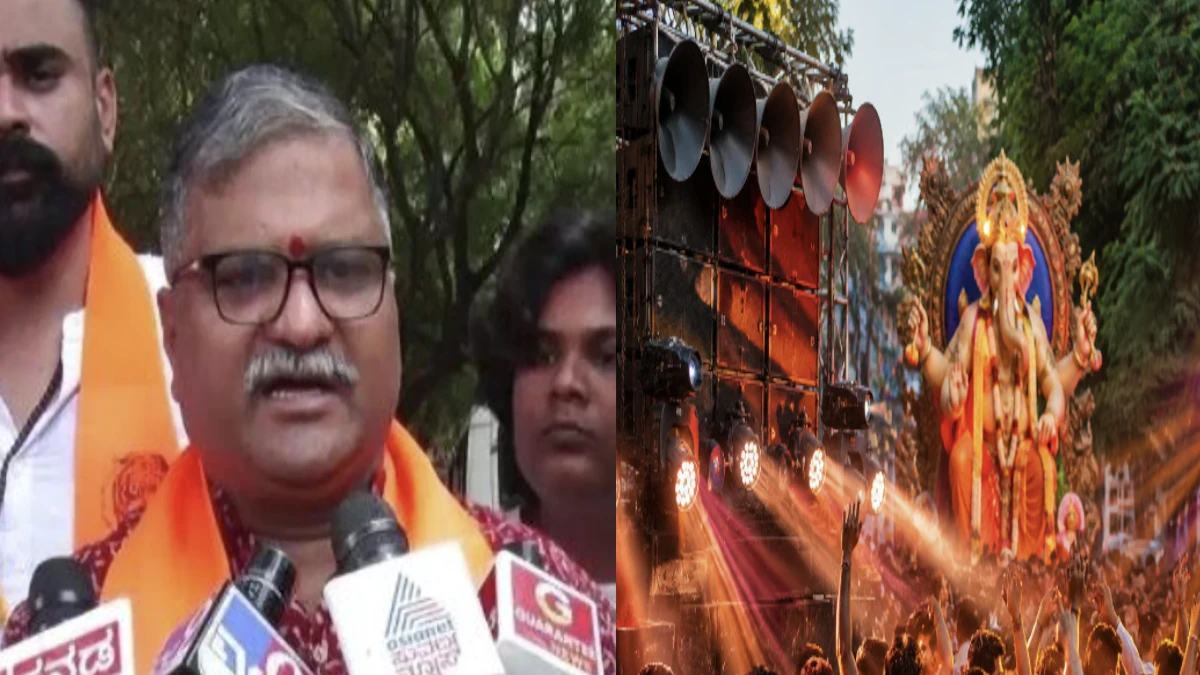
The issue also drew criticism from Shiv Sena state general secretary Gangadhar Kulkarni, who questioned how noise regulations were enforced during the Ganesh festival period.
Kulkarni alleged that violations of permissible decibel limits occur at different locations throughout the year and questioned why the administration was focusing particularly on DJ-related violations during Ganeshotsava. He demanded that noise-control regulations be applied consistently rather than selectively to particular festivals or communities.
He also objected to holding local police personnel responsible for the entire controversy. According to Kulkarni, if prescribed sound limits are being breached in certain locations, the administration should identify them and take action in accordance with the rules.
Kulkarni further maintained that Ganeshotsava is a festival involving people from across society and said enforcement should not give the impression that celebrations alone were being singled out for restrictions. He warned that his organisation would consider agitation if the administration continued what he described as selective enforcement of noise-control norms.
The controversy has therefore moved beyond the original complaint involving a child and loud music, raising broader questions about how Raichur monitors noise regulations.
While Vallabh’s protest has highlighted residents’ concerns about the impact of high-volume sound, particularly on children and other vulnerable groups, the response from parts of the police and Kulkarni has drawn attention to the need for consistent enforcement and clearer administrative directions.
Noise pollution regulations set limits on sound levels and restrict the use of loudspeakers and other sound-amplifying equipment, particularly during specified hours. Enforcement, however, requires coordination among police, district officials, local authorities and organisers of public events.