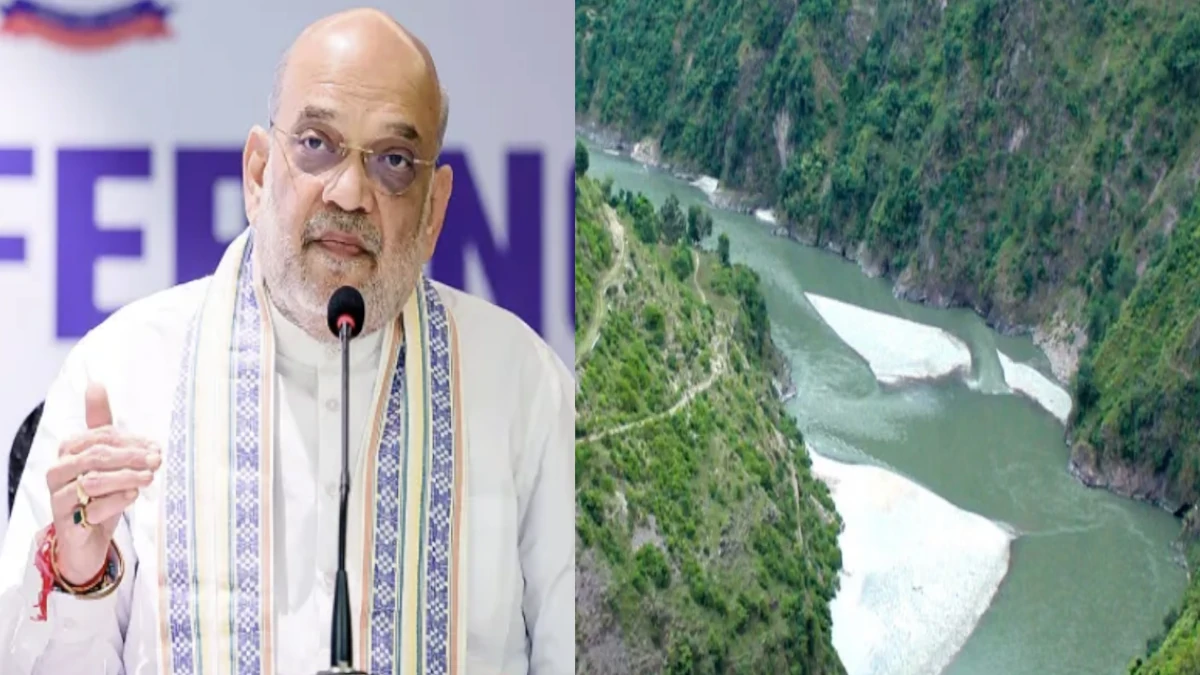
NEW DEHI: A 17-year-old deadlock over the Kishau Multipurpose Project has been broken, with six states signing an agreement that could reshape water management across the Upper Yamuna basin and strengthen long-term water security for Delhi.
Chief Ministers of Uttar Pradesh, Uttarakhand, Himachal Pradesh, Haryana, Rajasthan and Delhi signed the Kishau Multipurpose Project agreement in New Delhi in the presence of Union Home and Cooperation Minister Amit Shah and Union Jal Shakti Minister C. R. Patil. The agreement brings together states with different water, financial and development interests under a common framework.
The project, which had remained stalled for years, envisages construction of a 232.6-metre-high concrete gravity dam on the Tons River, along the Uttarakhand-Himachal Pradesh border. The reservoir will have a storage capacity of 1,562 million cubic metres.
A project with multiple national benefits
According to the government, Kishau is designed to deliver benefits across irrigation, water management and renewable energy. The project is expected to create irrigation potential for approximately 97,000 hectares of land and generate 1,476 million units of clean hydropower. Delhi is expected to be the biggest beneficiary in terms of regulated water availability.
The agreement also addresses the distribution of water and project costs. Under the arrangement, water allocated to Himachal Pradesh will be made available to Delhi and Rajasthan, while the states will share the cost of Himachal Pradesh’s power component. The Centre will provide approximately 90 per cent of the financial burden for the project’s water component, with the remaining 10 per cent shared by the six participating states.
Yamuna rejuvenation at the centre of the agreement
The project has also been linked to efforts to improve the environmental flow of the Yamuna.
The Union government has said the agreement will increase the availability of water in the river and contribute to efforts to rejuvenate the Yamuna. Amit Shah said the project would be particularly significant for Delhi and the Yamuna, arguing that previous allocations had not adequately accounted for the river’s environmental flow.
The Kishau agreement follows earlier progress on other Upper Yamuna storage projects. The government said agreements on the Lakhwar and Renukaji projects helped create the conditions for resolving the remaining issues surrounding Kishau.
From years of negotiation to a six-state consensus
The project has its roots in the 1994 Upper Yamuna Basin agreement, which provided for separate agreements for storage projects in the basin. Kishau was subsequently declared a National Project, but differences over water allocation, costs and state interests delayed implementation.
A major breakthrough came in June 2026, when the six states reached a consensus on the framework for implementing the project. The September agreement formally brought that consensus into a signed pact.
The government has presented the development as an example of resolving an inter-state water issue through negotiation and consensus rather than allowing competing state interests to keep the project stalled.
With the agreement now signed, the Kishau project moves closer to implementation. If completed as planned, it will combine large-scale water storage, irrigation expansion, renewable power generation and increased water availability for the Yamuna in one of the country’s most significant inter-state water projects.