
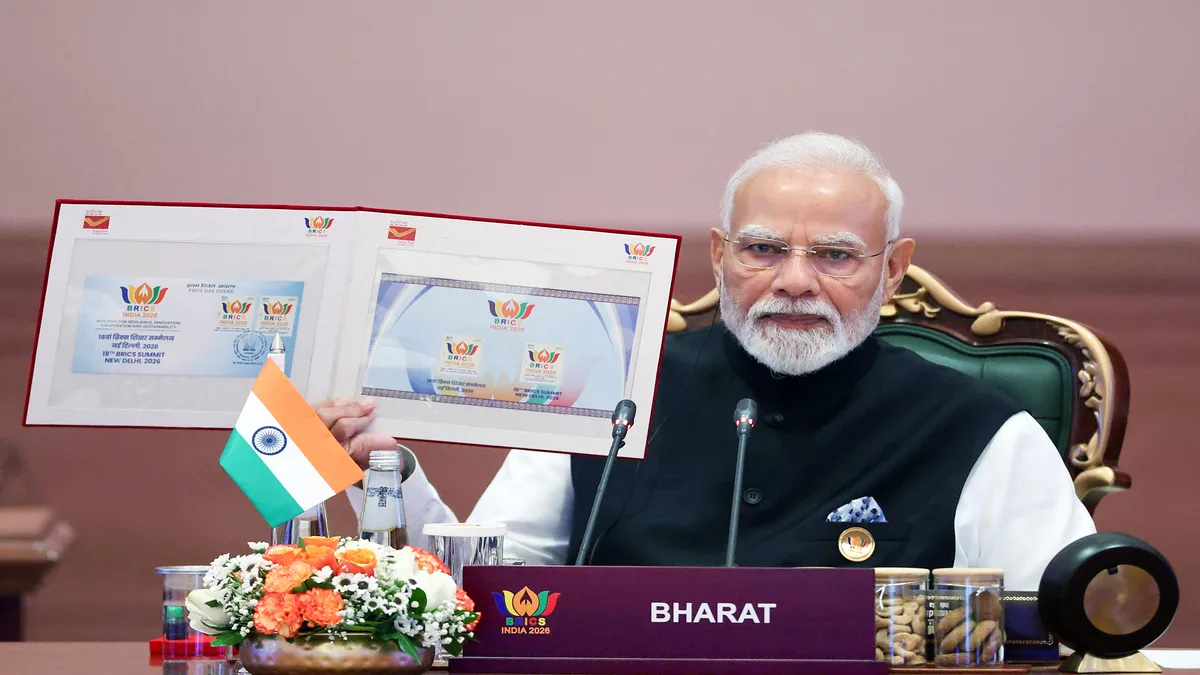
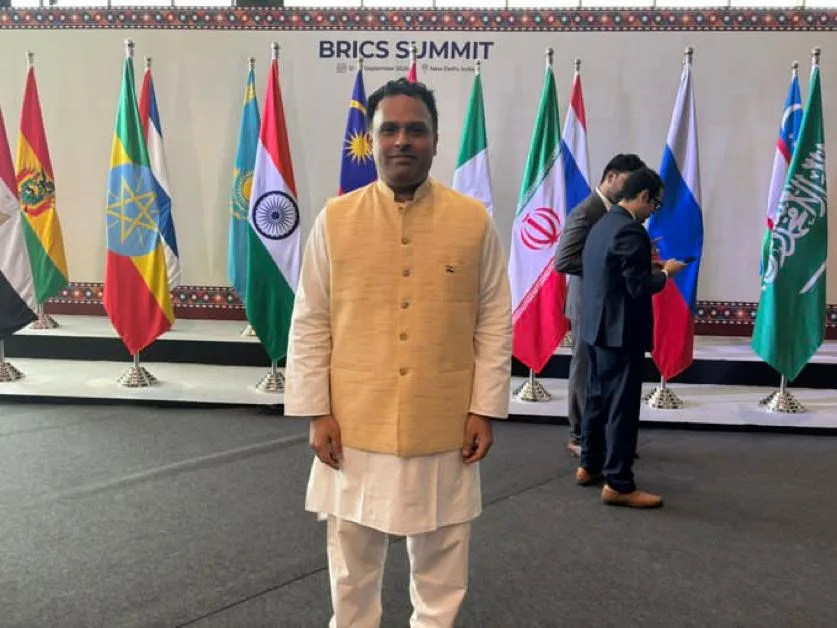
NEW DELHI: After successfully hosting the G20 Summit in 2023, Bharat successfully organised 18th BRICS summit 2026 at Bharat Mandapam in New Delhi from September 12-13.
On the first day (while we send it for the Print), leaders of BRICS country participated in the event. The prominent names include Chinese President Xi Jinping, Russian President Vladimir Putin, South African President Cyril Ramaphosa, Iranian President Masoud Pezeshkian, Malaysian Prime Minister Datuk Seri Anwar Ibrahim, and among others participated in this summit.
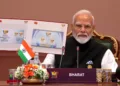
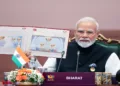
“It is now time for us to translate our unity and consensus in BRICS into concrete outcomes on the global stage. While strengthening BRICS, we must also chart the direction of global reform. The current structure of Global Governance appears like a pyramid. The Global South is today in the front row of global crises, but in the back row of decision-making. We have to transform this “pyramid of privilege” into a “platform of partnership”, where every country has a voice, every member has a stake, and the development of humanity remains at the centre of every effort. With this objective, I propose that we jointly prepare ten proposals for global governance reform, which we can endeavour to shape into a BRICS Reform Roadmap by the next Summit. In preparing this roadmap, we will have to keep three main aspects in mind – Representation, Responsiveness and Rule-making,” said Prime Minister Narendra Modi, while addressing the inaugural session “Inclusive Global Governance and Strengthening Multilateralism” of BRICS 2026, organised at Bharat Mandapam New Delhi on September 12.
Prime Minister proposed three roadmaps through his address, which are Representation, Responsiveness and Rule-making. While talking about Representation, he said, “I would like to say that reform of the UN Security Council can no longer be delayed. Text-based negotiations on this issue must be linked to a definite timeline and clear outcomes”
On responsiveness, he said that the confidence of humanity in global institutions will be strengthened only when they are capable of providing effective solutions to problems. We must focus on the speed, scale and last-mile impact of our collective response.
“Ensuring equal participation in determining future global rules is extremely important. AI, cyberspace, outer space, biotechnology and critical technologies are determining not only future opportunities but also future rules. The message of this BRICS Summit being held in Bharat should be clear: if our future is shared, then the right to shape that future must also be shared. From voice to impact. From privilege to partnership. Let this be the resolve of BRICS at 20,” Prime Minister Modi added while speaking about Rule-making.
Notably, at the end of the session, Prime Minister Narendra Modi proposed the adoption of the declaration. “No member has raised any objection. The New Delhi Declaration 2026 is adopted unanimously,” said PM Modi.
With 140 Paras, “New Delhi Declaration — Building for Resilience, Innovation, Cooperation and Sustainability” touched upon many points, from development to conflict to women’s issues to global stability.
Para seven emphasised global peace, respecting sovereignty and reforms. Para 7th says:
“On the landmark occasion of the 20th anniversary of BRICS, we reiterate our commitment to reforming and improving global governance by promoting a more just, equitable, agile, effective, efficient, responsive, representative, legitimate, democratic and accountable international and multilateral system in the spirit of extensive consultation, joint contribution and shared benefits. Bearing in mind the need to adapt the current architecture of international relations to better reflect the contemporary realities, we reiterate our commitment to strengthening multilateralism and multipolarity and to upholding international law, including the Purposes and Principles of the Charter of the United Nations (UN) in their entirety and interconnectedness in a balanced and inclusive manner, as its indispensable cornerstone, and the central role of the UN in the international system in which sovereign states cooperate to maintain peace and security, advance sustainable development, ensure the promotion and protection of democracy, human rights and fundamental freedoms for all”
Without mentioning the name of any country, Para 28 says, “We express deep concern over the continued escalation of tensions in Middle East/West Asia and, recalling our respective national positions, call for exercising maximum restraint, as well as avoiding actions that could further aggravate the situation”
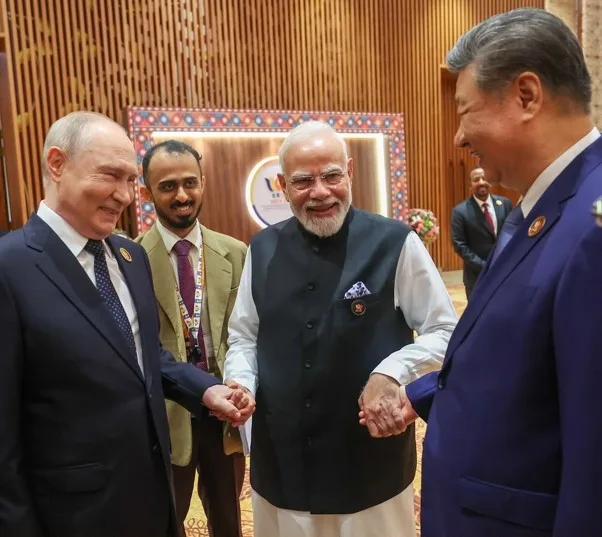
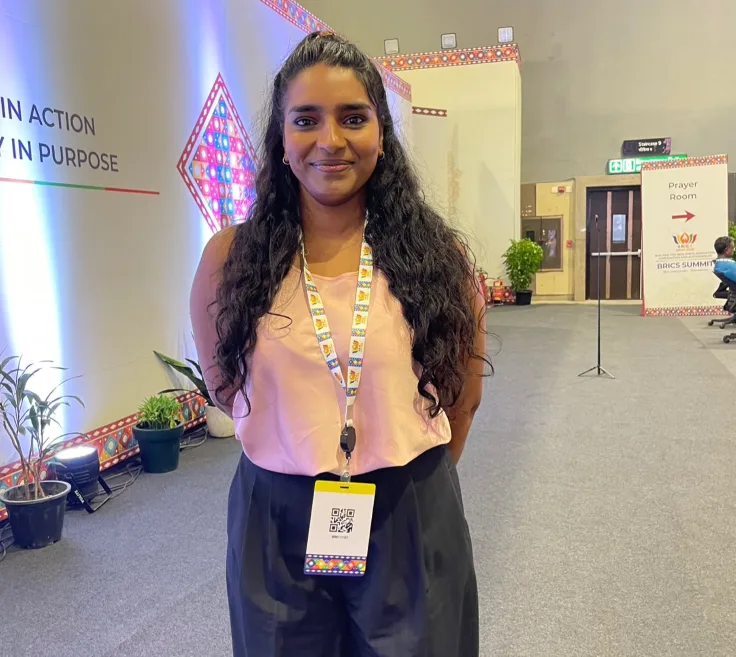
Melissa Hollow, Multimedia Manager for TV BRICS AFRICA and an expert on international relations in South Africa, who had come to Bharat to cover this summit, says, “It is extremely significant to be at the 20th anniversary of the BRICS group, coming from South Africa. We are one of the largest trading partners with India. So in terms of that, it’s also very significant for South Africa to join as part of the BRICS members. But more than anything, due to the geopolitical tensions, from yesterday’s BRICS Business Forum, you know, seeing Prime Minister Narendra Modi and the Iranian President holding hands, and President Vladimir Putin and President Cyril Ramaphosa all together as brothers, it really signifies the Global South: solidarity, unity, and these conversations are strongly needed in this geopolitical time. So It is a very significant BRICS Summit this year”
“We see that BRICS have very complementary economies. For example, Russia is very strong in energy, China is very strong in technology. India is strong in Artificial Intelligence. So, we can offer a lot of things to each other. So, this is one of the strengths of BRICS, in my opinion, that our economies are complementary economies,” says Viktor Ternovskii, a Senior Russian journalist associated with Sputnik.
On comparison of BRICS with other groupings like the G7, he says, “BRICS offers a different model of economy and relations. Africa has a lot of important resources, critical minerals, metals, and West needs these resources of Africa. But Africa doesn’t receive technologies from the West. So Africa wants to change its mode, to change its model. And countries like Russia and India are ready to offer to Africa technologies.”
While talking to the Organiser Weekly about this summit, Professor Sreeram Chaulia, Expert on International Affairs, said, “The entire non-western world is here. BRICS is a big celebration of global south at one level. Of course, we have a lot of differences and India has got the capacity and the wherewithal to bring about consensus. So I am fairly confident that this will be a historic BRICS summit, not only in terms of getting a daily declaration, more in terms of the substantive outcomes and the new initiatives that are going to be announced at the end of this summit that will take BRICS into its third decade. As you know, we have completed 20 years of BRICS and therefore the next 10 years are going to be crucial. So we are actually setting the benchmark through a very exemplary presidency that others will, it will take a lot of beating to emulate the kind of in-depth and very, very elaborate summit that we have conducted.”
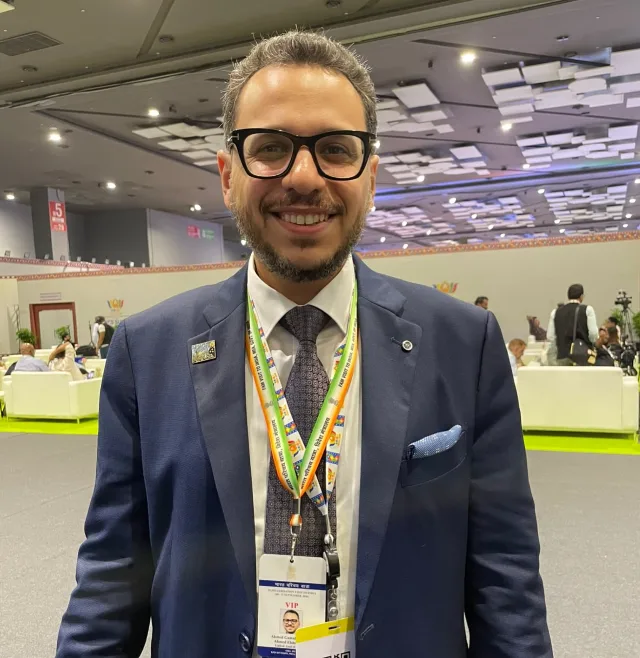
Artificial Intelligence was also a widely discussed topic during the summit. Ahmed Elsharkawy, Head of Training Business Development at Tahaluf, a UAE-based company, attended the event as a delegate from Egypt and said he had a good experience at the summit and enjoyed seeing different cultures.
He said, “It is also wonderful to learn more about the cultures and different countries that are part of BRICS. Even our government here is talking about how to cooperate in areas such as artificial intelligence, development, digital transformation and cybersecurity. At this time, they are focusing more on artificial intelligence, which is changing the world and transforming societies. Perhaps the BRICS countries are now discussing how they can cooperate on artificial intelligence projects, because government policy is very important and can contribute significantly to the development of the national economy.”
An another topic was discussion about the summit was the unique media Kit given by the Government to all the journalists, from Bharat and across the world, which gives a taste of Bharat’s vibrant cultural diversity. The kit includes – Bihar’s earthy Sattu and Makhana, Koraput’s hill-grown coffee and Gujarat’s intricate handicrafts.
Notably, the last time India hosted the BRICS Summit was in 2021, when it was held virtually due to COVID-19, and before that, in 2016 in Goa. Here, it is important to mention that BRICS has 11 member countries: Brazil, China, Egypt, Ethiopia, India, Indonesia, Iran, Russia, Saudi Arabia, South Africa, and the United Arab Emirates.
The most important aspect of this year’s BRICS Summit is the large participation of African delegations. Delegations from countries such as Nigeria, Ethiopia, and Uganda among others were present in significant numbers, showing the considerable interest of African countries in the summit. BRICS, which is essentially an organisation representing developing countries, is not a counter to other groupings but reflects the aspirations of these nations, as reflected in the theme of this year’s summit: “Building for Resilience, Innovation, Cooperation, and Sustainability.”