New Delhi: Marking a historic diplomatic victory for India, the 18th BRICS Summit has adopted the New Delhi Declaration 2026, laying out an expansive goals and vision for inclusive global governance, UN reforms, international trade, regional peace and security and counter-terrorism. It also emphasises partnership for digital transformation, Artificial Intelligence, health, food and energy security, climate action, finance and people-to-people cooperation.
Adopted under India’s 2026 chairship theme — “Building for Resilience, Innovation, Cooperation and Sustainability” — the declaration seeks to strengthen BRICS as a platform for a more representative, inclusive and multipolar international order. With the successful sealing of New Delhi declaration, India acts a bridge and strong voice of the Global South amid increasing protectionism, geopolitical fragmentation, polarisation and in an era where tools of growth are increasingly weaponised.
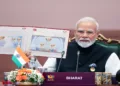
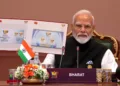
Swagatam BRICS leaders for the 2026 Summit. pic.twitter.com/SkmO9rV2Kf
— Narendra Modi (@narendramodi) September 12, 2026
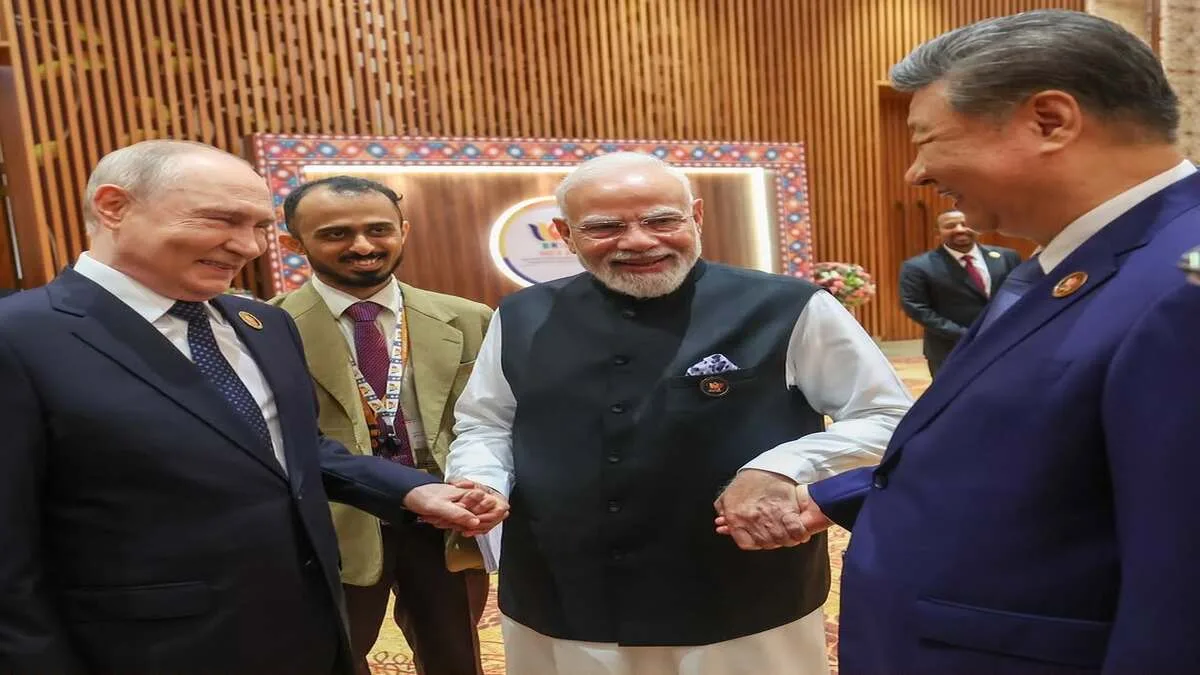
The New Delhi declaration comes amid a precarious and highly volatile geopolitical era, thus resonating India’s consistent effort towards Global consensus, partnership building, innovation and cooperation for prosperity and human welfare. Bringing China, Iran, UAE, Brazil, Egypt and other countries on a common ground amid West Asia crisis was indeed a herculian task and India has indeed successfully navigated the gridlocks in a jeopardized strategic mosaic of the current decade. Here are the key highlights from the Joint Document!
BRICS Summit 2026 gets underway in Delhi. pic.twitter.com/WN7YWi5bTg
— Narendra Modi (@narendramodi) September 12, 2026
Global South at the centre of a changing world order
Marking two decades of BRICS, the declaration reiterates the bloc’s commitment to sovereign equality, solidarity, inclusiveness, consensus and multilateralism. It calls for greater participation of Emerging Markets and Developing Countries (EMDCs) and Least Developed Countries in global decision-making, including stronger geographical representation and greater participation of women in international institutions.
The declaration identifies the Global South as a driver of positive change, particularly amid geopolitical tensions, economic disruptions, technological transformation, protectionism, migration and climate change.
UNSC reforms to reflect geopolitical realities & inclusive world order
It backs comprehensive reform of the United Nations and its Security Council, with China and Russia reiterating support for Brazil and India playing a greater role in the UN, including the Security Council.
BRICS also called for reform of the Bretton Woods institutions, including the IMF and World Bank, so that their governance better reflects the growing weight of developing economies. It backed greater EMDE representation in quotas, voting shares and leadership positions.
Trade, finance, cross-border payment mechanism & supply-chain resilience
The declaration strongly supports reform of the World Trade Organization and a predictable, open and rules-based multilateral trading system. BRICS expressed concern over unilateral tariffs, non-tariff barriers and protectionist measures, warning that they could disrupt global trade and supply chains.
The grouping also opposed unilateral coercive measures and sanctions that it says undermine international law and adversely affect development, health and food security. Ethiopia and Iran’s WTO accession bids received BRICS support.
On finance, BRICS highlighted cross-border payment interoperability and encouraged practical solutions that are fast, low-cost, accessible, transparent and secure, including greater use of local currencies. It also advanced discussions on a New Investment Platform, settlement infrastructure, an insurance resilience ecosystem and India’s proposed BRICS Risk Lab at GIFT City.
The New Development Bank was reaffirmed as a crucial institution for infrastructure, sustainable development and economic integration in the Global South, while the BRICS Contingent Reserve Arrangement was being strengthened as a financial safety net.
zero tolerance to terrorism & flags nuclear risks
The joint declaration also called for conflict prevention, preventive diplomacy, mediation and peaceful resolution of disputes through dialogue. It expressed concern over rising military expenditure and nuclear risks while backing disarmament, arms control and non-proliferation.
Significantly, BRICS condemned the April 22, 2025 terrorist attack in Jammu and Kashmir, which killed 26 people and called for zero tolerance towards terrorism, cross-border movement of terrorists, terror financing and safe havens. It also called for finalising the Comprehensive Convention on International Terrorism and stronger cooperation against radicalisation, particularly among youth.
Restraint, peace, civilian safety & uninterrupted energy flow in West Asia
On West Asia, the declaration called for maximum restraint, protection of civilians and civilian infrastructure, uninterrupted trade, supply chains and energy flows and diplomatic efforts towards lasting peace. It reaffirmed support for a two-state solution and Palestinian statehood while opposing forced displacement from Gaza.
AI, digital infrastructure and technology cooperation
The declaration places digital transformation and emerging technologies at the heart of BRICS cooperation. Members backed stronger cooperation on ICT security, cybercrime, misinformation, disinformation, deepfakes and digital financial security.
BRICS welcomed the proposed Digital Public Infrastructure Repository, digital ecosystem cooperation, digital-skilling initiatives and capacity-building centres. Artificial Intelligence was recognised as a major opportunity for economic growth and sustainable development, with members committing to cooperation on safe, secure, inclusive, reliable and trustworthy AI. India’s AI Impact Summit held in February 2026 was also acknowledged.
The bloc also backed cooperation in quantum technologies, scientific research, submarine cable connectivity, space technology and the BRICS Remote Sensing Satellite Constellation, while supporting efforts to prevent an arms race in outer space.
The declaration further promotes Industry 4.0, startups, MSMEs, robotics, photovoltaic cooperation, technology transfer and stronger global value chains. It welcomed the BRICS Incubator Network, potential Startup Innovation Fund and India Centre for BRICS Industrial Competencies.
Health, food and energy security
Health cooperation received significant attention, with BRICS backing universal health coverage, stronger disease surveillance, early-warning systems, vaccine and medical-product cooperation and efforts to combat tuberculosis. The declaration endorsed a BRICS Integrated Early Warning System for mass infectious diseases and initiatives on digital health, mental wellness and traditional medicine.
On food security, BRICS supported work towards a BRICS Grain Exchange, resilient agricultural supply chains, climate-adaptive seeds, farmer-centric cooperation, digital agriculture and agroecology.
Energy security was described as fundamental to economic development and national security. The declaration supported diversified energy mixes, including renewables, nuclear power, hydropower, hydrogen and fossil fuels, while advancing smart grids, energy storage and resilient critical-mineral supply chains.
Climate resilience and environmental conservation efforts
BRICS called for stronger climate adaptation financing for developing countries, community-based adaptation, traditional knowledge, resilient infrastructure and early-warning systems. It backed biodiversity conservation, forest restoration, sustainable land management and India’s initiative for an International Big Cats Alliance.
Culture, youth and people-to-people ties
Beyond economics and geopolitics, BRICS placed emphasis on culture, education, tourism, sports, youth and women-led development. Initiatives include stronger academic exchanges, traditional and indigenous knowledge cooperation, digital literacy, skills development and the BRICS CONNECT network for future-ready employment.
The declaration welcomed BRICS cultural and film festivals, tourism cooperation, sports exchanges and youth initiatives, while strengthening the Women’s Business Alliance and opportunities for women entrepreneurs.
World Leaders’ hail India’s BRICS presidency
The declaration commended India’s 2026 chairship, noting more than 400 meetings and engagements across 30 Indian cities. It also welcomed efforts towards a BRICS Online Archival Database and stronger institutional continuity between successive presidencies.
The New Delhi Declaration thus presents BRICS not merely as an economic grouping, but as an expanding platform seeking greater Global South representation while building practical cooperation across finance, technology, security, health, food, energy, climate and culture. India formally concluded its 2026 chairship with BRICS expressing gratitude to New Delhi and extending full support to China for the 2027 BRICS chairship and the 19th BRICS Summit.