BENGALURU: The Karnataka High Court has ruled that a technical defect in an affidavit filed along with a private criminal complaint can be corrected and cannot, by itself, be used to divert a case away from the statutory mechanism for seeking a police investigation under Section 175 of the Bharatiya Nagarik Suraksha Sanhita (BNSS).
Justice M. Nagaprasanna, while dealing with a petition concerning alleged irregularities in the allotment of a civic amenity site by the Bengaluru Development Authority (BDA) to the Siddhartha Vihar Trust associated with Congress president Mallikarjun Kharge and his family, said a curable procedural lapse should not become the reason for preventing allegations requiring investigation from being examined.
The court set aside the trial court’s decision to proceed with an inquiry under Section 223 of the BNSS solely because the affidavit accompanying the private complaint did not meet the prescribed verification requirement. The matter has been sent back to the trial court with directions to give the complainant an opportunity to rectify the defect and thereafter consider the matter under the statutory procedure for seeking investigation.
The High Court stressed that there is a fundamental difference between the two provisions. Section 223 deals with proceedings in which the court takes cognizance of a complaint and examines the complainant and witnesses. Section 175(3), on the other hand, provides a mechanism through which the court can direct investigation when the allegations require police intervention and collection of material beyond the complainant’s ability to obtain independently.
The court observed that treating the defective affidavit as an insurmountable obstacle had effectively allowed a procedural issue to determine the course of the entire case. “The truth cannot be permitted to become a casualty at the altar of an imperfect verification clause”, the court said, emphasising that a distinction must be maintained between a defect that cannot be remedied and one that can be rectified.
The case originated from a private complaint filed by Vijayraghava Marathe, who alleged that the Siddhartha Vihar Trust had obtained a civic amenity site in Bengaluru by claiming eligibility under the Scheduled Caste category.
According to the allegations, the trust was granted a 50% concession in the lease amount on the basis of its claimed status. The complaint questioned whether the eligibility criteria had been correctly applied and whether officials involved in the allotment had acted in accordance with the applicable rules.
The complainant also raised questions about an alternative site allegedly allotted to the trust and claimed that the value of the alternative property was substantially higher. Allegations were also made regarding the continued retention of the land despite the absence of construction for a prolonged period.
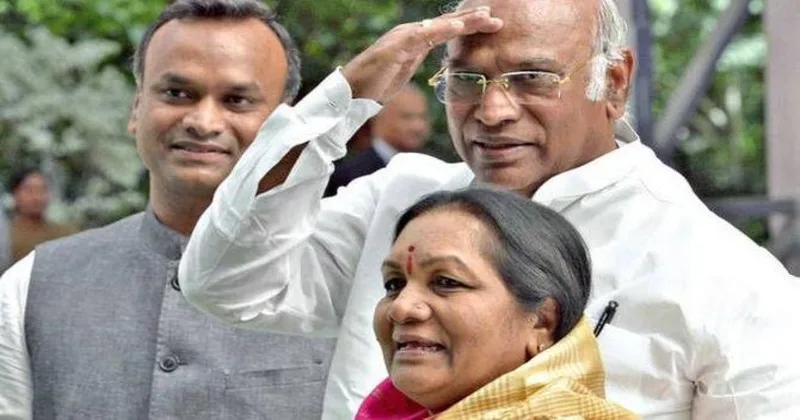
The complaint named Mallikarjun Kharge, Karnataka Minister Priyank Kharge, Radhakrishna Kharge, Radhabai Kharge and others. The allegations have been denied by the accused. Before approaching the court, the complainant had reportedly sought action from the jurisdictional police and the Lokayukta authorities.
He had also approached the Governor seeking sanction under Section 17A of the Prevention of Corruption Act, 1988. After claiming that the authorities had failed to act on his representations, he approached the Special Court seeking an investigation under Section 175(3) of the BNSS.
The Special Court, however, found that the affidavit filed by the complainant did not contain the verification required under the relevant provision. It consequently declined to proceed under Section 175(3) and instead directed that the complainant be examined and that the matter be dealt with through an inquiry under Section 223.
However, the High Court disagreed with this approach. It noted that the requirement of an affidavit serves an important purpose because it ensures accountability when a person seeks to invoke the criminal investigation process. However, the safeguard cannot be interpreted in a manner that defeats the very purpose of examining serious allegations when the defect in the affidavit can be corrected.
Justice Nagaprasanna relied on earlier judgments, including the Supreme Court’s decision in N. Vijayalakshmi v. State of Karnataka and the Madras High Court’s ruling in A. Gerald Prakash v. State of Tamil Nadu, which recognised that defects relating to affidavits can be cured.
The court pointed out that the allegations in the present case were not confined to a dispute between private individuals. They involved claims of possible corruption, misuse of official authority, extension of an alleged undue benefit and irregularities in the handling of public property.
“Procedure is undoubtedly the handmaid of justice; it cannot be permitted to become its hangman”, the court observed. The High Court further explained why a judicial inquiry under Section 223 could not adequately address several questions raised by the complaint. Determining who processed the application, what documents and notings were placed in the official file, who recommended the concession and on what basis the trust was treated as eligible under the relevant category would require access to official records and other material.
The court said these were matters that a private complainant could not reasonably be expected to establish on his own. It posed questions that could only be answered through a proper investigation: who processed the allotment proposal, what was recorded in the official files, who approved or recommended the concession and whether there was any understanding between the trust’s representatives and public servants.
According to the High Court, such information lies beyond the normal reach of a complainant and is precisely why the law provides for an investigative mechanism. The court therefore quashed the trial court’s decision to divert the proceedings to an inquiry under Section 223 of the BNSS. It directed the trial court to permit the complainant to cure the defect in the affidavit and thereafter consider the request for investigation in accordance with Section 175 of the BNSS.