Unity in variety is the plan of nature, and the Hindu has recognised it. Every other religion lays down certain fixed dogmas, and tries to force society to adopt them. It places before society only one coat which must fit Jack and John and Henry, all alike. If it does not fit John or Henry, he must go without a coat to cover his body. The Hindus have discovered that the absolute can only be realized, or thought of, or stated, through the relative, and the images, crosses, and crescents are simply so many symbols-so many pegs to hang spiritual ideas on. It is not that this help is necessary for everyone, but those that do not need it have no right to say that it is wrong. Nor is it compulsory in Hinduism
– Swami Vivekananda,PAPER ON HINDUISM, Read at the Parliament on September 19, 1893
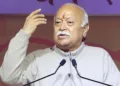
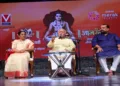
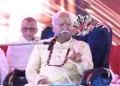
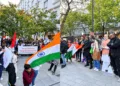
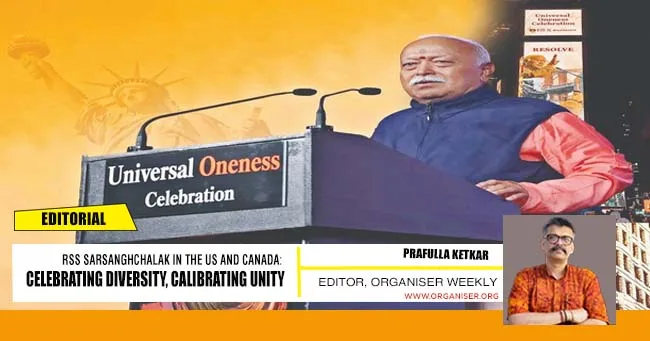
When in the homeland of Hindus, the Sanatan tradition of seeing entire existence as one has been targeted in the name of casteism, majoritarianism, exclusionary practices, etc., Sarsanghchalak Dr Mohan Bhagwat ventured to be in the US and Canada to deliver the real Hindu message of Universalism. The three events had a continuity and conviction – One Humanity, One World – the interfaith dialogue of various faith community leaders; Universal Oneness Celebration – organised by AHEAD, where Hindus, along with other community leaders, celebrated the spirit of Oneness; and the Hindu, Vishwa Bandhu event in Toronto, Canada, organised by CHORD, where the Hindu message of universal fraternity echoed. When the perception reaches much before the Rashtriya Swayamsevak Sangh (RSS) connects with the audience outside the Sangh purview, what Sarsanghchalak Dr Mohan Bhagwat actually achieve from these events in the US and Canada goes beyond the political noise.
The One Humanity, One World event was organised by the World Council of Religious Leaders (WCRL), in which fourteen faiths and 180 representatives from diverse denominations participated. Everyone had their own point of view about each other and their perceptions, yet they decided to engage in dialogue. In September 1893, when Swami Vivekananda spoke at the World’s Parliament of Religions in Chicago, Hindus were not even considered at the table. Yet, he turned the tables by presenting the Hindu point of view to the world. Sarsanghchalak Dr Mohan Bhagwat was speaking in a changed context where Hindus have taken the initiative to engage in inter-faith dialogue with confidence – a sign of resurgent and confident Hindus of an independent and rising Bharat. When did we last listen to the different faith leaders saying that God is more important than religion, or a clear articulation that for religions to be part of the solution, they have to come out of the squabbling among themselves because of each one of them have different ways of understanding the true nature of God? The message of the inter-faith dialogue was a clear action plan with a resolve to work together, start with the self, serve together, build relationships and take responsibility for the future. This coming together of religious leaders on one platform, with the RSS Sarsanghchalak at the table articulating Hindutva or Hinduness in terms of inherent unity while celebrating diversity, was itself a significant and meaningful beginning of the process.
The iconic Madison Square Garden event called Universal Oneness Celebration by American Hindus for Engagement and Dialogue (AHEAD Forum) literally elevated the preceding dialogue to the next level. From presenting the diverse colours of Bharat to forging cultural connections across continents, Hindu Americans rose to the occasion. The Raksha Bandhan celebration was taken to an international level, where individuals from different faiths, sects, regions, linguistic identities, and nationalities tied Rakhi (Sacred thread) to each other. RSS has been practising this as one of the key annual festivals – the symbol of fraternal bond and vow of protecting each other with a sense of belongingness. As the Sarsanghchalak Ji rightly pointed out, “while celebrating Raksha Bandhan, we have to remember that we tie the rakhi, that bandhan, that binding. What is that binding? It is the binding of responsibility, not restriction. When we take the responsibility of others, it liberates us”. Swami Vivekananda’s concept of Universal Brotherhood could touch the audience participating in the historic event.
Sarsanghchalak Dr Bhagwat reminding the destiny of Bharat was an even more powerful message for the Hindus and the world. Diversity as the expression of Unity is in our DNA. As every nation has a destiny to fulfil, Bharat has to demonstrate the philosophy of oneness underlying outer differences as part of its national duty, and Bharatvanshis have to imbibe it in action. ‘Rise of Bharat means more united, more emancipated humanity’ – ‘Not Mahashakti but Vishwaguru’, Dr Bhagwat pronounced at the next event in Canada, titled Hindu, “Vishwa Bandhu”. Explaining the principles of Dharma as the rules, through which the universe is sustained, take us on the path of righteousness and restore balance in life, Dr Bhagwat reset the dialogue on religious diversity. Bharat has demonstrated its ability to serve humanity whenever someone comes as a refugee or is engulfed in a humanitarian crisis. Hence, the rise of Bharat is not a threat, and the organised Hindu community will only guarantee the protection of diversity because the Hindu dream is to see prosperity, health, and happiness for all. This civilisational tradition of helping others, without any selfish interest, is the trait of Bharat, and was articulated for the international audience after a long time.
On the Muslim question, he was also forthright. Excluding anyone just because of faith is un-Hindu, was the reiteration of the old position. Bharat is the Hindu Rashtra because acceptance and respect for all ways of worship is a Hindu civilisational trait, and the RSS only seeks to strengthen this conviction; hence, there is no scope for exclusion. Seeing divinity in everything that exists is the philosophical foundation of Hindu Dharma, irrespective of different sects and faiths. Sangh Swayamsevaks also imbibe these values and serve people without discrimination. Without even referring to the political criticisms and accusations, Sarsanghachalak presented the Sangh vision of Vasudhaiva Kutumbakam.
The timing of this dialogue is also important. August is a significant month in history of the world, as it marks the anniversary of the most heinous use of nuclear weapons against Japan during the Second World War. And now, when the world is divided and on the verge of multiple Kinetic conflicts across the continents again, this dialogue shows the way, as it gives the message of resolving conflict and differences spiritually. As Pujaniya Sarsanghchalak ji rightly said, there are two tendencies in the world. One tendency is: live and let live. Another tendency is: live, and let only those live who obey us. Those who say, “If you obey us, we will protect you” (protection is Raksha in Sanskrit, in Hindi). So, those who protect only those who obey are Rakshasas (evil forces). Therefore, it is time to respect the sovereignty of every country that wants peace in this world and unite against the evil forces.
The dialogue has started. This dialogue has paved the way to strengthen the bond of humanity. An action plan was conceived to mitigate the global challenges. The Hindu principles of inclusion, celebrating diversity while realising unity and service without conditions, were established through participatory events. More than 200 Hindu organisations came together on one platform to cherish their shared civilisational heritage. Their deliberation on complex issues of diversity with other faith leaders was a significant step. These events drew a bigger line of inclusion and divine unity through material diversity, making protests and criticism smaller and virtually irrelevant. Celebrating diversity, while calibrating unity, is the Hindu way of dealing with divisive and exclusionary ideas. After charting the difficult journey of neglect and ridicule, repression and negation, and now acceptance and support within Bharat, Sangh could present the larger vision and mission for the world, not for itself but for Bharat and all Bharatiya people.