Sindh is a historical, cultural and geographical region located in the north-western part of the Indian subcontinent and is now the southernmost province of Pakistan. It lies along the lower course of the Indus River (called Sindhu in Sanskrit, from which the name “Sindh” is derived). Its capital is Karachi, which is Pakistan’s largest city and economic hub.
History of Sindh
Historically this region has been home to the Indus Valley Civilization, with plenty of major sites like Mohenjo-daro. The region was successively ruled by local Hindu and Buddhist dynasties like Rai and Chach. Later after Arab conquest in 712 CE (by Muhammad bin Qasim), various Muslim dynasties like Soomra, Samma, Arghun, Tarkhan and Mughals ruled this region. Sindh became part of British India in 1843 after the conquest by Charles Napier. In 1947, at the Partition of India, the entire province of Sindh was awarded to Pakistan (unlike Punjab and Bengal, which were divided).
Sindhi Hindus are ethnic Sindhis who follow Hinduism. Before 1947, they formed a significant minority in Sindh, roughly 20–30 per cent of the population, concentrated in cities such as Karachi, Hyderabad, Shikarpur, Sukkur, and Larkana.
Many of them belonged to trading and professional communities (notably the Bhaiband merchants and Amil administrators). They were prominent in commerce, education and urban life. Their religious and cultural life showed strong syncretic influences like devotion to the deity Jhulelal (a form of Varuna), deep engagement with local poetry and saints and relatively harmonious everyday relations with Muslim neighbours for much of history. They spoke Sindhi language and traditionally used the Perso-Arabic script. Sindh has a distinct culture, language (Sindhi), music, literature and traditions compared to the rest of Pakistan.
A Unique Painful Case of 1947 Partition
Sindh’s experience of the 1947 Partition was unique for several clear historical reasons. Unlike Punjab and Bengal, it did not follow the typical pattern of territorial division, immediate mass violence and reciprocal population exchange. Punjab and Bengal were partitioned — their territories were split between India and Pakistan according to religious majorities. While Sindh was awarded entirely to Pakistan. The province was never divided. For Sindhi Hindus, this meant the complete loss of their ancestral homeland rather than the loss of only a portion of it.
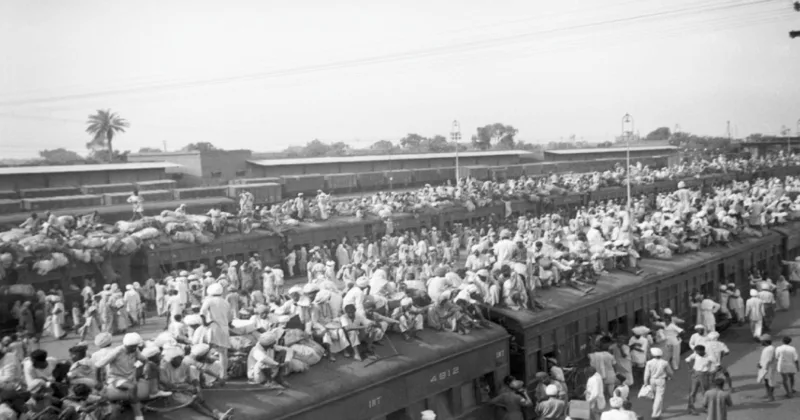
In Punjab and Bengal, Partition triggered massive communal massacres, train massacres and forced migrations in August–September 1947. Sindh remained comparatively peaceful in the first months after August 15, 1947. Large-scale communal killings were limited. Many Sindhi Hindus stayed on, believing they could continue living in the new state of Pakistan as a significant minority.
In Punjab, the exodus was sudden and chaotic in the summer of 1947. In Sindh, the major wave of Hindu migration occurred later — especially after the Karachi pogrom of 6–7 January 1948. The departure was more prolonged and staggered rather than a single catastrophic flight.
Punjab saw a two-way exchange of populations (Hindus/Sikhs moving east, Muslims moving west) across a newly drawn border. In Sindh, almost the entire Hindu population eventually left for India, while large numbers of Muslim refugees (muhajirs) from India poured into Karachi and other cities. This created intense pressure on housing and property, which became a major factor in the later violence and exodus.
The 1948 Karachi Pogrom (January 6–7 1948)
This was the most significant outbreak of communal violence in Karachi after Partition and a major turning point for Sindhi Hindus. Until early 1948, Sindh had remained relatively peaceful compared to Punjab and Bengal. Many Hindu Sindhis had stayed on, forming the largest non-Muslim minority in West Pakistan. The January events shattered that relative calm and accelerated their mass migration to India.
On the morning of January 6, 1948, a group of approximately 180–300 Sikhs (including women and children) arrived in Karachi by train from Shikarpur (or other parts of interior Sindh). They were being evacuated and were taken under police escort to a Gurdwara near Rattan Talao (also referred to as the Guru Mandir area).
A large mob of around 8000 people, predominantly Muslim refugees (muhajirs) from India quickly gathered. The crowd surrounded the Gurdwara, set it on fire and attacked those inside. Many Sikhs were killed or burned; others were attacked while police attempted to evacuate them in trucks. The violence then rapidly spread across the city.
Mobs moved into Hindu neighbourhoods, attacking homes, shops and individuals. Looting and arson occurred in several areas (including parts of Bunder Road, Jacob Lines, Ranchor Lines, and Hindu-majority localities). Hindu passengers at the railway station were also targeted. Contemporary accounts describe indiscriminate stabbing, killing and plunder, with the slogans “Kill the kafirs / Kill the Hindus / Loot the kafirs.” Violence continued into 7 January before being brought under control.
Early reports (including from Pakistani newspapers and the District Magistrate) mentioned dozens killed (e.g., around 64–127 deaths and 100–300+ injured over the two days). Indian accounts and later estimates (including in G.D. Khosla’s Stern Reckoning) put the death toll higher — often cited as at least 300 killed, with some community estimates reaching 1,000 or more. Several lorry-loads of bodies were reportedly taken for mass cremation.
Karachi had become severely overcrowded with Muslim refugees from India who had lost property and family members during the violence in Punjab and elsewhere. Competition for housing and businesses left behind by departing Hindus was intense. Many accounts indicate that the attacks were carried out largely by muhajir elements rather than local Sindhi Muslims. Some contemporary and later sources (including Nandita Bhavnani) note that certain groups saw violence as a way to create panic and push the remaining Hindus to leave, thereby freeing up properties.
The Civilizational Erasure
Sindhi Hindu experience of Partition was one of civilizational erasure rather than simple territorial division. Because the whole of Sindh went to Pakistan, Sindhi Hindus experienced a sense of total civilizational and territorial loss. There was no “half-Sindh” left in India that could serve as a cultural or political anchor. This made questions of language, identity and memory especially acute in the diaspora. They did not lose half a homeland; they lost the entire world — land, language, cultural memory and the way of life.
In her book ‘Stories from Vanished Homeland’, author Saaz Aggarwal has narrated many personal accounts of Sindhi Hindus highlighting pain mixed with nostalgia and resilience. Unlike countless books, reports and movies on the partition of Punjab, personal accounts of Sindhi Hindu community is not represented widely. Mostly due to the community’s long silence about the past — many have chosen to focus on rebuilding successful new lives and rarely passed on ill memories to the next generation. Despite this loss, the community has shown rebuilding itself with remarkable resilience in India.