The contrasting social media visibility of two protests has raised questions about how platforms such as Instagram determine which events receive widespread attention and which remain largely confined to smaller audiences.
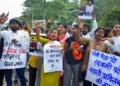
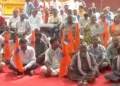
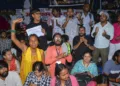
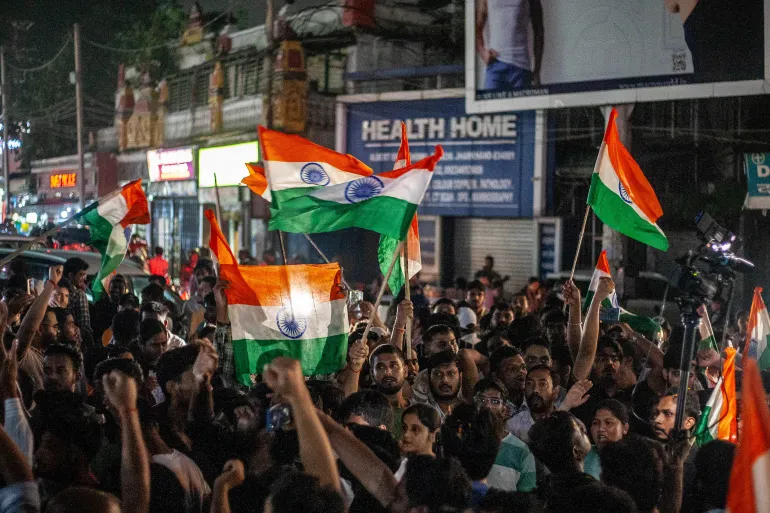
While the protest at Jantar Mantar in Delhi became highly visible across Instagram and other social media platforms, the student agitation in Ranchi, Jharkhand, received significantly less amplification despite featuring many of the visual elements that typically drive social media engagement, including large crowds, young protesters, clashes with police, tear gas, lathi charges and water cannons.
An NDTV analysis, conducted in collaboration with data analytics firm DataBeings, examined Instagram posts, accounts, reach, engagement and reel performance related to the two protests.
The findings showed a substantial difference in the scale of amplification.
However, the analysis also carried important caveats. The two protests took place in different locations and at different stages, had different levels of participation by digital creators and mainstream media, and followed different trajectories. The data therefore does not by itself establish that Instagram deliberately suppressed content from Jharkhand.
Delhi Protest Generated 1.85 Crore Reach
According to the data presented by NDTV, searches related to the Jantar Mantar protest generated around 5,239 Instagram posts from approximately 3,100 unique accounts.
Those posts collectively reached around 1.85 crore people, according to the analysis.
The report calculated an amplification level of approximately 5.86 times, while the average engagement was cited at around 3,547 engagements per post.
The numbers help explain why the Delhi protest appeared to be much larger on Instagram than its raw number of posts might suggest.
The 5,239 posts represented only a tiny proportion of Instagram’s massive Indian user base. Yet the content was repeatedly circulated through accounts, shares, recommendations and reels, creating the impression of a much larger presence across users’ feeds.
Ranchi had far fewer posts and accounts
The numbers for the Jharkhand student protest were considerably lower.
Data presented in the programme showed approximately 1,062 posts related to the Ranchi student protest, originating from around 290 accounts.
The estimated reach was approximately 6 lakh, compared with 1.85 crore for the Jantar Mantar protest.
The difference was therefore not simply about the number of posts. The bigger gap was in how widely those posts travelled.
This raised the central question explored in the programme: why did content from one student protest receive significantly greater amplification than content from another protest involving a similar demographic and, at several points, equally dramatic visuals?
Reel performance shows sharp difference
The comparison became more pronounced when NDTV examined the average views per reel among the top 100 accounts covering the protests.
The Jantar Mantar protest showed a gradual increase in visibility over several weeks. According to the analysis, its Instagram performance rose following clashes with police on July 20 and reached its highest point around the time of the resignation of Union minister Dharampal Padan, when some reels averaged close to 3 lakh views per day.
The Delhi protest consequently maintained sustained social media visibility for nearly three weeks.
The Ranchi protest followed a different pattern.
Its reels initially performed strongly, reaching around 2.8 lakh average views per reel during the early days of the protest. But that visibility subsequently fell sharply.
By August 10, when another police clash occurred in Ranchi, the protest’s presence among the top-performing accounts had already declined substantially.
This is significant because it suggests that the Jharkhand protest was not completely absent from Instagram in its initial phase. Rather, its visibility rose briefly before falling.
The biggest difference: Share of overall coverage
The most striking comparison presented by NDTV involved the share of content devoted to each protest among the top 100 Instagram handles being studied.
At its peak, the Jantar Mantar protest accounted for around 30 percent of the reels posted by the top accounts, meaning almost one in every three reels from those accounts was linked to the protest on the day highlighted in the analysis.
The Ranchi protest never came close to that level.
At its highest point, on the day of a police clash, content related to the Jharkhand protest accounted for only around 3 percent of the coverage among the top 100 accounts.
The difference was therefore roughly 30 percent versus 3 percent at their respective peaks.
Why did the gap emerge?
The programme examined several possible explanations rather than attributing the difference to one factor.
One possibility is the location itself.
Jantar Mantar is in New Delhi, the country’s political centre and a location where national political developments, journalists, influencers and digital creators naturally converge.
Ranchi, by contrast, is a state capital and the protest was primarily viewed as a Jharkhand-specific agitation.
That difference can affect the number of journalists, influencers and high-follower accounts producing content from the site.
Another factor is the digital profile of protesters.
According to a journalist account, many protesters at Jantar Mantar appeared to have better access to high-end smartphones and were more familiar with creating, editing and immediately uploading short-form videos.
In Ranchi, the journalist said, protesters were less active and less technically equipped as content creators.
That difference can have a direct impact on social media visibility. A protest with hundreds of people recording, editing and sharing content simultaneously can generate significantly more digital signals than a protest where fewer participants are producing content.
Hashtag use may also affect visibility
Journalists also discussed the role of hashtags.
The journalist said videos carrying hashtags associated with the Jharkhand protest appeared to receive fewer views in some cases, while videos using text overlays without corresponding captions or hashtags performed differently.
This observation, however, should not automatically be interpreted as evidence that Meta was deliberately suppressing Jharkhand-related content.
Instagram’s recommendation systems consider multiple signals, including user interactions, content characteristics, previous viewing behaviour, account relationships and other factors.
Hashtags are only one component of that larger ecosystem.
Trending music and reposting can change reach
Another factor discussed during the programme was the use of trending music.
According to the journalist, reels from the Jantar Mantar protest continued to circulate partly because they used popular or trending audio.
Trending sounds can help content enter recommendation ecosystems beyond the original followers of an account.
Reposting and sharing can have a similar effect.
When users interact with a reel, that activity can influence what is subsequently recommended to people connected to them or with similar interests.
This can create a feedback loop.
A video that initially receives strong engagement can be recommended to more people. Those additional viewers can generate more interactions, which can result in further distribution.
In this way, an event can quickly become highly visible even when the original number of posts is relatively limited.
Mainstream media coverage could be another factor
DataBeings founder Sumit Gupta also pointed to another possible explanation: differences in mainstream media coverage.
According to Gupta, the Jantar Mantar protest received broader mainstream media attention after clashes took place, while the Ranchi protest did not receive comparable coverage across all sections of the media.
This matters because social media and mainstream media increasingly influence each other.
A television report can generate clips for Instagram. An Instagram video can prompt television coverage. Journalists and influencers can then amplify the same incident across multiple platforms.
Once an issue enters that cycle, its digital visibility can increase rapidly.
The question, therefore, may not simply be what the Instagram algorithm is doing.
It may also be about who is producing the content, who is sharing it, what mainstream media is covering, how users interact with it and whether influential accounts decide to amplify it.
Allegations of mass reporting also surface
The programme also discussed allegations that some videos from protests were being mass-reported.
Journalist showed what she described as a screenshot from a WhatsApp group connected to the Jantar Mantar protest, in which users discussed repeatedly reporting a video with the expectation that a large number of reports could lead to its removal.
She also said some videos associated with the journalist’s reporting had experienced sharp drops in visibility and referred to the phenomenon as “shadow banning”.
Content moderation and recommendation decisions can be influenced by community guidelines, automated systems, user reports and other factors, and a reduction in views does not by itself prove shadow banning.
DataBeings raises the possibility of broader political content changes
Gupta also referred to a meeting involving Meta officials and the Indian government on August 3 and suggested that changes in the visibility of political content could be examined from that point onwards.
He stressed that it would be necessary to analyse a larger dataset to determine whether the pattern was specific to the Jharkhand protest or reflected a broader change affecting political content on Instagram.
That distinction is important.
If political content across multiple subjects experienced a similar decline, it could point towards a wider change in platform distribution.
If only one protest experienced the decline, other explanations would need to be examined more closely.
Does the algorithm decide what Gen Z sees?
The debate has broader implications because social media has become a major source of news and current affairs for young users.
The programme cited estimates suggesting that 84 percent to 91 percent of Gen Z consumes news and current affairs through social media.
That gives recommendation algorithms considerable influence over what young audiences encounter.
The concern is not necessarily that an algorithm consciously decides which protest it “likes”.
Rather, recommendation systems can create unequal visibility through a combination of automated ranking, engagement patterns, user behaviour, creator networks, content formats and platform policies.
A protest that generates early engagement can therefore receive increasingly greater exposure, while another protest may remain trapped within a smaller audience.
The data does not prove deliberate suppression
The central finding of the analysis is the existence of a significant visibility gap.
The data showed:
Jantar Mantar: 5,239 posts from around 3,100 accounts.
Jantar Mantar reach: Around 1.85 crore.
Jantar Mantar amplification: Around 5.86 times.
Ranchi: 1,062 posts from around 290 accounts.
Ranchi reach: Around 6 lakh.
Peak share among top 100 accounts: Around 30 percent for Jantar Mantar versus around 3 percent for Ranchi.
Average reel views: Ranchi initially reached around 2.8 lakh per reel before its visibility dropped sharply.
Delhi: Reels peaked at close to 3 lakh views per day around a key political development.
These figures establish a substantial difference in social media performance.
They do not, by themselves, establish that Instagram or Meta deliberately suppressed the Jharkhand protests.
The gap could be influenced by geography, creator participation, smartphone access, mainstream media attention, trending audio, hashtags, reposting patterns, user networks, timing and the recommendation algorithm itself.
Why the question matters
The bigger issue is not simply why one protest went viral and another did not.
It is whether social media users understand how much of the information reaching their screens is determined by factors beyond their direct control.
For young audiences who increasingly discover news through Instagram, YouTube and other platforms, visibility itself can influence perceptions of importance.
An issue that appears repeatedly in a user’s feed can seem like a national movement.
Another issue, despite having thousands of protesters and dramatic developments on the ground, can appear relatively insignificant if it does not enter the same digital circulation.
The Jharkhand-Jantar Mantar comparison therefore raises a larger question about the modern information ecosystem: Is social media giving every protest an equal opportunity to be heard, or are algorithms, creator networks and engagement patterns increasingly determining which movements receive national attention?
For now, the available data demonstrates the visibility gap. Establishing whether that gap was caused by deliberate platform intervention, however, would require substantially more data and independent analysis of Instagram’s recommendation and moderation systems.