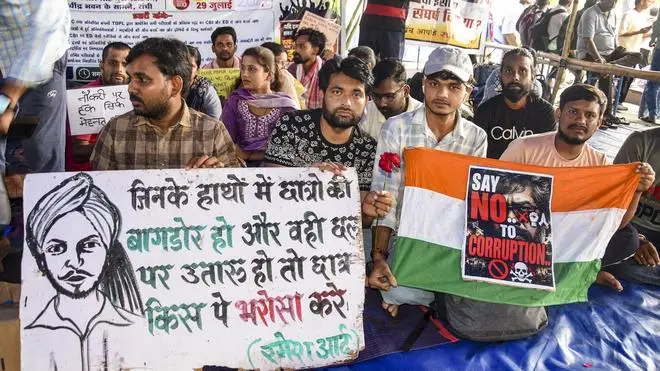
Deputy Commissioner Manjunath Bhajantari and SSP Rakesh Ranjan reached the JPSC-JSSC students’ protest site at Jaipal Singh Munda Stadium around 12:30 am with a police team, prompting allegations from protesters that the administration was trying to pressure them into ending the agitation. Police, however, said the visit was part of routine night patrolling, security assessment and verification of people at the protest site.
The late-night visit came amid heightened tensions following the alleged lathi-charge on students during their Assembly march. While officials questioned students and asked some to return home, protesters said their demands went beyond any single examination and vowed to continue the agitation.
DC, SSP question students at stadium
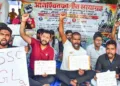
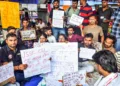
At around 12:30 am, DC Manjunath Bhajantari and SSP Rakesh Ranjan reached the Satyagraha site at Jaipal Singh Munda Stadium along with a police team. The officials went among the protesting students and spoke to them about their concerns and the ongoing agitation.
The DC asked students about their well-being and told them that vehicles had been arranged by the administration for those who wanted to return home. He also said students could approach the administration if they faced any problems.
Ranchi Students Protest:
Whole administration came after students late at night yesterday. They tried to divide students based on examination telling that, demands of JSSC students have been met then why are the still there.
So importantly, no such demands have been accepted,… pic.twitter.com/lCpfrVPAsn
— Subhi Vishwakarma (@subhi_karma) August 12, 2026
The SSP, meanwhile, interacted with students associated with the JPSC-JSSC Reform Forum and JPSC-JSSC Nyay Manch. He asked how many students present at the site had appeared for the JPSC examination and how many had taken the JSSC CGL examination.
After identifying candidates associated with the two examinations, the SSP questioned the JPSC candidates about their continued presence at the protest site, asking, in effect, why they were still there when their demands had been accepted.
The students responded that the agitation was not limited to one examination or one group of candidates. They said the issue concerned the future of students across Jharkhand and maintained that the protest would continue until all their demands were addressed.
Students allege police tried to create pressure
The protesting students alleged that the administration was attempting to create psychological pressure on them and intimidate them into ending the movement.
According to the students, police personnel also switched off lights inside and outside the stadium, making the protesters suspicious of the administration’s intentions. They alleged that the police visit was aimed at removing them from the stadium.
The allegations came days after the students’ Assembly march and the reported use of force against protesters. Students claimed that the administration’s actions were creating an atmosphere of pressure at the protest site.
They also alleged that officials had sought the names, phone numbers and photographs of students present at the site who had appeared for JPSC or JSSC examinations.
Police deny attempt to remove protesters
The police denied that the late-night deployment was intended to remove or arrest the protesting students.
SSP Rakesh Ranjan said the visit was part of night patrolling. According to the police explanation, the team had gone to assess security arrangements and verify the people present at the protest site.
The City SP also clarified that police had not arrived to pick up or arrest protesters.
Police officials said claims circulating on social media that the administration had come to remove the students were misleading. They said security personnel were deployed to ensure that no outsider involved in criminal activity, including someone who may have committed an offence in another state, was taking shelter at the protest site.
#WATCH | Jharkhand: Ranchi City SP Paras Rana says, “No one came to detain anyone; the issue is that Instagram influencers have arrived to make videos go viral. They seized a great opportunity when the administration arrived; a rumour is being spread that we are here to detain… https://t.co/hHDf0nVkFP pic.twitter.com/G2ID9id0Mz
— ANI (@ANI) August 11, 2026
The police also said the verification exercise was necessary to identify any anti-social elements and maintain security at the location.
Officials further maintained that the core committee of the student movement had itself sought police cooperation to identify such elements.
At around 1:05 am, the DC and SSP left the protest site. However, the City SP, SDO and ADM Law and Order remained there.
BJP leaders reach stadium after police presence
The presence of senior police officials at the stadium also drew political attention.
After receiving information about the police presence, Dhanbad BJP MLA Raj Sinha reached the stadium at around 1:30 am. He spoke to the students and assured them that force could not be used against them.
BJP नेता,भानु प्रताप, अमर बावरी और प्रफुल्ल पटेल रात में छात्रों से मिलने आए हैं। pic.twitter.com/hrUg9Ii5NX
— Vikram Kumar (@VikramKrDas_) August 11, 2026
Raj Sinha said it was not appropriate to trouble students late at night and questioned the need for questioning protesters at that hour.
Amar Bauri and Prafull Shahdeo also subsequently reached the protest site, while Bhanu Pratap Shahi was already present there.
Students say they will turn protest into mass movement
Meanwhile, the JPSC-JSSC Reform Forum has warned that the student agitation could be expanded into a larger public movement if the government fails to address their demands.
Student leader Ravindra Kumar Paswan said the government should take the students’ concerns seriously and take an early decision. He said preparations were underway to transform the student movement into a mass movement if their demands remained unresolved.
The forum said it would announce its next course of action through a press conference.
SSP DM साहब अचानक रात में क्यों आए थे ?
आये थे तो मकसद कुछ और था पर महौल ने मूड बदल दिया। pic.twitter.com/MNDzA4SpBs
— JPSC JSSC REFORM MANCH (@JPSCreformanch) August 11, 2026
Paswan also claimed that despite alleged attempts to prevent students from different districts from reaching Ranchi by train and bus during the August 10 Assembly march, a large number of students reached the state capital.
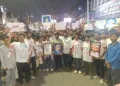
The forum claimed that around 50,000 students had gathered for the protest.
According to the student forum, around 300 to 500 volunteers had been deployed to ensure that the protest remained peaceful and was conducted through constitutional means.
Paswan said that from around 10 am to 5 pm, the police administration’s conduct had remained cooperative, for which the forum had thanked the authorities.
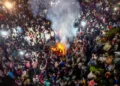
However, he alleged that the situation changed after evening, when police used lathis to disperse or remove students from the site.
Several students were allegedly injured and some reportedly required medical treatment. The protesters also alleged that women participants were subjected to lathi-charge.
Students demand action against irregularities
Paswan said that if the administration believed anti-social elements were present among the protesters, it should have identified them and taken action against them instead of using force against the entire gathering.
He argued that students who were protesting peacefully should not have been subjected to lathi-charge.
He also claimed that some people were detained for a period of time and condemned the alleged use of force against media personnel covering the protest.
According to Paswan, the students were raising their demands through democratic means and were cooperating with the administration. He said the government should engage directly with the students and provide a clear response to their demands.
Students seek cancellation and probe into exams
The student leaders have maintained that their demands extend beyond the cancellation or investigation of any single examination.
Paswan referred to Chief Minister Hemant Soren’s statement in the Assembly regarding the cancellation of certain examinations and an inquiry into the matter. However, he said the students wanted a wider examination of the recruitment process.
The forum has demanded an impartial investigation into examinations over which students have raised allegations of irregularities. It has also called for the cancellation of examinations where wrongdoing is established and has demanded a CBI probe.
The students have said their agitation will continue until the government provides a satisfactory response to their demands.
The midnight police visit
The late-night developments at Jaipal Singh Munda Stadium have produced sharply different accounts.
Students’ version: Protesters allege that police arrived unexpectedly around midnight, switched off lights inside and outside the stadium and attempted to create psychological pressure to force them to leave.
Police and administration’s version: Officials say the deployment was part of night patrolling, security assessment and routine verification. They deny that the police went to the stadium to arrest or remove the protesting students.
The allegations of lathi-charge, injuries and action against women protesters also remain part of the wider dispute surrounding the student agitation, with the protesters and administration presenting different accounts of the events.