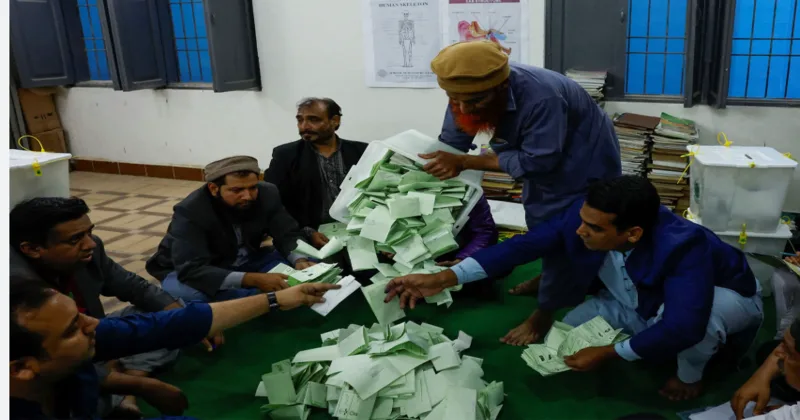
The Pakistan Muslim League-N has bagged 14 seats while the PPP has managed to secure just four of the total 18 seats that were up for grabs in the second phase of Pakistan occupied Jammu Kashmir (PoJK) election on August 2, according to unofficial results released by the Election Commission.
The PML-N had secured 10 out of 12 refugee seats while the PPP had won two, according to these results. This is something along expected lines as these seats are often bagged by the party in power at Islamabad. Even before the first round of elections on July 27, it was being said that the PML-N was most likely to win a majority of, or all, seats in this category.
Polling was postponed until Tuesday in LA-27 Muzaffarabad-I (Kutla) and at 71 of the 174 polling stations in LA-28 Muzaffarabad-II (Lachhrat). This was done as polling staff and election material could not reach the constituency because of landslides and bad weather that resulted in blocked roads, according to a Dawn report.
Chief Election Commissioner Justice (retd) Ghulam Mustafa Mughal held a press conference in Muzaffarabad regarding these 18 results. He announced that the PML-N had won 14 seats and the Pakistan Peoples Party (PPP) four.
On Sunday, the PPP had accused the PML-N, its ally in Islamabad, of electoral malpractices, rigging and violence, as it had during the first phase of the elections in Mirpur division on July 27. PML-N had secured nine of the 13 seats in the first phase while the PPP won the remaining four.
Polls in PoJK are being held in three phases because of concerns regarding security with the polling held on seven seats of Muzaffarabad division and 12 refugee seats.
In the third phase, polling will be held in 11 constituencies of Poonch division.
PML-N now has 23 legislators, out of 45
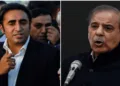
As the unofficial results were released, Adviser to the Prime Minister on Political Affairs Rana Sanaullah said his party had now gained the “simple majority” needed to form a government. He was addressing a press conference alongside Minister for Kashmir Affairs and Gilgit-Baltistan Amir Muqam.
“We have the government-forming numbers,” he said, adding that “there are a total of 45 seats […] and out of 45, PMLN has so far secured 23 seats”. The PML-N leader said his party had won in four of the seven territorial constituencies in Muzaffarabad while the PPP, which had been “attempting to build a rigging narrative since 10:30AM on Sunday”, had secured three.
Sanaullah demanded that the PPP must tell the people how they managed to secure three seats despite the alleged rigging. “Did they succeed because of rigging or because of a free and fair election?”
Sanaullah further stated that the PML-N had also secured 10 out of 12 refugee seats while the PPP had won two. “A democratic government, which has the people’s mandate, will now be formed and it will work on ideological, economic, and political affairs of the region,” he said.
He added that a parliamentary party session of the PML-N would be called after the conclusion of the third phase of the elections for future decisions.
PPP’s rigging, vote looting allegations dismissed
Speaking about PPP’s rigging allegations, the PML-N leader dismissed them and accused PPP of colluding with the proscribed Joint Awami Action Committee (JAAC) to disrupt the election process in Muzaffarabad. “Anticipating PML-N’s win, PPP along with the action committee planned riots and [..] fired at the police personnel when they got there,” Sanaullah alleged.
He claimed that the incident created an atmosphere of fear in the area, which led to a lower turnout.
“We received at least 3,000 to 4,000 fewer votes due to this,” he claimed.
On PPP’s allegations that an attempt had been made on its candidate AJK Legislative Assembly Speaker Chaudhry Latif Akbar’s life, he accused the party of staging a “drama”. He also claimed that the PPP had refused to get Akbar’s medico-legal examination done.
Sanaullah accused the PPP of employing “dirty tricks” to sabotage the electoral process, saying that the PPP’s actions violated the Charter of Democracy. In the charter, the party leadership had agreed that they would not “malign each other’s mandate with such dirty tricks”.
Replying to a question, he said the PPP had raised doubts over “high turnout” in constituencies where the PML-N’s candidate had won. “With the kind of societal system in place here, it is certainly possible that if there are 300 people in a village, 290 might show up to vote,” he said.
He asked the PPP to follow due process in case of complaints rather than “building a narrative and disrupting democracy and the election process”.
Reports of violence during voting
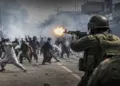
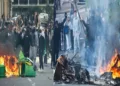
During the polling on Sunday, attempts were reportedly made to disrupt polling in some neighbourhoods of Muzaffarabad, but voting continued in most areas. In LA-31, Muzaffarabad-V (Khawra), clashes between workers of the PML-N and PPP were reported in Union Council Katkair.
The PPP alleged that one of its workers, Syed Mushtaq Shah, was killed in an attack by PML-N supporters. The PML-N rejected the allegation, claiming the man suffered a cardiac arrest following a scuffle between two groups. There was no independent confirmation of either claim.
PPP candidate and Legislative Assembly Speaker Akbar also wrote to the Election Commission, alleging security lapses, firing incidents, interference in polling, prevention of polling agents from entering polling stations and denial of voting rights. He also claimed there had been an attempt on his life in which Advocate Syed Mumtaz Hussain Naqvi was injured, and called for an investigation and legal action against those responsible. There was no immediate response from the Election Commission.
Clashes between workers of the two major parties, some involving the use of firearms, were also reported from other areas, though no casualties were immediately reported.
Turnout remains very low outside PoJK
Outside the PoJK, people voted for their candidates vying for refugee seats at polling stations set up in Chakwal, Jhelum, Rawalpindi, Islamabad, Sialkot, Narowal, Sargodha, Attock, Nawabshah, Hyderabad, Mohmand, Mansehra, Quetta, Dera Ghazi Khan, Peshawar, Sanghar, and Naushahro Feroze.
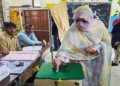
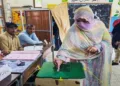
Polling in these areas largely remained peaceful and recorded a low turnout. In Mohmand, not a single voter turned up at a station set up for the AJK polls. In Dera Ghazi Khan, a single registered female voter cast her ballot at the Govt Elementary School in Maumori, where a polling station had been established just for her.
Out of 12 refugee seats, seven seats are in Punjab, one seat is in Khyber Pakhtunkhwa, one seat (Jammu-VI) is divided between Punjab, Islamabad, and Khyber Pakhtunkhwa, one seat is divided between Sindh and Balochistan (Valley-I), and one seat (Jammu-I) is shared among refugees living in Balochistan, Punjab, and Sindh. Valley-V seat is divided between Punjab and Islamabad.
Since early June, the POJK region has witnessed protests by the now-proscribed Joint Awami Action Committee (JAAC), which has been demanding the abolition of the 12 refugee seats in the legislature. The protests have also been marred by rampant violence with over 100 people getting killed and hundreds being injured.