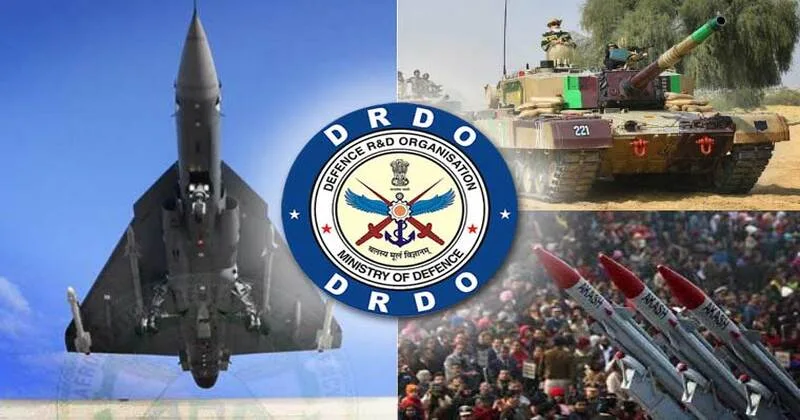
New Delhi: India has emerged as one of the few countries capable of independently developing several of the world’s most sophisticated military technologies, according to the Defence Research and Development Organisation (DRDO), which recently showcased seven flagship indigenous defence programmes that it says place the country in an exclusive league of technologically advanced military powers.
Presented under the theme “India in an Exclusive Club,” the compilation highlighted India’s progress across land warfare, aerospace, missile defence, underwater propulsion and space security, reflecting decades of sustained investment in indigenous research and development. The organisation said these achievements demonstrate the country’s growing strategic autonomy while reducing dependence on foreign military technologies.
According to DRDO, the seven programmes collectively illustrate India’s ability to master critical defence technologies spanning propulsion systems, advanced materials, radar engineering, electronic warfare, missile guidance, software integration and complex systems engineering. The organisation emphasised that these capabilities are not confined to individual platforms but represent a broad technological ecosystem that is now supporting future-generation defence projects. The presentation also underlined the role of indigenous innovation in strengthening India’s long-term defence preparedness under the Aatmanirbhar Bharat initiative.
ATAGS, AIP, A-SAT and missile defence mark strategic milestones
Among the most significant technologies highlighted was the Advanced Towed Artillery Gun System (ATAGS), which DRDO described as making India the first country to develop the world’s longest-range artillery gun in its category. Developed jointly with Indian industry, the indigenous 155 mm/52-calibre artillery system has repeatedly achieved record-breaking firing ranges during successive trials. Having successfully completed extensive testing, the gun system is now progressing towards large-scale induction into the Indian Army, marking a major milestone in India’s indigenous artillery modernisation programme.
The organisation also highlighted the Fuel Cell-based Air Independent Propulsion (AIP) system developed for conventional submarines, describing it as one of the country’s most advanced indigenous underwater technologies. According to DRDO, only four countries possess this capability, placing India among a select group with expertise in fuel-cell AIP technology. The system enables diesel-electric submarines to remain submerged for much longer periods without surfacing to recharge their batteries, significantly enhancing underwater endurance, operational effectiveness and stealth during maritime missions.
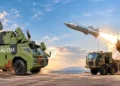
Maiden flight-test of ‘Kusha’ Long-Range Surface-to-Air Missile was successfully conducted from the APJ Abdul Kalam Island off the coast of Odisha today. This test was conducted against an electronic target simulating high-speed and high-altitude aerial threat which was… pic.twitter.com/UeJgNOtCm5
— DRDO (@DRDO_India) July 23, 2026
Another strategic achievement featured in the presentation was India’s indigenous Anti-Satellite (A-SAT) capability, successfully demonstrated during Mission Shakti on 27 March 2019. DRDO stated that the mission placed India among only four nations capable of intercepting satellites in low-Earth orbit using indigenous missile technology. The successful test marked a significant step in India’s evolving space security architecture and demonstrated the country’s growing ability to safeguard its strategic interests in the space domain.
India’s indigenous Ballistic Missile Defence (BMD) programme was also identified as one of the country’s defining technological accomplishments. Developed entirely within India, the multi-layered missile shield has undergone numerous successful interceptor trials against ballistic missile threats. According to DRDO, India is among only four countries possessing an indigenous ballistic missile interception capability, joining a limited group of technologically advanced nations capable of developing and deploying such sophisticated missile defence systems.
Tejas, AWACS and Arjun showcase India’s aerospace and armoured capability
In the aerospace sector, DRDO showcased the country’s indigenous Airborne Warning and Control System (AWACS) programme as another example of India’s technological advancement. The organisation stated that only five countries possess the capability to independently develop airborne early warning and battle management systems, placing India within this exclusive group. Equipped with advanced radar, electronic intelligence and command-and-control technologies, these aircraft substantially improve the Indian Air Force’s situational awareness, surveillance capability and operational coordination during both peacetime and combat operations.
The Arjun Main Battle Tank also figured prominently in the presentation. According to DRDO, India is one of only seven countries capable of designing and manufacturing a modern indigenous main battle tank. Although the programme evolved over several decades, it enabled Indian scientists and engineers to develop expertise in several highly specialised technologies, including advanced armour protection, sophisticated fire-control systems, suspension engineering and the integration of large-calibre tank guns. These technological gains have strengthened India’s indigenous armoured vehicle development capability and reduced reliance on imported platforms.
Completing the list was the Light Combat Aircraft (LCA) Tejas, which DRDO described as placing India among only seven countries capable of designing and manufacturing a modern fourth-generation-plus fighter aircraft. The programme has enabled India to acquire expertise across a wide spectrum of advanced aerospace technologies, including fly-by-wire flight control systems, advanced aerodynamics, composite airframe structures, mission computers, avionics integration and indigenous weapon systems. DRDO noted that the technological experience accumulated through the Tejas programme is now laying the foundation for India’s next-generation Advanced Medium Combat Aircraft (AMCA).
🚨 Azad Engineering Delivers Its First Fully Indigenous Expendable Turbojet Engine to DRDO for Use in Missiles and Drones. pic.twitter.com/DbCgnYcCF3
— Bharat Tech & Infra (@BharatTechIND) July 23, 2026
Beyond these seven flagship programmes, DRDO emphasised that each project has contributed to the creation of an extensive indigenous technological base that spans multiple domains of modern warfare. Expertise generated through the Tejas programme is being applied to the AMCA project, while technologies developed under the Ballistic Missile Defence programme are supporting Project Kusha, India’s indigenous long-range air defence system. Similarly, research undertaken for the fuel-cell Air Independent Propulsion programme is expected to strengthen future conventional submarine projects and enhance India’s underwater warfare capabilities.
The presentation also reflected the broader objectives of the Aatmanirbhar Bharat initiative, under which the government has expanded investment in indigenous defence research, encouraged greater participation by private industry and promoted exports of domestically developed military platforms. DRDO noted that defence systems such as Akash, BrahMos and Pinaka have increasingly become important components of India’s growing defence export portfolio, demonstrating the country’s expanding industrial and technological capabilities.
While DRDO acknowledged that assessments such as India being “one of four,” “one of five,” or “one of seven” countries are based on the organisation’s evaluation of indigenous technological capability, it maintained that the broader conclusion remains unchanged. Through sustained investment in research and development over several decades, India has steadily built the ability to independently design, develop and integrate highly complex strategic defence systems across land, air, sea, missile defence and space domains, placing the country among a limited group of advanced military technology powers.