NEW DELHI: As protests over examination paper leaks intensify across the country, the political battle over the issue has sharpened, with BJP leader Indresh Kumar accusing Opposition parties and the self-styled “Cockroach Janta Party” (CJP) of exploiting students’ concerns to create political instability rather than seeking genuine reforms in the education system.
The remarks come amid demonstrations across multiple states demanding the resignation of Union Education Minister Dharmendra Pradhan over alleged irregularities in competitive examinations, including the NEET paper leak controversy.
Addressing the issue, Indresh Kumar argued that examination paper leaks and recruitment irregularities are not confined to institutions under the Central Government but have also surfaced in several Opposition-ruled states. Referring to the delay in the constable recruitment examination in Congress-ruled Himachal Pradesh, he said the recruitment process itself had been disrupted due to alleged paper leaks. He also cited similar concerns in Punjab and Kerala, alleging that these states too have witnessed administrative failures relating to recruitment examinations.
He accused critics of selectively targeting the BJP while remaining silent on comparable controversies in Opposition-ruled states.
The BJP leader further alleged that several ongoing protests had moved beyond genuine concerns over examination paper leaks and were being used as a vehicle for broader political mobilisation. According to him, the agenda of certain groups was no longer limited to issues such as paper leaks, farmers’ concerns, democracy or the Constitution, but was aimed at creating instability and weakening democratic institutions.
He also claimed that attempts were being made to push India towards a situation of lawlessness comparable to the unrest witnessed in neighbouring countries such as Nepal and Bangladesh. Defending the BJP against allegations of suppressing dissent, Kumar maintained that the party had continued to uphold democratic institutions despite sustained criticism.
Drawing a comparison with the Congress government’s handling of Baba Ramdev’s agitation, he described that episode as a far stronger example of authoritarianism than recent police action against protesters. He also argued that India’s inability to build consensus on national issues weakens collective public action and said lasting reforms require social cohesion rather than fragmented movements.
On the issue of examination fraud, Kumar said the government’s foremost responsibility should be to dismantle the criminal networks responsible for paper leaks. He maintained that identifying the masterminds behind the alleged rackets, exposing those who patronised them and imposing exemplary punishment would have a greater long-term impact than merely demanding the resignation of Union Education Minister Dharmendra Pradhan.
Questioning the pace of investigations, he asked why the identities of those allegedly responsible for organised paper leak syndicates had not yet been publicly disclosed.
He also stressed the importance of character building in society, citing RSS founder Dr K B Hedgewar, and said virtuous individuals could reform institutions irrespective of the system in place.
Meanwhile, protests demanding accountability over examination irregularities continued across the country. Demonstrations were reported from Congress-ruled Himachal Pradesh, Maharashtra, Gujarat, Sikkim and Arunachal Pradesh.
In Congress-ruled Himachal Pradesh, students from Kinnaur and Lahaul-Spiti assembled at Children’s Park in Solan demanding the resignation of Union Education Minister Dharmendra Pradhan over the alleged NEET paper leak controversy. Members of the Centre of Indian Trade Unions (CITU) also joined the protest, alleging that repeated examination irregularities had severely undermined confidence in the education system.
NEET aspirant Bhavika said recurring paper leaks and re-examinations had imposed enormous emotional and financial burdens on students and their families. Protesters also criticised the government’s silence over reports of student suicides linked to examination-related stress. Reports also emerged of police resorting to lathi-charge on protesting students in Himachal Pradesh, drawing criticism from demonstrators who accused the Congress government of suppressing peaceful protests while demanding accountability over examination irregularities.
In Chhatrapati Sambhajinagar, students and advocates gathered at Kranti Chowk demanding accountability in the education sector. Protesters questioned why no responsibility had been fixed in paper leak cases and argued that repeated examination controversies reflected deeper systemic failures.
At Nagpur’s Samvidhan Square, hundreds of students, youth and senior citizens demanded Dharmendra Pradhan’s resignation, alleging that repeated examination and recruitment controversies were jeopardising the future of young Indians.
The Students’ Association of the Film and Television Institute of India (FTII), Pune, also extended support to the protests, citing the recent leak of the FTII entrance examination paper as evidence that examination security had become a nationwide concern. The association demanded stronger safeguards and greater accountability to restore confidence in competitive examinations.
In Ahmedabad, police detained several protesters gathered at Law Garden after they allegedly assembled without permission.
Similar demonstrations were organised in Surat, Junagadh and Bhavnagar, where protesters carried copies of the Constitution, displayed placards supporting Sonam Wangchuk and raised slogans against the government. One protester alleged that students demanding accountability were facing police action while serious offenders remained free.
In Namchi, the opposition Sikkim Democratic Front (SDF) organised a demonstration alleging that repeated paper leaks had severely damaged the credibility of India’s competitive examinations.
Meanwhile, thousands of youths in Itanagar organised a rally demanding stringent action against those responsible for examination paper leak scams and called for greater transparency and accountability in the country’s examination and recruitment system.
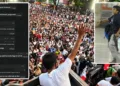
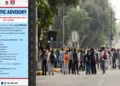
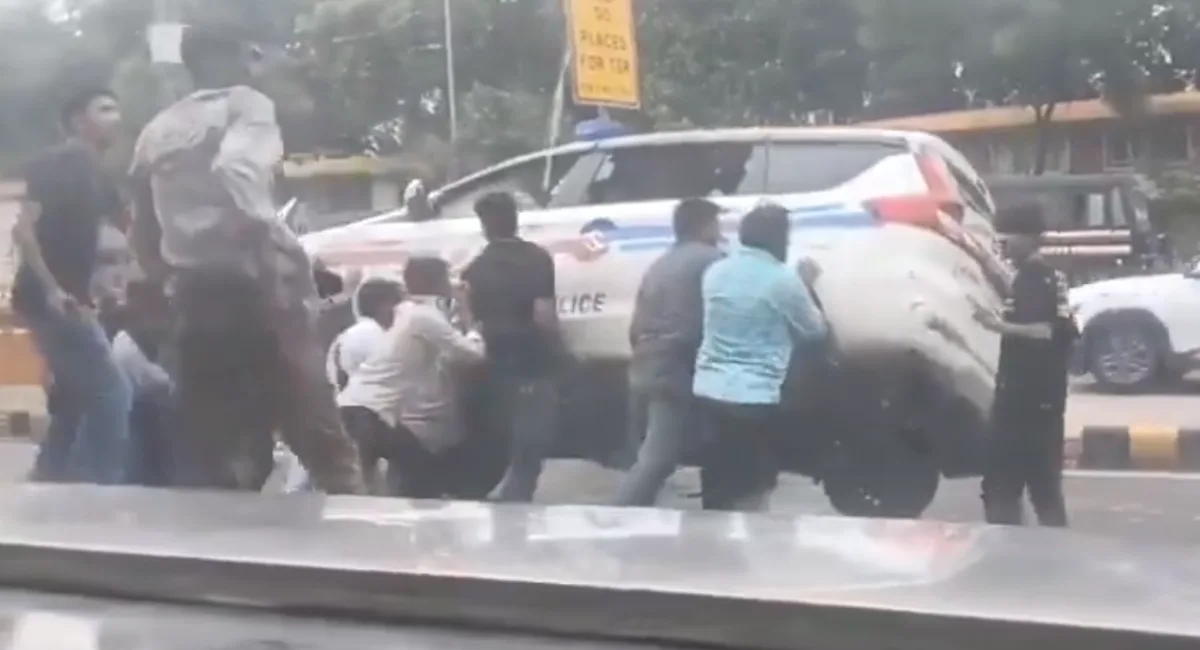
The controversy further escalated during the “Sansad Chalo” march in New Delhi, where CJP activists attempted to proceed towards Parliament without official permission. The march resulted in clashes with security personnel, traffic disruptions and police action after demonstrators allegedly breached restrictions imposed in the high-security zone.