India is on the brink of its most historic military reforms since Independence. With the Chief of Defence Staff (CDS) General NS Raja Subramani set to present the roadmap for implementing Integrated Theatre Commands (ITCs) to the Raksha Mantri, the long-awaited restructuring of India’s higher defence organisation appears to be entering its final phase. Once approved by the Defence Minister, the proposal is likely to be placed before the Cabinet Committee on Security (CCS) for final clearance. The move reflects the Government’s commitment to military transformation under its declared “Year of Reforms” initiative.
Seamless Coordination: Three Services
At the heart of this reform is a simple but fundamental idea: future wars cannot be fought effectively by the Army, Navy and Air Force operating through separate command structures. Modern conflicts unfold simultaneously across land, sea, air, space and cyberspace, demanding seamless coordination between the three Services. The proposed ITCs seek to achieve exactly that by bringing the combat assets of all three Services within a designated geographical area under a single operational commander. The objective is to create a military that can respond faster, operate jointly and employ national military power more effectively.
The idea of greater jointness is not entirely new. Parliament had already laid the legislative foundation by enacting the Inter-Services Organisations (Command, Control and Discipline) Act, 2023, to strengthen integration among the Armed Forces and enable them to meet future security challenges more effectively. Yet, despite broad agreement on the need for greater integration, important questions remain. Why does India need ITCs? How will they improve military effectiveness? What challenges have delayed their implementation? And what would success ultimately look like? Understanding these questions is essential to appreciating one of the most consequential defence reforms currently underway.
Need Integrated Theatre Commands
Modern warfare has changed fundamentally. Future conflicts will unfold simultaneously across land, sea, air, space and cyberspace, demanding seamless coordination and faster decision-making across the three services. At the same time, India faces an increasingly assertive China, an unpredictable Pakistan and the possibility of collusive threats on two fronts. Such challenges demand a military that can plan and operate as a single, integrated force.
India’s existing command structure evolved over decades, when each service largely planned and conducted operations through its own chain of command. Today, the Army has seven operational commands, the Air Force seven and the Navy three, alongside two tri-Service commands – the Andaman and Nicobar Command and the Strategic Forces Command. While this system has served the country well, it was not designed for the demands of modern, multi-domain warfare. Integrating these commands into ITC structures is therefore one of the most ambitious organisational reforms ever undertaken by the Indian Armed Forces. Greater jointness was recommended by the Kargil Review Committee after the 1999 conflict and later endorsed by the Naresh Chandra Task Force and the Shekatkar Committee. The creation of the CDS and the Department of Military Affairs (DMA) marked important milestones in this journey. These reforms have steadily paved the way for ITCs. Today, there is broad agreement that greater jointness is essential for India’s Armed Forces. The real challenge lies in designing a command structure that strengthens, rather than inadvertently weakens, India’s military capability. Reorganising commands while integrating communications, logistics, intelligence and operating procedures is a complex task that cannot be accomplished overnight. Every major military has taken years to implement similar reforms, and India is no exception.
What is Integrated Theatre Command?
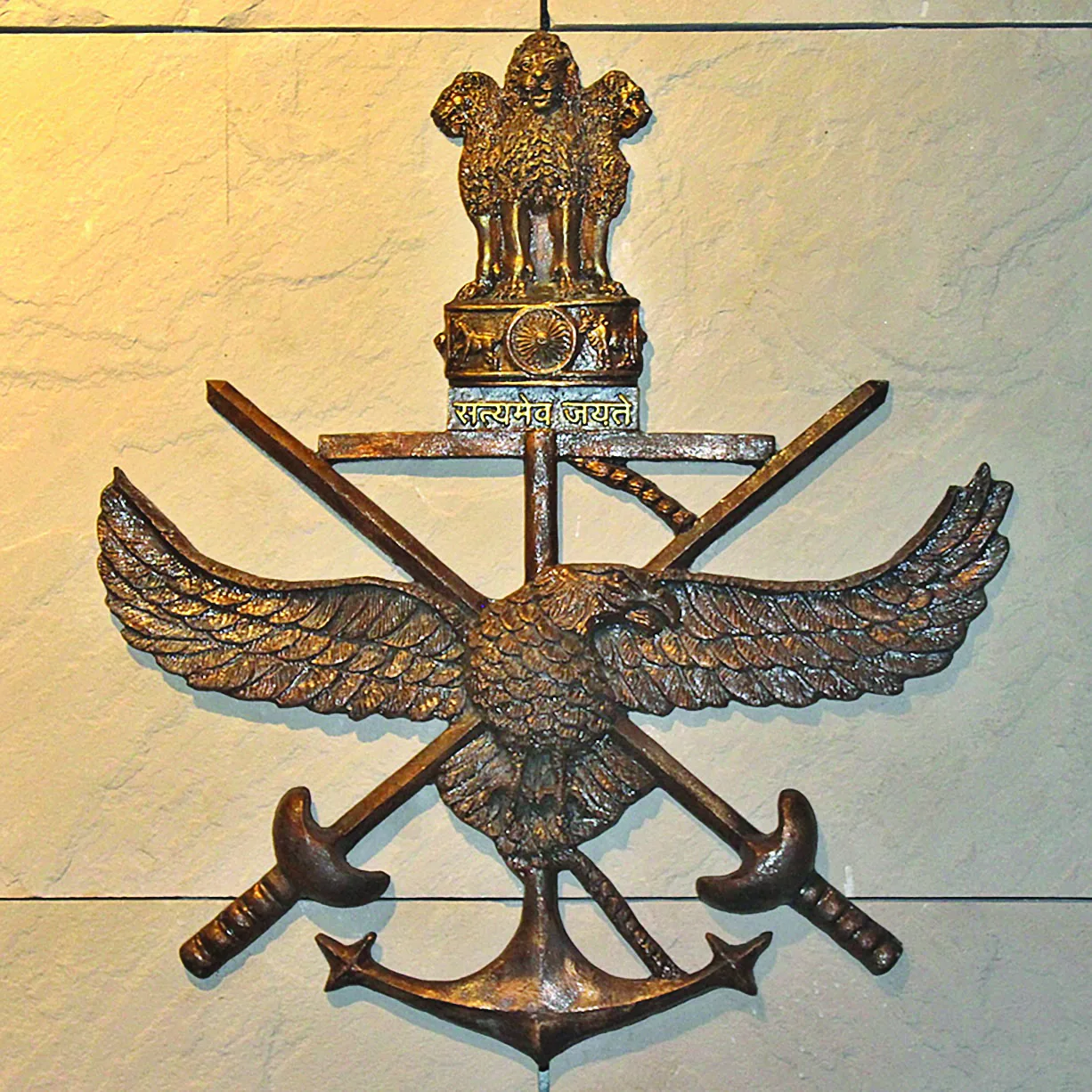
- An integrated theatre commands is a unified structure where assets from the Army, Navy, and Air Force operate under a single commander for a specific geographical area
- This ensures better coordination, faster decision-making, and improved combat effectiveness
- ITCs will mitigate the shortcomings of single-service operations and integrate emerging war-fighting capabilities, such as cyber and space warfare
- Key Committee Recommendations: The Kargil Review Committee, 1999 recommended creation of integrated theatre commands and Chief of Defence Staff (CDS) to improve joint operations and address coordination failures during the Kargil War
- The Shekatkar Committee, 2016: proposed three integrated theatre commands (Western, Northern, and Southern) to enhance tri-service synergy and resource efficiency
- Proposed Theatre Commands in Bharat: Northern Theatre Command (Lucknow) focused on countering threats from China
- Western Theatre Command (Jaipur) centered around threats from Pakistan
- Maritime Theatre Command (Thiruvananthapuram) focused on managing operations in the Indian Ocean Region
- Progress Toward Theaterisation: The appointment of the CDS as the head of Department of Military Affairs are momentous steps towards the integration and advancement of defence forces
- Inter-Services Organisation (Command, Control, and Discipline) Act 2023 empowers theatre commanders with disciplinary control over all three services and promotes jointness through cross-postings
- First Tri-Service Common Defence Station (Mumbai, 2024) merges logistics and maintenance facilities for all three services under one leadership
Existing Tri-Service Commands
- The Andaman and Nicobar Command, based in Port Blair, is Bharat’s first tri-service theatre command, overseeing Southeast Asia and the South China Sea
- The Strategic Forces Command (SFC), based in Delhi, responsible for handling Bharat’s nuclear deterrence capabilities
Much of the groundwork has already been completed. The creation of the CDS and the DMA, the Inter-Services Organisations Act, the establishment of a Joint Operations Centre, integrated logistics, common air defence networks and cross-posting of personnel have all laid the foundation for ITCs. Successive CDSs have submitted detailed proposals on the structure and implementation of ITCs, bringing the reform well beyond the conceptual stage.The Indian Air Force’s concerns are equally important. It has consistently supported the principle of jointness but has cautioned against dividing India’s limited air assets into rigid geographical theatres. Unlike land forces, air power derives its strength from the ability to concentrate rapidly wherever required. With the IAF currently operating well below its authorised fighter squadron strength, dispersing scarce aircraft, airborne early warning platforms and aerial refuelling assets across multiple theatres could reduce their effectiveness during a major conflict. Its concern is not with jointness, but with preserving the flexibility that makes air power effective. Recent developments indicate that the reform has now entered its final phase.
With CDS General N. S. Raja Subramani expected to present the implementation roadmap shortly, the debate has shifted from whether India should adopt ITCs to how to introduce them. The emphasis must now be on a phased, carefully tested and professionally managed transition that does not compromise operational readiness. Success will not be measured by the creation of new headquarters, but by the Armed Forces’ ability to fight as a single, integrated force. Modern wars leave little time for consultation among multiple headquarters; decisions often must be made within minutes. A fragmented command structure risks slowing the military’s response at precisely the moment when speed, coordination and unity of effort are most critical. The proposed ITC system addresses this challenge by replacing separate service-centric operational commands with integrated commands led by a single Integrated Theatre Commander. The plan envisages three major ITCs – a Northern Theatre focused on the China front, a Western Theatre responsible for the Pakistan front, and a Maritime Theatre tasked with safeguarding India’s interests across the Indian Ocean Region.
Each commander will have operational control over the Army, Navy and Air Force assets assigned to that theatre, enabling all three services to fight under one commander and one battle plan. The Service Chiefs will continue to be responsible for raising, training and sustaining their respective forces.
In the end, success will be judged by faster decision-making, better utilisation of military resources, greater operational synergy and a force capable of delivering a swift, coordinated and decisive response across all domains of warfare.
The Way Forward
With implementation now approaching, the challenge is to ensure that ITCs strengthen combat capability without compromising the strengths of individual Services. A phased rollout, backed by joint training, integrated logistics and common communications, is the best way forward. Equally important is a clearly articulated National Security Strategy. ITCs are instruments for executing national strategy, not ends in themselves. Such a strategy would provide the political and military guidance needed for capability development, resource allocation and unified operational planning.
ITCs are not about creating new headquarters. They are about ensuring that India’s military can respond with speed, unity and precision in an increasingly challenging security environment. As India’s strategic interests expand from the Himalayas to the Indian Ocean, the ability of the Army, Navy, and Air Force to operate as a single force will become a key determinant of national security. Ultimately, this reform will be judged not by the number of headquarters created, but by a simple question: If conflict comes, can India’s Armed Forces respond faster, fight together more effectively and prevail decisively?