The Uttar Pradesh government presented its vision of transforming the state into a leading textile and garment manufacturing hub at Bharat Tex 2026, showcasing a series of policy reforms, investment incentives and welfare schemes aimed at strengthening both traditional handloom industries and modern textile production.
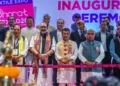
Speaking at the event held at Bharat Mandapam in New Delhi, Uttar Pradesh Minister Rakesh Sachan said the state is leveraging its rich handloom heritage while creating an enabling ecosystem for investment in garment manufacturing, technical textiles and integrated textile infrastructure.
The presentation highlighted the state’s production clusters, employment potential and initiatives to improve the livelihoods of handloom weavers.
Nearly two lakh handloom weavers in UP
According to data presented by the state government, Uttar Pradesh is home to nearly 1.91 lakh handloom weavers, making it one of India’s key textile-producing states.
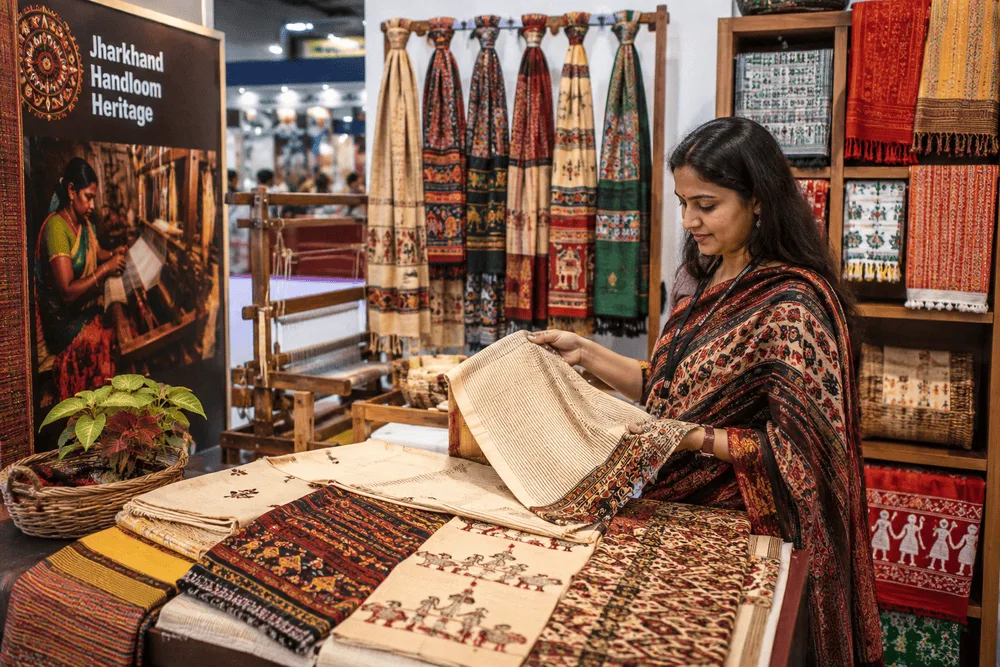
The government highlighted several renowned textile products that continue to drive the state’s handloom economy, including Banarasi sarees, Lucknow Chikankari, Bhadohi carpets, Sitapur rugs, and home textile products manufactured in districts such as Meerut and Baghpat.
Officials said these traditional sectors are being strengthened alongside emerging segments such as technical textiles and organised garment manufacturing.
Investment-friendly textile policy
The government showcased the Uttar Pradesh Textile and Garmenting Policy-2022, describing it as the state’s flagship policy for attracting domestic and global investments in the textile sector.
Under the policy, investors are offered several incentives, including:
Capital subsidies
Interest subsidies
Concessions on land costs
Stamp duty exemptions
Officials said these measures are intended to encourage the establishment of new textile units, enhance production capacity and generate employment across the state.
Focus on weaver welfare
The presentation also highlighted several welfare initiatives introduced for handloom workers.
These include electricity bill subsidies, financial assistance for different categories of weavers and scholarships for students studying at the Indian Institute of Handloom Technology (IIHT), Varanasi.
The government also highlighted recognition programmes such as the Sant Kabir Handloom Award, which honours outstanding contributions to the handloom sector.
Special welfare provisions have also been introduced for Scheduled Caste weavers under various state schemes.
Officials said the Mukhyamantri Handloom and Powerloom Udyog Vikas Yojana is helping artisans adopt modern technology while providing financial support for upgrading production.
PM MITRA park and market expansion
The Uttar Pradesh government also highlighted the proposed PM MITRA Textile Park, which is expected to create an integrated textile manufacturing ecosystem by bringing together various stages of production under one platform.
Officials said the project would strengthen supply chains, promote large-scale manufacturing and improve the state’s competitiveness in domestic and global markets.
To expand market access, the government is facilitating the participation of weavers, self-help groups and textile enterprises in national and international trade fairs by providing financial assistance for stalls, transportation and other related expenses.
The presentation at Bharat Tex 2026 underscored Uttar Pradesh’s strategy of combining its traditional textile strengths with modern industrial policies to position the state as a major destination for textile manufacturing and investment.