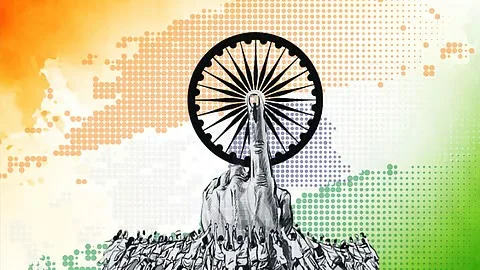
The proposed One Nation, One Election (ONOE) initiative is moving closer to implementation, with preparations intensifying for the possibility of conducting simultaneous Lok Sabha and State Assembly elections across the country in 2029.
Speaking at a press conference in Lucknow, Joint Parliamentary Committee (JPC) Chairman and BJP MP P.P. Chaudhary said the proposal is being pursued as a major electoral reform aimed at improving governance efficiency, reducing election-related expenditure and ensuring better utilisation of administrative resources.
He said the objective is to synchronise parliamentary and state assembly elections by 2029 through the necessary constitutional and legal amendments.
“Our objective is that in 2029, Lok Sabha and State Legislative Assembly elections across the country should be held simultaneously. Necessary constitutional and legal amendments will be made for this. This is not the agenda of any political party but a comprehensive electoral reform linked to national interest,” Chaudhary said.
Simultaneous elections were once the norm
Chaudhary noted that India successfully conducted simultaneous elections for the Lok Sabha and State Assemblies during the first four general election cycles in 1952, 1957, 1962 and 1967.
According to him, the cycle was disrupted over the years due to factors such as premature dissolution of state assemblies, imposition of President’s Rule in certain states, the creation of new states and the extension of the Lok Sabha’s tenure during the Emergency.
He argued that since simultaneous elections functioned within India’s democratic and federal framework in the past, concerns regarding their compatibility with federalism are unfounded.
“If simultaneous elections between 1952 and 1967 did not violate democracy or the federal structure, then advancing such an argument today is merely part of a political debate,” he said.
Government highlights governance and cost benefits
Advocates of the proposal argue that India currently remains in an almost continuous election cycle, with polls taking place in different states throughout the year.
According to Chaudhary, frequent elections trigger the Model Code of Conduct repeatedly, slowing policy implementation and diverting government machinery toward election-related duties.
He said simultaneous polls could reduce public expenditure on elections, minimise administrative disruptions and enable governments to focus more consistently on development and governance.
“If Lok Sabha and Assembly elections are held simultaneously, time, resources and public money will be saved, and governance can function more effectively,” he said.
The BJP MP also dismissed concerns that voters may face difficulties distinguishing between parliamentary and assembly elections if held together, stating that Indian voters are politically aware and capable of making independent choices at different levels.
Proposal has received support from multiple committees
Highlighting the history of the idea, Chaudhary said several constitutional and policy bodies have endorsed simultaneous elections over the past four decades.
According to him:
The Election Commission recommended the idea in 1983.
The Law Commission supported it in 1999.
The National Commission to Review the Working of the Constitution endorsed it in 2002.
A Parliamentary Standing Committee recommended it in 2015.
NITI Aayog supported the proposal in its 2018 report.
He also referred to the High-Level Committee on Simultaneous Elections, chaired by former President Ram Nath Kovind, which examined the issue after extensive consultations with political parties, constitutional experts, the Election Commission and other stakeholders.
The committee recommended synchronising Lok Sabha and Assembly elections and also proposed a framework for aligning local body elections in a phased manner.
JPC consulting stakeholders across states
The Joint Parliamentary Committee examining the proposed legislation is currently holding consultations across the country before finalising its report.
Chaudhary said the committee has already visited around ten states, including Uttarakhand, Punjab, Haryana, Himachal Pradesh, Karnataka, Gujarat, Goa and Uttar Pradesh.
During these visits, the panel has sought views from chief ministers, former chief ministers, assembly speakers, political parties, constitutional experts, legal professionals and civil society organisations.
He emphasised that the committee is still in the consultation phase and has not arrived at any final conclusions.
“At present, the committee is only listening to all stakeholders and has not reached any conclusion. The final report will be prepared after studying all the suggestions received,” he said.
Election commission capable of conducting simultaneous polls
Responding to questions regarding logistics, electronic voting machines (EVMs) and election management, Chaudhary expressed confidence in the Election Commission’s ability to conduct simultaneous elections nationwide.
He said adequate preparation time would enable the poll body to successfully manage elections at such a large scale.
“If the Election Commission gets about six months for preparation, it is fully capable of conducting simultaneous elections across the country,” he said.
According to Chaudhary, the committee’s goal is to examine the practical feasibility of the proposal while ensuring that any recommendations remain consistent with constitutional principles and democratic values.
With consultations continuing across states and discussions underway on the required constitutional amendments, the One Nation, One Election proposal is expected to remain a major political and governance reform issue in the run-up to the 2029 general elections.