As lakhs of devotees prepare to participate in the annual Jagannath Rath Yatra 2026, President Droupadi Murmu and Prime Minister Narendra Modi extended their greetings on the auspicious occasion, describing the centuries-old festival as a profound symbol of devotion, unity and India’s enduring spiritual heritage.
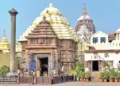
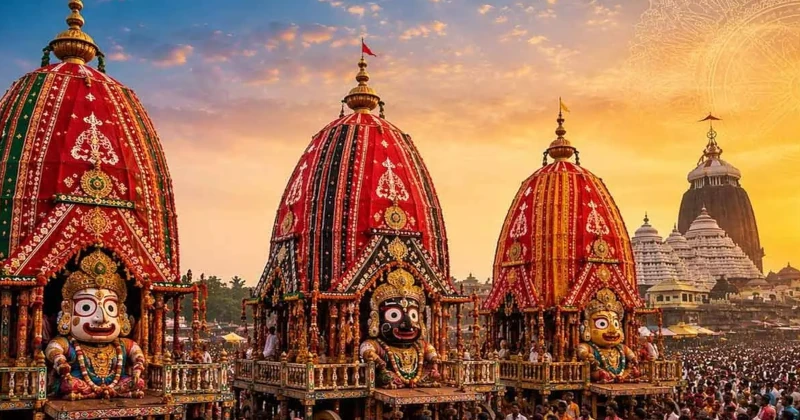
The annual chariot festival, one of Hinduism’s most revered religious events, will witness Bhagwan Jagannath, accompanied by elder brother Bhagwan Balabhadra and sister Devi Subhadra, emerging from the sanctum of the Jagannath Mandir in Puri to bless devotees during the grand procession.
The Organiser (@eOrganiser) family wishes you a blessed and joyous Rath Yatra.
May Mahaprabhu Shri Jagannath Ji bless you with peace, prosperity, good health, and happiness.
Jai Jagannath 🧡🙏 pic.twitter.com/9X32xfXBsu
— Organiser Weekly (@eOrganiser) July 16, 2026
In a message shared on X, President Droupadi Murmu said the Rath Yatra represents the sacred meeting of the deity with devotees and embodies India’s rich spiritual traditions.
“On the auspicious occasion of Mahaprabhu’s Rath Yatra, I extend my heartfelt greetings to all devotees of Shri Jagannath across the country and abroad. It is a widely held belief that during the magnificent tradition of this sacred procession, Mahaprabhu Shri Jagannath, accompanied by Chakraraj Sudarshan, elder brother Balabhadra and sister Subhadra, comes out to meet the devotees. This soulful occasion, marking the union of the devotee and the Divine, is truly unique,” she said.
ବିଶ୍ଵପ୍ରସିଦ୍ଧ ରଥଯାତ୍ରା ଉପଲକ୍ଷେ ଦେଶବିଦେଶରେ ରହୁଥିବା ଶ୍ରୀଜଗନ୍ନାଥଙ୍କ ଭକ୍ତଗଣଙ୍କୁ ମୁଁ ହାର୍ଦ୍ଦିକ ଶୁଭେଚ୍ଛା ଜ୍ଞାପନ କରୁଅଛି । ଏହି ମହାପର୍ବରେ ମହାପ୍ରଭୁ ଶ୍ରୀଜଗନ୍ନାଥ ବଡ଼ଭାଇ ବଳଭଦ୍ର, ଭଗିନୀ ସୁଭଦ୍ରା ଓ ଚକ୍ରରାଜ ସୁଦର୍ଶନଙ୍କ ସହିତ ରଥାରୂଢ଼ ହୋଇ ଭକ୍ତମାନଙ୍କ ସହିତ ମିଳିତ ହୁଅନ୍ତି । ଭକ୍ତ ଓ ଭଗବାନଙ୍କ ମିଳନର ଏହି ପର୍ବ…
— President of India (@rashtrapatibhvn) July 16, 2026
The President also prayed for the country’s continued prosperity and well-being, expressing hope that Bhagwan Jagannath’s blessings would ensure happiness and progress for the nation.
PM Narendra Modi also greeted devotees, describing the Rath Yatra as a shining example of India’s civilisational ethos.
“Greetings to everyone on the sacred occasion of Rath Yatra. This is a radiant expression of India’s timeless spiritual and cultural heritage. The traditions associated with the Rath Yatra have inspired generations across India and the world. They embody humility, collective participation and selfless service,” the Prime Minister said.
Greetings to everyone on the sacred occasion of Rath Yatra. This is a radiant expression of India’s timeless spiritual and cultural heritage. The traditions associated with the Rath Yatra have inspired generations across India and the world. They embody humility, collective…
— Narendra Modi (@narendramodi) July 16, 2026
He prayed for good health, happiness and prosperity for all while expressing hope that the festival would further strengthen the spirit of unity and social harmony.
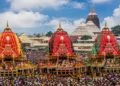
In Odisha’s Puri, preparations have entered the final phase ahead of the commencement of the annual Rath Yatra. Following the traditional Agyan Mala Bije ritual, the three massive wooden chariots constructed at the historic Rathakhala, the traditional open-air workshop, are being ceremonially brought before the Jagannath Mandir.
The three chariots include:
- Nandighosha – Chariot of Bhagwan Jagannath
- Taladhwaja – Chariot of Bhagwan Balabhadra
- Darpadalana – Chariot of Devi Subhadra
The movement of the chariots marks the culmination of weeks of elaborate preparations carried out according to centuries-old Mandir traditions. Authorities have deployed extensive security arrangements and logistical measures to facilitate the movement of lakhs of devotees expected to gather in the Mandir town during the festival.
This year’s observance also coincides with the simultaneous celebration of the Jagannath Rath Yatra in Puri and the Maa Tara Rath Yatra in Tarapith, West Bengal, a phenomenon regarded by many Tantric practitioners as a rare spiritual alignment.
#Odisha: World-famous Rath Yatra of #LordJagannath and his 2 siblings – elder brother Lord Balabhadra and younger sister Devi Subhadra begins at #Puri.
During the annual festival of #RathYatra, Lord Jagannath and his two siblings give darshan to the public from the Chariots and… pic.twitter.com/CZoK9AyBbp
— All India Radio News (@airnewsalerts) July 16, 2026
While Bhagwan Jagannath is widely worshipped as a manifestation of Bhagwan Vishnu or Krishna within the Vaishnava tradition, certain Tantric texts present a distinct theological interpretation. According to the ancient Todala Tantra, Jagannath is identified with Dakshina Kalika, stating:
“Vaikuntheadhipati Brahma, Jagannathecha Kalika” interpreted as “The Bhagwan of Vaikuntha is Brahma, but Jagannath is Kalika herself.” Within the Mahavidya tradition of Tantra, Kali represents the primordial manifestation of divine energy, while Maa Tara is regarded as the second Mahavidya.
For many practitioners of Tantra, the simultaneous emergence of Bhagwan Jagannath in Puri and Maa Tara in Tarapith on the same lunar day Ashadha Shukla Dwitiya symbolises the twin manifestation of supreme divine energy stepping out to bless the world.
These interpretations remain part of specific Tantric traditions and exist alongside the broader Vaishnava understanding of Jagannath as Bhagwan Krishna. Although the Jagannath tradition originated in Odisha, its influence gradually spread across western India, particularly Gujarat, through the Bhakti movement.
Between the fifteenth and seventeenth centuries, Gujarat witnessed a remarkable expansion of Krishna devotion through the Vaishnava Bhakti movement. Bhajans, Mandir worship, Krishna Leelas and devotional gatherings became integral to everyday religious life.
As Bhagwan Jagannath came to be identified with Bhagwan Krishna, the tradition found natural acceptance among Gujarati devotees.
Sants such as Mahaprabhu Vallabhacharya laid the foundations of the Pushtimarg tradition centred on Krishna worship. His son, Goswami Vitthalnathji, expanded the movement across Gujarat by establishing havelis and promoting rituals of seva, bhog and shringar.
The devotional literature of Sants like Narsinh Mehta and Mirabai further popularised Krishna bhakti among ordinary people through simple yet deeply spiritual hymns that continue to be sung today.
Travelling Ramanandi Sants and Vaishnava ascetics who regularly visited Puri also played an important role in carrying Jagannath’s traditions to western India. Importantly, Gujarat never viewed Bhagwan Jagannath as a rival to Dwarkadhish. Instead, devotees embraced both as different manifestations of the same Bhagwan Krishna.
Pilgrims returning from Puri brought not only sacred Mahaprasad but also stories of Jagannath’s Mandir rituals, the Rath Yatra and Odisha’s rich devotional traditions. Over centuries, these narratives became deeply woven into Gujarat’s own religious and cultural identity.
Even today, many Vaishnav families in Gujarat continue to offer equal reverence to both Dwarkadhish and Jagannath, reflecting a shared devotional tradition that transcends geography.