The West Bengal government has initiated a major inspection exercise covering unaided and unrecognised madrasas, including Khariji madrasas, across 12 districts of the state. The move is aimed at reviewing the functioning of these institutions and ensuring compliance with educational and administrative norms prescribed by the state government.
According to an order issued on July 8 by the Minority Affairs and Madrasa Education Department, physical inspections of the institutions are to be completed within a week. Senior officials of the madrasa education department, along with representatives from other government agencies, have been assigned district-wise responsibilities to carry out the exercise.
The survey comes amid growing attention on unregulated educational institutions operating outside the state’s formal education framework. Authorities have stated that the primary objective is to gather information on infrastructure, student welfare, teaching practices and institutional management.
Twelve Districts Under Scanner
The inspection drive covers a wide geographical area, including districts with significant madrasa populations. The districts identified for the exercise are Cooch Behar, North Dinajpur, Malda, Murshidabad, Birbhum, West Midnapore, East Midnapore, Nadia, Hooghly, Howrah, North 24 Parganas and South 24 Parganas.
Officials have been tasked with conducting on-ground verification of institutions operating in these districts. The exercise will include both recognised and unrecognised establishments, with a particular focus on Khariji madrasas that function without government funding.
The government has indicated that the inspection is intended to create a comprehensive database of such institutions and assess whether they comply with the state’s educational framework and regulatory requirements.
What are Khariji Madrasas?
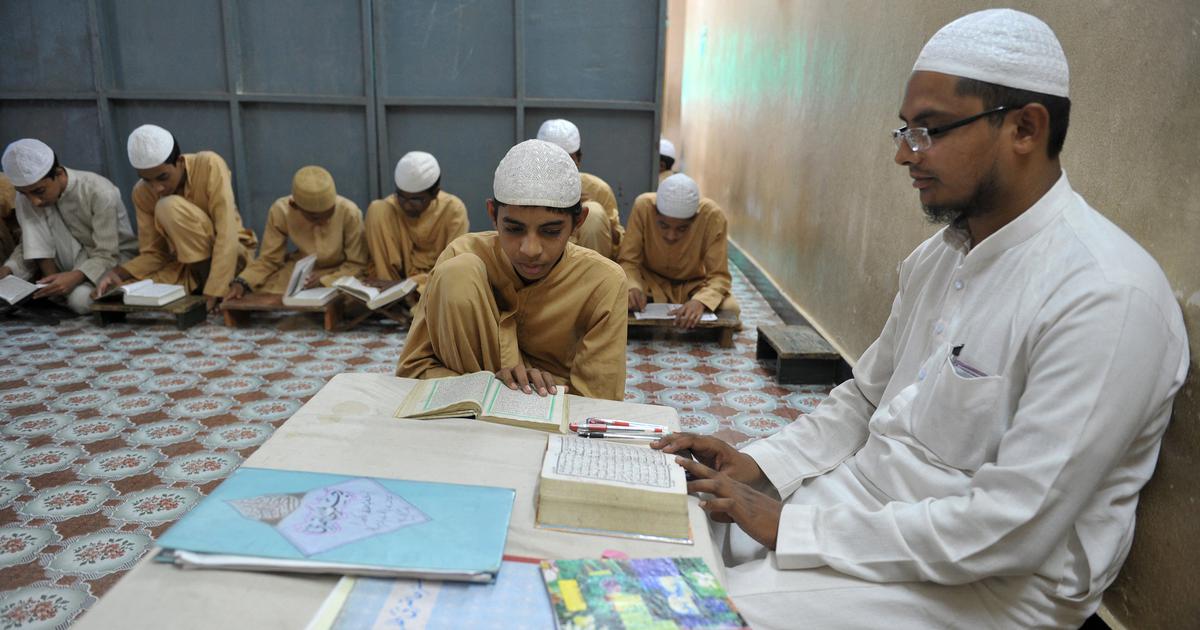
Khariji madrasas are educational institutions that are typically established and operated by private individuals, religious organisations, trusts or local communities. Unlike government-recognised madrasas, these institutions generally do not receive state financial assistance and operate independently of the formal madrasa education system.
Because they function outside the government funding framework, there is often limited official data regarding their curriculum, student enrolment, staffing patterns and sources of funding.
The current inspection drive seeks to bridge this information gap by collecting detailed information about their operations and institutional structures.
Focus on Funding, Curriculum and Infrastructure
As part of the exercise, officials will gather information on multiple aspects of each institution. These include details about the origin and establishment of the madrasa, sources of funding, student enrolment figures, residential facilities, staffing patterns and educational programmes being offered.
Particular attention is expected to be paid to curriculum content and the nature of instruction being imparted. Authorities will also review whether welfare schemes intended for students are being implemented effectively and whether the institutions meet basic administrative and educational standards.
Government officials have maintained that the exercise is aimed at ensuring transparency and accountability while improving oversight of educational institutions operating within the state.
Political Reactions Follow Inspection Order
The inspection drive has quickly acquired political significance, with Bharatiya Janata Party leaders strongly backing the government’s decision and calling for greater scrutiny of unrecognised institutions.
The issue has resurfaced longstanding debates over the regulation of privately run religious educational institutions and concerns regarding radicalisation.
BJP leaders argued that a detailed assessment of such institutions was necessary to determine whether they are operating in accordance with educational norms and constitutional values.
Sukanta Majumdar Supports Probe
Union Minister and BJP MP from Balurghat, Sukanta Majumdar, welcomed the state government’s decision to inspect the institutions.
Speaking on the issue, Majumdar said inquiries into such institutions were necessary and referred to remarks made by former West Bengal Chief Minister Buddhadeb Bhattacharjee regarding concerns over extremist activities in some madrasas.
Majumdar argued that the inspection would help authorities determine the nature of activities taking place within the institutions and whether any violations or irregularities existed.
The BJP leader stated that any institution functioning as an educational establishment should be subject to oversight and accountability, particularly when questions arise regarding curriculum or administration.
Agnimitra Paul Raises Concerns Over Curriculum
BJP leader Agnimitra Paul also welcomed the inspection exercise and alleged that some unrecognised Khariji madrasas were promoting anti-India narratives among students.
Paul claimed that authorities needed to examine the curriculum being taught in these institutions and determine whether students were being exposed to content that could foster hostility towards the country.
According to her, the survey would provide clarity regarding the educational material, teaching methods and ideological influences present within such institutions.
She argued that education should empower children to participate in national development and contribute positively to society, irrespective of their religious background.
The BJP leader maintained that the inspection exercise would help identify whether educational objectives were being properly pursued and whether the institutions were functioning within acceptable educational standards.
Allegations of Radicalisation and Security Concerns
The BJP’s support for the inspection drive has largely been framed around concerns relating to radicalisation and national security.
Agnimitra Paul alleged that some individuals linked to extremist activities had been associated with unrecognised madrasas in the past and claimed that authorities must investigate any potential connections between educational institutions and unlawful activities.
She referred to the arrest of an individual identified as Shahad Ali, alleging that the case raised questions that warranted further investigation into certain institutions.
While such allegations have become part of the political debate surrounding the inspections, the official government order focuses primarily on administrative review, educational compliance and institutional verification.
Authorities have not publicly stated that the inspection exercise is specifically linked to any ongoing security investigation.
Government Seeks Comprehensive Data
Beyond the political reactions, the inspection drive also reflects the state’s attempt to gather comprehensive data regarding unaided educational institutions.
Government officials have indicated that there is a need for updated information regarding the number, location and operational status of Khariji madrasas functioning across West Bengal.
Such data could help policymakers better understand the educational landscape and formulate future regulatory or welfare measures where required.
The collection of information on infrastructure, staffing, student enrolment and funding patterns is expected to provide a clearer picture of how these institutions operate and the role they play within local communities.