HYDERABAD: It began with a conversation on a mobile phone screen and a virtual identity created on social media, evolving into a network groomed under the instructions of foreign handlers to challenge India’s internal security. However, the vigilance of the nation’s security agencies, particularly the National Investigation Agency (NIA), exposed this conspiracy in time. Through this, the NIA has made it clear over the past few years that terrorism is no longer merely a matter of cross-border infiltration for India; it is challenging national security in various forms, including through social media, encrypted messaging platforms and online radicalization.
In fact, the NIA’s recent raid in Vijayawada, Andhra Pradesh, linked to a case involving alleged Islamic jihadi terror connections, is part of a broader campaign in which the agency is systematically exposing terror modules, their financial sources, digital networks and foreign contacts across the country.
Clue to a major terror network uncovered in Vijayawada
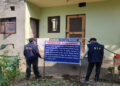
On July 8, an NIA team conducted a raid in the Vinchipeta area of Vijayawada to gather further evidence related to the case. According to officials, the investigation aims to identify the individuals and organisations connected to the arrested accused and to determine the true extent of the network’s reach. So far, those arrested in this case include Vijayawada residents Mohammed Rahmatullah Shariff, MD Danish and Mirza Sohail Baig; Hyderabad resident Saida Begum; and Abdul Salam from Bellary, Karnataka. Investigative agencies allege that all of them were involved in a conspiracy to expand terror activities in India and were acting on instructions from foreign handlers.
Module Being Formed at the Behest of a Foreign Handler
Interrogation revealed that the accused had come into contact with a foreign terrorist handler, Al-Hakim Shukur, via social media. They admitted that while they never met him in person, they maintained constant communication through Instagram, Telegram, and other digital platforms. According to the NIA investigation, acting on Shukur’s instructions, the accused were cultivating ties with Al-Qaeda in the Indian Subcontinent (AQIS) and ISIS and had long been working to expand the activities of both organizations within India. Their objective was to grow the networks of these organizations in the country and recruit new members.
Youth Being Targeted via ‘Al-Malik Islamic Youth’
Investigative agencies reported that the accused had formed a group named ‘Al-Malik Islamic Youth.’ During preliminary questioning, they admitted to harboring radical views previously, but their mindset became increasingly extreme after coming into contact with the foreign handler. A particularly alarming aspect was the group’s attempt to influence young people via social media and push them toward radicalization. The investigation also uncovered efforts to incite youth to carry out suicide attacks and to recruit them into terrorist organizations.
Plan to Establish a Separate Wing for Women
The investigation further revealed that the organization was preparing to set up a separate wing for women, with the responsibility to be entrusted to ‘Saida Begum.’ The aim of this wing was to increase female recruitment and ensure women played a role in the organization’s expansion. Additionally, there were plans to train recruits in the use of sniper rifles and other weaponry, as well as in the fabrication of black powder bombs and IEDs.
Radicalisation Spread Under the Guise of the ‘Ghazwa-e-Hind’ Concept
During interrogation, the accused allegedly admitted that they were operating under the influence of the ‘Ghazwa-e-Hind’ ideology. Investigative agencies allege that their stated objective was to challenge India’s constitutional order and expand the influence of terrorist organizations. The investigation also revealed plans such as hoisting the ISIS flag in place of the Indian Tricolour. While they were striving to establish an Islamic state in India, they also believed that Sharia law should be implemented in the country. The investigation into these allegations is now proceeding through the judicial process.
Social Media Emerges as the Primary Weapon
The most concerning aspect of this entire case is that social media, rather than traditional training camps or cross-border infiltration, became the most effective medium for this network. Through platforms like Instagram, Telegram and other encrypted services, the group reached out to young people, influenced them ideologically and gradually attempted to steer them toward radicalization.
Network Dismantled Through Counter-Intelligence Vigilance
This module was exposed by the Andhra Pradesh Counter-Intelligence unit while monitoring social media activities. Following the detection of suspicious activities, the police arrested Rahmatullah Sharif, Danish, and Sohail Baig. As the scope of the investigation expanded, the case was handed over to the NIA. Reports indicate that the FIR names a total of 12 accused individuals linked to various states, including Andhra Pradesh, Telangana, Bihar, Delhi, Rajasthan, Karnataka, Maharashtra and West Bengal. Cases have been registered against them under various sections of the Unlawful Activities (Prevention) Act (UAPA), the Bharatiya Nyaya Sanhita, and the Information Technology Act.
NIA’s Strategy: Dismantling the Entire Network, Not Just Arrests
The NIA’s modus operandi extends beyond merely arresting the accused; the agency aims to investigate the entire network layer by layer. This process involves identifying foreign handlers, conducting forensic examinations of digital devices analyzing financial transactions, scrutinizing encrypted chats, monitoring social media activities and identifying potential associates.
Thanks to this strategy, modules linked to terrorist organizations such as ISIS, Al-Qaeda, Lashkar-e-Taiba, Jaish-e-Mohammed, and others, active across various states, have been successfully dismantled in a timely manner over the past few years.
NIA’s Actions Over the Past Year: Where Were Suspected Terrorists Apprehended?
Over the last year, the National Investigation Agency (NIA) has taken sustained action across numerous states, including Jammu & Kashmir, Punjab, Delhi, Andhra Pradesh, Telangana, West Bengal, Bihar, Jharkhand, Uttar Pradesh, Rajasthan, Gujarat, Maharashtra, Karnataka, , Chhattisgarh, Assam, Manipur, and Kerala. These actions addressed cases involving terror modules, terror financing, espionage networks, Maoist organizations and banned groups such as ISIS, Al-Qaeda, Lashkar-e-Taiba, Jaish-e-Mohammed, and Babbar Khalsa International.
Based on available public information, the highest number of arrests has been made in Jammu & Kashmir. The primary reason for this is that the highest number of investigations concerning cross-border terrorist activities, Overground Workers (OGWs), arms smuggling, terror financing and infiltration are conducted in this region. Significant action has also been taken against active modules in Punjab, Delhi, Uttar Pradesh and certain states in South India.
Recent actions by the NIA indicate that the agency is no longer merely a body that investigates incidents after they occur; instead, it is playing an active role in thwarting terrorist plots at their nascent stage through intelligence gathering, digital analysis and inter-state coordination. Whether dealing with networks that radicalize youth via social media, modules operating under the direction of foreign handlers, or covert terror financing chains, the NIA’s operations consistently aim to connect these dots, track down India’s adversaries, and bring them to justice. This is why the NIA is today counted among the most critical and decisive investigative agencies in India’s fight against terrorism.