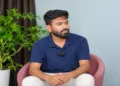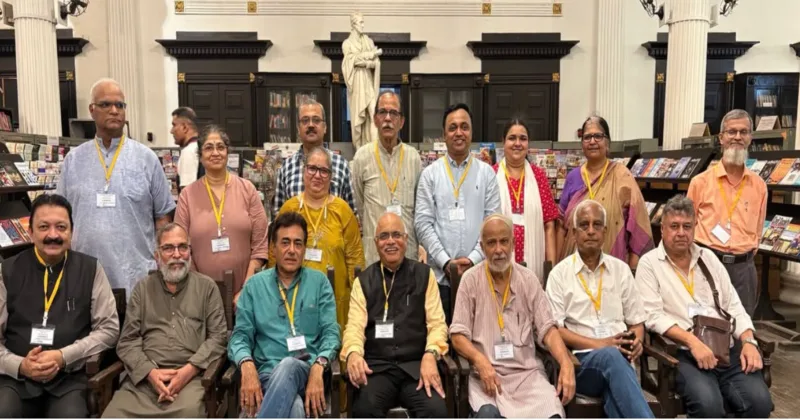
MUMBAI: On July 4, 2026, amid heavy Mumbai rains, voters at the Asiatic Society of Mumbai’s Durbar Hall delivered a resounding mandate. Former Rajya Sabha MP and intellectual Dr Vinay Sahasrabuddhe was elected President with 349 votes against his rival’s 147, while his #AsiaticTomorrow panel secured all 19 executive posts in high-turnout polling (517 out of ~2,545 eligible members).
Dr Sahasrabuddhe’s Facebook post captured the moment’s significance: gratitude to voters, a commitment to restoring glory, bridging with the NextGen, extending activities beyond South Mumbai, and maintaining an all-inclusive, non-partisan approach. He also thanked Maharashtra Chief Minister Devendra Fadnavis for promising full support.
This victory marks more than a routine institutional election. It represents a potential inflection point for one of India’s oldest learned societies, founded in 1804 as the Literary Society of Bombay by Sir James Mackintosh, inspired by Sir William Jones’ Asiatic Society of Bengal (1784).
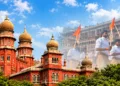
Now 222 years old and housed in the neoclassical Town Hall at Mumbai’s landmark Horniman Circle, the society has long served as a repository of knowledge with over 100,000 books (15,000 rare), thousands of manuscripts, coins (including rare specimens from Kumaragupta I, Akbar, and Chhatrapati Shivaji Maharaj), maps, and treasures like one of two known original copies of Dante’s Divine Comedy.
The society’s journey mirrors India’s own. Born in the East India Company era, it initially functioned as a colonial-era Orientalist body for “promoting useful knowledge… connected with India.”
Early presidents were British administrators and governors like Mountstuart Elphinstone. It affiliated with the Royal Asiatic Society in London and evolved into the Bombay Branch.
Post-independence, it Indianised, with figures like Justice Kashinath Trimbak Telang (first Indian president, prominent reformer, judge, and educationist) symbolizing the shift. In 2019, Prof. Vispi Balaporia became its first woman president.
The Town Hall building itself carries layered history. Its dramatic 30-step staircase has witnessed public life, from 19th-century announcements to 20th-century protests, including a 1930 dharna against British liquor policy.
In the turbulent 1940s, the Fort area around it pulsed with nationalist energy during events like the 1946 Royal Indian Navy Mutiny. The building was never a revolutionary headquarters but served as a stage for intellectual and public discourse that contributed to India’s freedom struggle indirectly through reformist and cultural revivalist thought.
Challenges accumulated over decades: financial strains, declining membership in the digital age, conservation needs for priceless artifacts, and perceptions of elitism confined to South Mumbai.
Dr Sahasrabuddhe’s campaign framed the election as a contest against “status-quoism.” His panel promised digitization, youth outreach, CSR funding, scientific preservation, staff welfare, fiscal prudence, and extending activities citywide. The society’s official results confirmed the clean sweep, with strong wins for vice-presidential and committee posts.
Dr Sahasrabuddhe brings substantial credentials. Born in 1957 in Maharashtra, he holds a PhD in Political Science from Mumbai University and has authored works like ‘Beyond a Billion Ballots’.
A long-time RSS/ABVP affiliate and BJP national vice-president (2014–2020), he served as Rajya Sabha MP (2016–2022), chaired the Parliamentary Standing Committee on Education, and has led the Indian Council for Cultural Relations (ICCR) since 2018.
He previously served as the society’s Vice President (2013–2015). His vision blends scholarship with public life, emphasizing cultural rootedness, democracy training, and inclusive knowledge dissemination.
Sahasrabuddhe’s success reflects member appetite for renewal. His post-election message explicitly commits to non-partisanship and NextGen engagement, vital for an institution whose collections span centuries of Asian and Indian heritage.
One such comment, while beginning with the congratulations, adds: Heartiest congratulations, adds: “…As a distinguished thinker, institution-builder, and one of the intellectual forces behind The Innovation Republic, you have consistently demonstrated that enduring institutions thrive when guided by vision, scholarship, and inclusivity. Your commitment to reconnecting the Society with the next generation while preserving its rich legacy is both timely and inspiring.
We are confident that under your stewardship, this 222-year-old institution will emerge as an even more vibrant centre of knowledge, dialogue, and national thought.
Wishing you excellent health, strength, and every success as you lead the Asiatic Society into a new era of relevance and excellence.”
Maharashtra Chief Minister Devendra Fadnavis’s support signals potential state backing for preservation of Mumbai’s heritage and cultural initiatives. This aligns with broader efforts to preserve the historic city’s colonial-era landmarks while adapting them for contemporary India.
Historically, the Asiatic Society network advanced Indology, linguistics (Jones’ influence on comparative philology), archaeology, and cultural documentation. Mumbai’s branch preserved invaluable materials that might otherwise have been lost.
Members contributed to the Indian Renaissance, social reform, and nationalist thought. Today, it faces the challenge of balancing preservation with democratization, digitizing the Granth Sanjeevani platform, hosting inclusive events, and reaching beyond elite circles.
Sahasrabuddhe’s leadership could energize these efforts. Priorities likely include:
- Technological upgrade, Full digitization and global access.
- Outreach Programs in suburbs, collaborations with universities, and youth fellowships.
- Sustainability, CSR partnerships and transparent governance.
- Research revival, Supporting publications and interdisciplinary studies on Indology, Asian studies, and Mumbai’s history.
The Asiatic Society Mumbai stands at a crossroads. Sahasrabuddhe’s election, backed by a strong mandate, offers an opportunity to “regain the glory” while evolving.
As India asserts its civilizational heritage globally, institutions like this, custodians of rare manuscripts, coins, and knowledge, play a quiet but vital role.
Bridging the colonial-era edifice with 21st-century aspirations could ensure the 222-year-old knowledge institute not only survives but thrives as a vibrant, inclusive centre of learning.
In his Facebook post, Dr Sahasrabuddhe expressed deep gratitude and forward-looking resolve, and his plans for #AsiaticTomorrow: the endeavour to preserve the past while building bridges to the future. For Mumbai and India’s intellectual heritage, that is an arduous but essential exercise.
This development underscores how even venerable institutions can renew themselves through democratic processes, carrying forward legacies while adapting to new realities.