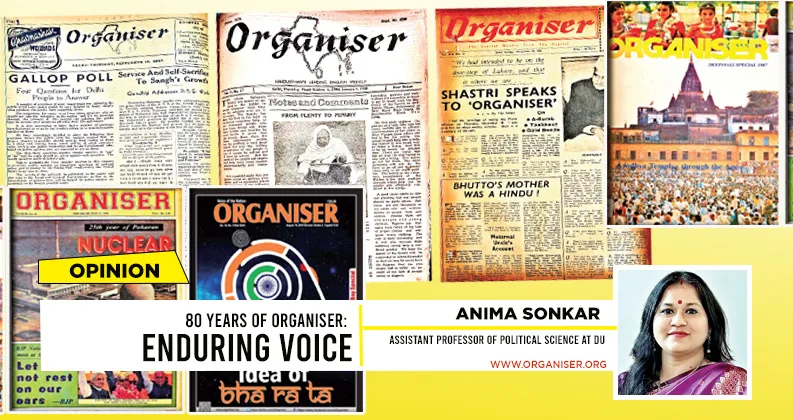
As Organiser celebrates eighty years of publication, this is not just the long life of a weekly magazine, but it is the story of an intellectual institution which, despite political fluctuations, technological changes and changing contours of public discourse, has continued to spread the idea of Bharatiya nationalism. In an era where so much of media space is given to speed, sensationalism and short attention span, Organiser has stuck to a higher and more durable purpose: cultivating and nurturing ideas that are based on Bharat’s civilisational consciousness.
Over the past eight decades Organiser has been making a consistent case for a nationalism that transcends electoral politics and the models of governance. The issues of Organiser have been concerned with the topics of history, culture, education, governance, foreign policy, strategic affairs, social harmony and economic development, all seen through the prism of Bharatiya thought. It has nudged readers to look beyond the headlines and mull over the larger intellectual currents that are moulding the nation.
During the varied political phases of history of Bharat, from the days of early Republic to this age of digital revolution, Organiser has maintained its distinct editorial flavour, while incorporating new technologies and new forms of communication, which not many publications have succeeded in achieving such continuity of purpose and, at the same time, remain important and relevant for generation after generation of readers.
Its relevance in today’s context is even more important, as the world is witnessing a battle of narratives that is unprecedented and more intense than ever before, and the contestation today is not only between economic powers, military powers or technological powers, but also between ideas, interpretations of history, cultural confidence and strategic communication. Public opinion has become an important theatre of contest and information itself has emerged as an important instrument of national power.
Sharing Relationship with Weekly
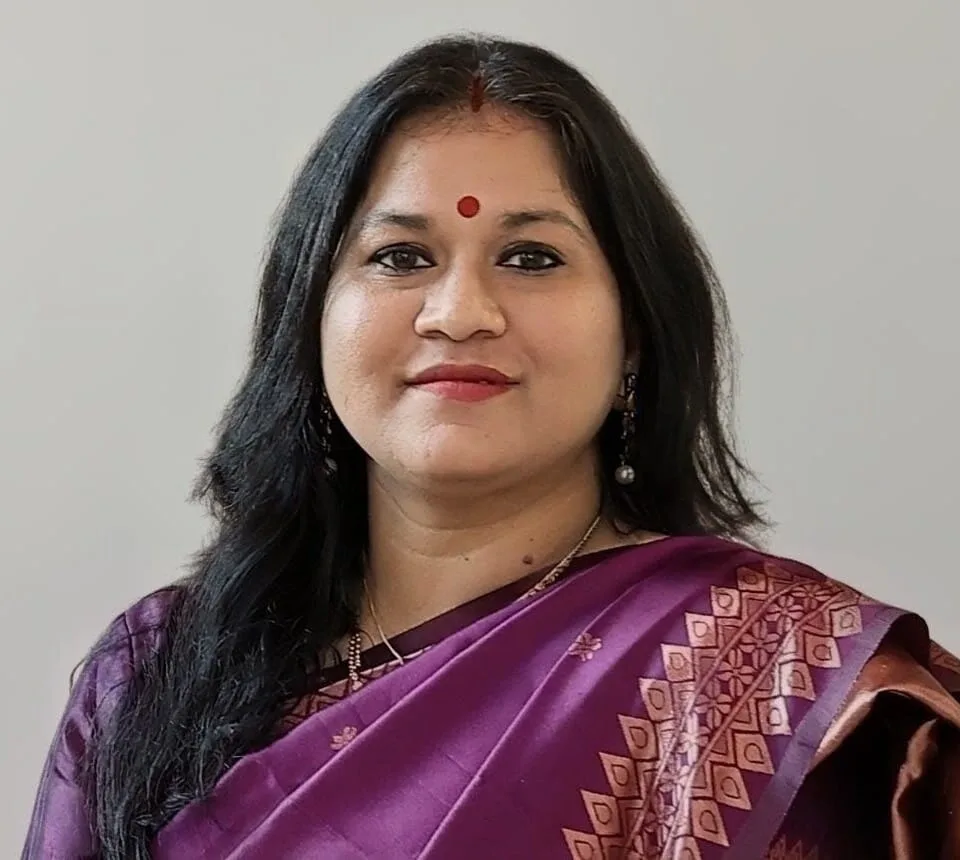
My personal relationship with Organiser over the last 15 years is a classic example of how an institution and a publication like Organiser can influence successive generations. I started reading Organiser regularly while pursuing my studies from the Jawaharlal Nehru University, New Delhi, where debates on ideology were an integral part of academic life, and these debates in the classrooms would spill over to seminars, hostels and student forums. We were exposed to competing ideologies of nationalism, civilisation, history and Bharat’s place in the world. In that intellectually charged ambience, Organiser became something more than a weekly magazine for me because it provided me with a perspective rooted in Bharatiya thought, deepened my understanding of ideological issues and encouraged me to grapple with national issues through the prism of Bharat’s civilisational experience. Even today, as a Professor of Political Science at the University of Delhi, where I introduce students to ideas, debates, nationalism, civilisation, international relations and political thought, I read Organiser with the same sense of intellectual curiosity, while the context has changed from that of a student looking for answers to that of a teacher guiding an inquiry. But the Organiser still continues to be an important source for me to understand ideological debates and the evolution of contemporary national discourse.
As Organiser enters the ninth decade, the biggest achievement of this publication is not to be seen in years or decades, but it is to be seen in the generations of readers it has helped form who could respond to national issues with intellectual confidence from the foundations of Bharat’s civilisational perspective. For many readers like me, Organiser has not been a weekly, it has been a constant companion in a journey of learning, reflection and ideological engagement, and that may be one reason why its voice continues to echo even after eighty years. It remains a voice of Bharatiya nationalism and not just an observer of events, because it is a reminder that institutions based on ideas have a resilience that transcends the ages.