Amidst the visit of Bangladesh PM Tarique Rahman to China, a disturbing news about the growing radicalisation of the Bangladesh Army has come. Bangladesh Army has named four battalions of the Second Bangladesh Brigade after the four Caliphs of Islam. Four battalions, each with a fighting strength of approximately 700 soldiers has been named after Umar, Abu Bakr, Ali and Usman. This is a new trend of naming battalions in the Bangladesh Army. Earlier, the battalions were named after recipients of the Bir Sreshtho(the highest gallantry award in Bangladesh). In addition, the battle cry of these new battalions has been changed from Joy Bangla(Victory to Bangladesh) to Islamic Allahu Akbar.
There were reports of rise in radicalisation and Islamist influence in the Bangladesh Army in the past. The attempts at radicalisation were low key under PM Sheikh Hasina regime. But after her ouster from power in August 2024, the Bangladesh Army exhibited more eagerness to embrace Islamist traditions and similar recruitment narratives. Pakistan’s ISI always had a deep footprint inside Bangladesh through the radical Jamaat-e-Islami political party.
Under the interim government of Mohamad Yunus, the linkages of the radical elements with the Bangladesh Army had emerged more openly. The conduct of the Bangladesh Army to remain a mute spectator to the violence perpetrated against the Hindu minority is just one indicator of such growing radicalisation, particularly at the junior level of Bangladesh Army leadership.
But the resumption of the relationship between Pakistan Army and Bangladesh Army has been one of the most unexpected fallouts of the regime change in Bangladesh. Even after the election of Tarique Rahman of the BNP as the PM, the relations between Pakistan and Bangladesh have continued to improve on other fronts as well. Regular high-level visits, joint training and capacity building has been the focus between the two armies.
Bangladesh is already buying a substantial quantity of arms and ammunition from Pakistan. Pakistan has also offered 15 fighter jets of J Thunder series (Chinese origin) to Bangladesh. India has to closely watch the impact of shifting ties between Pakistan and Bangladesh. The growing radicalisation of the Bangladesh Army poses an additional challenge to counter terrorism in India’s backyard.
In the power structure of Bangladesh, the Bangladesh Army Chief occupies third most powerful position, after the President and Prime Minister. Though Bangladesh Army has not blatantly misused power like the Pakistan Army, but the resumption of relations between the two armies is a cause of concern. Pakistan Army is highly radicalised by now.
Pakistan Army Chief remains the most powerful person in the country and thus there is a feasibility that the Bangladesh Army Chief exerts more in the key decisions of the government. Such interference from the Army leadership can also bring political instability in Bangladesh. With the news of strategically located Mongla Port in Bangladesh now being developed by China, another maritime threat may develop in our neighbourhood.
It is also a matter of concern that all the four newly raised battalions have been deployed opposite India as part of the Chittagong Garrison. During my military career, I had the opportunity to visit the Chittagong Garrison in the year 2015. We were given a detailed briefing as to how this garrison was used to nurture multiple camps of the terror organisations operating in India’s north east.
That was the situation during the previous BNP rule under PM Khaleda Zia till the year 2006 and continued for some more years. It was only under Sheikh Hasina regime of the Awami League that relations between India and Bangladesh improved. Once PM Modi came to power in the year 2014, there was a major impetus to flush out the terror camps and hideouts located inside Bangladesh. As a result, the graph of terrorism has steadily come down in India’s north east thereafter. Major terror organisations like the ULFA have now been wiped out from states like Assam.
In the parliamentary elections of Bangladesh in February this year, the radical Jamaat-e-Islami is the second largest political party. Most of its members have been elected from the constituencies bordering India. It indicates that the border areas in the states of West Bengal, Assam and Tripura are more vulnerable to illegal infiltration and other terror threats. Therefore, the impetus of the new BJP government in West Bengal to fence the Indo-Bangla border and other steps like handing over of the Siliguri Corridor to the central agencies are indeed timely.
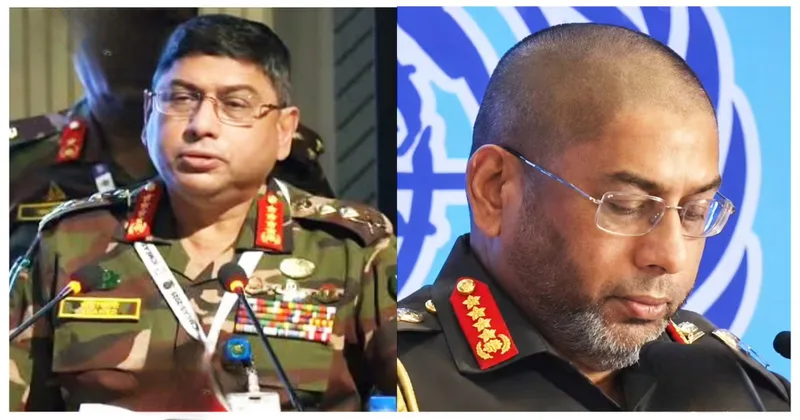
Let us understand that the threat of growing radicalisation in the Bangladesh Army is real. If any other proof was needed, then it was the visuals of Bangladesh Army Chief General Waker-Uz-Zaman now sporting a bearded look as against his earlier clean-shaven appearance. Indian security forces have to remain vigilant against the growing radicalisation of the Bangladesh Army and its rising nexus with the Pakistan Army.