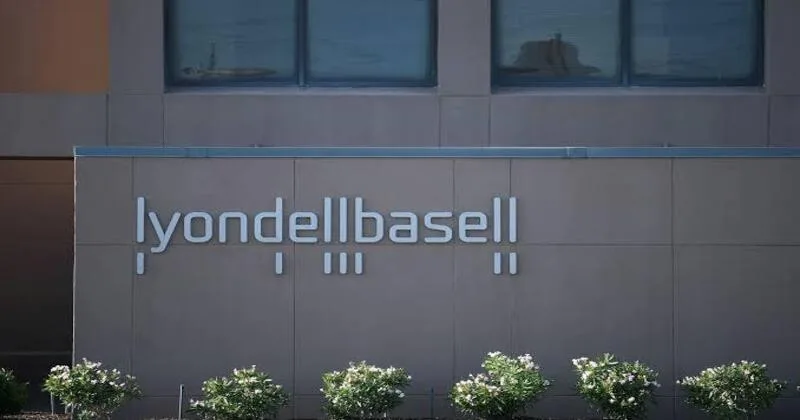
The Unraveling Begins: It is the end of August 2025. What began as a quiet organisational change towards the end of August 2025 has since unravelled into what many former employees are calling a targeted and systematic removal of Indian Hindu professionals from LyondellBasell’s (LYB) Enterprise Architecture division in Mumbai, India. LyondellBasell is one of the world’s largest plastics and chemicals companies, with its global headquarters in Houston, Texas.
The first sign came without warning. A well-respected Senior Director who had earned the trust and loyalty of his team through years of decisive leadership — was abruptly dismissed. No formal reason was communicated to the team. No transition plan was put in place. He was simply gone. Those who worked under him described him as not just a manager, but a pillar — someone who proactively drove the growth and structural strengthening of the Enterprise Architecture function, consistently went to bat for his team without discrimination, and built an inclusive environment where merit was the only currency that mattered. His sudden removal sent the first ripple of unease through the department.
A new face, A new agenda
On the very same day the Senior Director was let go, a new name surfaced — Razi Dakhan, a Pakistani Muslim, brought in under circumstances that employees found deeply suspicious given the timing. Sources who reviewed Dakhan’s publicly available LinkedIn and Facebook profiles describe content that reveals strong religious and national allegiances — with posts and associations demonstrably skewed in favour of Indian and Pakistani Muslim causes. For someone placed in a leadership role overseeing a diverse Indian team, this publicly declared ideological orientation raised immediate red flags among those who worked under him. What followed in the next ten days would prove their fears justified.
Within that narrow window, every single Indian Hindu professional working under the Enterprise Architecture division in Mumbai was removed from the organisation. One by one, across levels and tenures, they were let go. The removals were not performance-driven, not capability-based and not random. Those targeted shared one common identity: they were Indian Hindus. The speed and precision of the purge left little room for the interpretation that these were routine business decisions.
Further scrutiny of the internal hierarchy revealed an equally troubling dynamic at the leadership level. Dakhan’s direct superior, Kayoor Gajarawala, is alleged by multiple sources to have applied a strikingly asymmetric standard of leadership — described as consistently lenient, accommodating and supportive towards Pakistani nationals and Indian Muslims, while being demonstrably harsh, dismissive and demanding towards Indian Hindus. Sources allege that Gajarawala’s conduct created a two-tier professional environment within LyondellBasell, one where religious and ethnic identity determined not just opportunity, but survival. It was within this enabling environment that Razi Dakhan’s sweeping removal of Indian Hindu employees went entirely unchallenged.
A pattern that predates the purge
Crucially, sources indicate that this is not the first time discriminatory hiring patterns have been observed within LyondellBasell’s leadership circles. The roots of this bias run deeper than a single leadership change.
A previous manager at the organisation, Nasir Zaidi, built a hiring record that former colleagues describe as deliberate and exclusionary in nature. Sources allege that Zaidi hired almost exclusively Pakistani nationals and Indian Muslims into his team, consistently bypassing equally or better-qualified Indian Hindu professionals. What makes this particularly significant is that Nasir Zaidi has since left the organisation — but his legacy has not.
The individuals he brought in, hired under what sources allege was a religiously and ethnically motivated selection process, largely remain within LyondellBasell to this day, embedded across the organisation. Those who observed Zaidi’s tenure at the time noted the pattern but found little institutional willingness to question it. In hindsight, former employees now see his tenure as the early foundation upon which what would later unfold under Razi Dakhan and Kayoor Gajarawala was built. The religious preferentialism, it appears, was not born overnight — it had been quietly and systematically cultivated within LyondellBasell’s walls for years.
“Those targeted shared one common identity — they were Indian Hindus. The religious preferentialism was not born overnight; it had been systematically cultivated within LyondellBasell’s walls for years”.
The “cost cutting” justification that doesn’t add up
LYB’s official line, as communicated to some of those dismissed, was simple: cost optimisation. But the numbers tell a different story. The cost of employing skilled technology professionals in India — particularly in Enterprise Architecture— is well-documented to be significantly lower than equivalent resources in Europe or the United States. For a company invoking cost cutting as its rationale, eliminating the cheapest segment of its workforce is an argument that falls apart under even basic scrutiny. If cost reduction was the genuine motive, the cuts would have targeted higher-cost geographies first.
Instead, every Indian member of the India team was removed. Not restructured. Not redeployed. Removed entirely.
The Human Cost: Lives and careers upended
Behind the corporate language of “resource optimisation” are real individuals whose careers and livelihoods were abruptly derailed. Among the most troubling cases:
The employee who never got a fair start: One professional had joined the company in July — barely two months before the wave of removals. He was terminated in September, just two days after completing his probation period. The timing is difficult to dismiss as coincidence. He had cleared every threshold required of him, only to be discarded the moment he was no longer legally protected by probationary terms.
The six-month employee: Another individual, who had been with the company for approximately six months, was also let go without meaningful cause cited. Half a year of commitment, contributions, and institutional knowledge — erased overnight.
What makes these cases especially troubling is that these were not redundant roles. According to multiple sources familiar with the internal planning, these employees had been specifically identified and onboarded as planned resources for an upcoming project. They were not incidental hires. They were strategic appointments — people the organisation had deliberately brought in to fulfil a defined future need. And yet, they too were removed.
A team in shock
The psychological toll on those who witnessed this unfolding has been significant. Former colleagues — both those affected and those who narrowly escaped — describe a period of intense anxiety and disbelief. The speed of the removals, the apparent ethnic pattern, and the contradictory cost-cutting justification combined to create what many describe as a “shockwave” that travelled across the Indian professional community connected to LYB.
“Everyone was stressed. You could see it. Nobody felt safe. Nobody understood what the actual reason was — because the reasons they gave didn’t make sense”.
What this raises
The pattern of events at LYB raises serious and urgent questions:
• Was the removal of every Indian Hindu employee from a single division within ten days of a leadership change a business decision — or an act of religious and ethnic discrimination?
• Why were employees hired as planned project resources terminated shortly after completing probation, if genuine organisational need had driven their hiring in the first place?
• If cost reduction was truly the aim, why were India-based employees — among the most cost-effective in the global workforce — the first to go?
• Why does the hiring network built by Nasir Zaidi — alleged to have been constructed along religious and ethnic lines — remain intact within LyondellBasell to this day?
• How did Kayoor Gajarawala’s reported pattern of favouring Pakistani and Muslim employees while marginalising Indian Hindus go undetected and unchallenged by LyondellBasell’s leadership and HR structures?
• And what does Razi Dakhan’s publicly available social media — demonstrably aligned with Pakistani and Muslim causes — say about the due diligence applied before placing him in a leadership role over a predominantly Indian Hindu team?