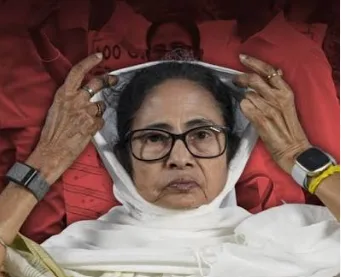
Far from being viewed as a routine organisational reshuffle, the latest changes announced by Trinamool Congress chief Mamata Banerjee are being seen by many as a desperate attempt to salvage authority amid an unprecedented collapse of support within the party.
The reshuffle was announced on June 13 following a meeting at Mamata Banerjee’s residence attended by her nephew Abhishek Banerjee and other loyalists. However, the exercise comes at a time when the party is facing perhaps the biggest internal revolt in its history, with a large section of MPs, MLAs and senior leaders openly questioning the leadership of both Mamata and Abhishek Banerjee.
For months, rebel leaders have accused the party’s top leadership of running the TMC in an increasingly centralised manner, alleging that decision-making had become concentrated in the hands of Mamata Banerjee and her nephew. The crushing defeat in the 2026 Assembly elections appears to have transformed that simmering discontent into open rebellion.
What makes the latest reshuffle particularly striking is that some of the changes appear to target leaders who have already distanced themselves from the party leadership or are associated with camps no longer fully aligned with Mamata Banerjee.
Among the most notable decisions was the removal of Saayoni Ghosh from the post of Youth President. While the party has not provided any official explanation, the move reflects an attempt by the leadership to demonstrate control over an organisation that is rapidly slipping from its grasp.
Kunal Ghosh was appointed President of the North Kolkata organisational unit, a position that gained significance after veteran MP Sudip Bandyopadhyay reportedly backed the rebel faction’s demand for recognition as a separate bloc within the party. Bandyopadhyay’s decision to sign the dissidents’ letter has been viewed as a major embarrassment for the Mamata camp.
The appointment of veteran MP Sougata Roy as Advisor in the Lok Sabha is similarly being interpreted as an effort to retain experienced leaders at a time when the party’s parliamentary wing appears deeply fractured.
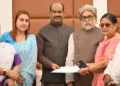
The rebellion itself has now moved beyond internal criticism. A faction led by senior MP Kakoli Ghosh Dastidar has reportedly claimed the support of 19 out of TMC’s 28 Lok Sabha MPs and is seeking recognition as a separate group. The dissidents have also announced plans to approach Lok Sabha Speaker Om Birla to seek recognition as the “real TMC,” directly challenging Mamata Banerjee’s authority.
The crisis deepened further when former minister Manas Bhunia resigned from the party. His departure added to a growing list of leaders who have either left the organisation or openly rebelled against the current leadership structure.
Reports indicate that 64 of the party’s 80 MLAs have broken away and secured recognition from the Speaker. The development resulted in dissident leader Ritabrata Banerjee being recognised as Leader of Opposition, though the matter is currently under judicial scrutiny.
Reports note that the organisational reshuffle does little to address the core complaint raised by rebel leaders, that the party has increasingly become centred around a small leadership circle dominated by Mamata Banerjee and Abhishek Banerjee. Dissidents argue that unless the leadership structure itself changes, cosmetic organisational changes are unlikely to halt the exodus.
With senior MPs, MLAs and former ministers abandoning the party or questioning its leadership, the latest reshuffle is being viewed less as a show of strength and more as an attempt to project control amid a rapidly deepening crisis. Whether it succeeds in stopping the rebellion or merely highlights the extent of the damage remains to be seen.