Bengaluru: A shocking report by the Comptroller and Auditor General (CAG) has uncovered alleged financial irregularities worth nearly Rs 200 crore in Karnataka’s Tourism Department, raising serious questions over the misuse of taxpayer money and the manner in which public projects were executed between 2022 and 2024.
The audit findings point to widespread administrative lapses, diversion of funds, unauthorised modifications of projects, poor planning and a lack of accountability in the implementation of tourism infrastructure schemes. The report, which covers projects undertaken during both BJP and Congress administrations, paints a disturbing picture of how public resources earmarked for tourism development were allegedly spent on activities that had little or no connection with promoting tourism.
ಪ್ರವಾಸೋದ್ಯಮ ಇಲಾಖೆಯಲ್ಲಿ 200 ಕೋಟಿ ರೂಪಾಯಿಗಳ ಅಕ್ರಮ ನಡೆದಿರುವುದು ಸಿಎಜಿ ವರದಿಯಲ್ಲಿ ಬಹಿರಂಗಗೊಂಡಿದೆ. ಯಾತ್ರಿ ನಿವಾಸ ನಿರ್ಮಾಣಕ್ಕೆ ಮಂಜೂರಾದ ಹಣದಲ್ಲಿ ಮಸೀದಿಯ ಬಳಿ ಪ್ರಾರ್ಥನಾ ಮಂದಿರ ನಿರ್ಮಿಸಲಾಗಿದೆ. ಪ್ರವಾಸೋದ್ಯಮದಲ್ಲಿ ಕರ್ನಾಟಕ ಅಪಾರ ಸಾಧ್ಯತೆ, ಸಾಮರ್ಥ್ಯ ಹೊಂದಿದ್ದರೂ, @INCKarnataka ಸರ್ಕಾರದ ದೂರದೃಷ್ಟಿಯ ಕೊರತೆಯಿಂದ… pic.twitter.com/AbW4Y21iwF
— Dr. Ravi C. T 🇮🇳 ಡಾ. ರವಿ ಸಿ. ಟಿ (@CTRavi_BJP) June 7, 2026
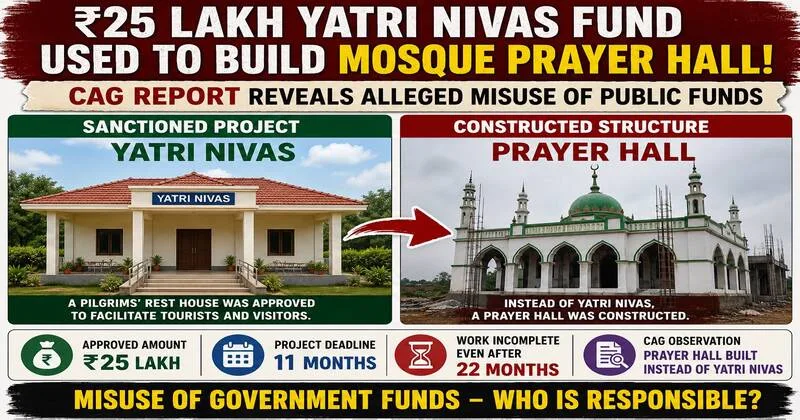
One of the most controversial findings relates to a project sanctioned for the construction of a pilgrims’ rest house near the Maulali Mosque at Basavanadurga in Vijayanagara district. According to the CAG, the government had approved Rs 25 lakh for the construction of a Yatri Nivas to facilitate visitors and tourists. However, a physical inspection reportedly revealed that instead of a pilgrims’ accommodation facility, a prayer hall had been constructed. The report further noted that despite official records showing the work as completed, the structure remained unfinished even 22 months after the scheduled completion period.
The revelation has triggered concerns about whether government funds sanctioned for tourism infrastructure were diverted for purposes outside the approved project scope. Critics argue that such deviations not only violate administrative norms but also undermine public trust in government institutions.
The audit report also highlights that Rs 88.2 crore originally allocated for tourism-related activities was transferred to works undertaken by the Public Works Department (PWD). The expenditure was reportedly linked to 19 road construction and improvement projects approved between 2015 and 2021 in districts including Vijayanagara, Chikkamagaluru, Mandya, Belagavi, Mysuru and Udupi.
According to the CAG, 15 of these projects did not conform to tourism infrastructure guidelines. The audit observed that project proposals failed to establish any direct tourism relevance and that many of the roads constructed were routine PWD works rather than infrastructure intended to boost tourist access or visitor experience.
Another major concern flagged in the report relates to tourism hotel projects in Badami, Belur, Vijayapura and Hampi. The audit found instances of faulty planning, irregular execution and unauthorised expansion of project scope, resulting in a wasteful expenditure of nearly Rs 83.97 crore. The report noted serious shortcomings in project conceptualisation, approval procedures, implementation and monitoring mechanisms.
The CAG further criticised frequent changes in executing agencies, repeated alterations in project scope and cost escalations without proper authorisation. Such practices, the report observed, led to delays, inefficient use of public funds and failure to achieve intended tourism outcomes even after several years.
The audit also exposed irregularities in a project involving the installation of tourism information hoardings. The department reportedly paid Rs 8.37 crore for the installation of 164 information boards at major tourist destinations across the state. However, audit teams could find no supporting records for the installation of 134 of those hoardings.
Adding to the concern, the department had allegedly failed to frame any policy, content framework or location-specific guidelines regarding the information that was to be displayed on the hoardings. The absence of documentation and monitoring mechanisms has raised doubts about whether the project delivered any meaningful benefit to tourists.
The report further pointed to questionable expenditure of Rs 6.81 crore on the preparation of a deficient Detailed Project Report (DPR) for the Jog Falls tourism development project. Similarly, irregularities involving Rs 8.25 crore were detected in development works undertaken at Chunchanakatte Falls in Mysuru district.
The cumulative findings indicate systemic weaknesses in financial management, project oversight and accountability within the Tourism Department. The audit report suggests that public money intended for creating tourism infrastructure and generating economic benefits may have been squandered due to poor governance and inadequate supervision.