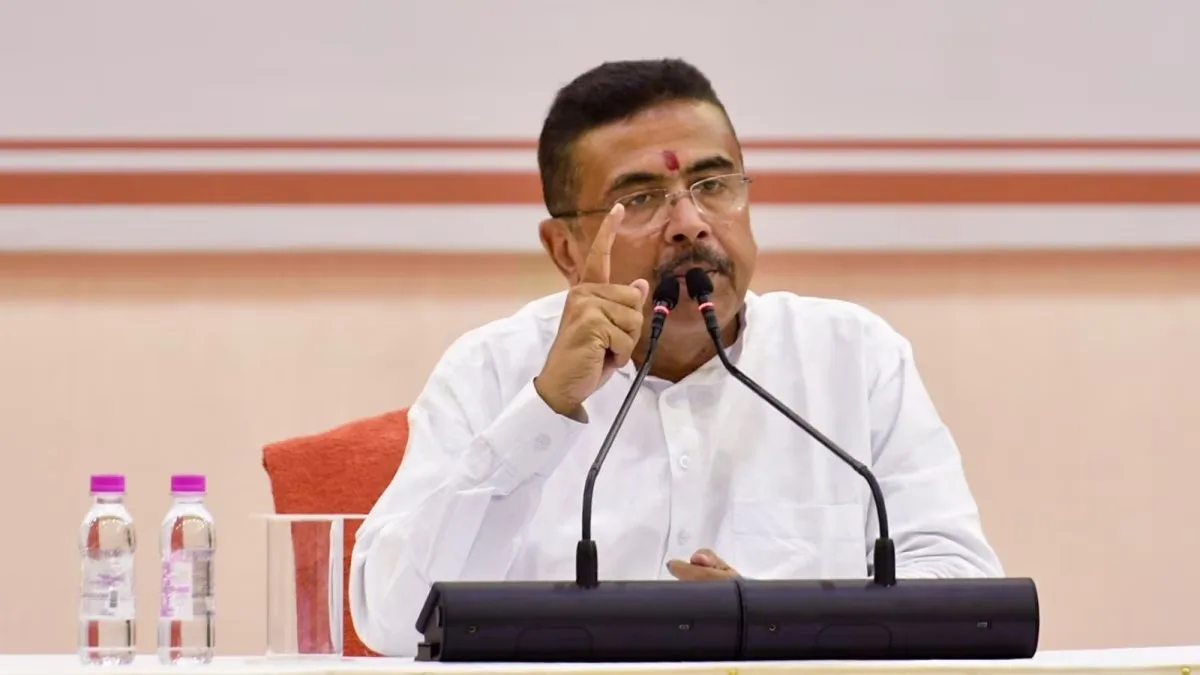
West Bengal Chief Minister Suvendu Adhikari on June 7, said that around 4,800 illegal immigrants have already been deported to Bangladesh from holding centres established in border districts of the state, while another 836 individuals are currently awaiting deportation.
Addressing the issue of illegal immigration, which has long remained a contentious political and security concern in West Bengal, Adhikari asserted that his government has initiated a systematic process to identify, detain and deport foreign nationals residing illegally in the state.
According to the Chief Minister, around 4,800 illegal immigrants have been repatriated to Bangladesh through holding centres set up in districts along the India-Bangladesh border.
He said another 836 individuals are currently lodged in these facilities and are awaiting completion of the deportation process.
Adhikari maintained that the state government is acting in accordance with laws framed by the Union government and is taking measures to ensure that foreign nationals residing illegally in the state are identified and sent back.
“These people are being handed over to the BSF directly,” he said while explaining the deportation mechanism being followed by the administration.
Describing illegal immigration as one of the most serious issues facing West Bengal, the Chief Minister said the state government is working closely with border security agencies to strengthen surveillance and prevent future infiltration.
West Bengal shares a long and porous international border with Bangladesh, making it one of the most sensitive regions in terms of cross-border movement.
The Chief Minister said efforts are underway to secure the border more effectively through physical infrastructure and enhanced coordination with security agencies.
Highlighting steps taken to strengthen border security, Adhikari said his government has already handed over land to the Border Security Force (BSF) for the construction of approximately 100 kilometres of fencing along the India-Bangladesh border.
He noted that a total of 556 kilometres of fencing is required to fully secure vulnerable stretches of the international border.
According to him, the fencing project is expected to play a critical role in curbing illegal infiltration, smuggling and other cross-border activities.
The Chief Minister clarified that those being deported are individuals who do not qualify for protection under the Citizenship Amendment Act (CAA).
He said the ongoing action is being carried out in accordance with the legal framework laid down by the Union government and is aimed at identifying illegal immigrants who do not possess valid documentation or legal status in India.
The remarks come amid continuing political debates over citizenship, migration and border management in eastern India.
Adhikari also accused the previous Trinamool Congress (TMC) government of failing to initiate census-related work in the state.
He claimed that the BJP government has now begun the process and will undertake house-to-house surveys between August 1 and August 15 as part of the census exercise.
According to the Chief Minister, the survey will help generate updated demographic data and improve the delivery of government services and welfare schemes.
Apart from border security and immigration issues, Adhikari highlighted the implementation of welfare programmes promised by the BJP during the election campaign.
He said the government has already transferred Rs 3,000 each to nearly 50 lakh women under the Annapurna Yojana scheme.
The Chief Minister stated that the initiative fulfils the BJP’s poll promise of doubling the financial assistance previously available to women beneficiaries under the TMC government’s Lakshmir Bhandar scheme.
According to him, the direct benefit transfer programme is aimed at strengthening financial support for women and enhancing household economic security across the state.
The Chief Minister’s remarks underline the BJP government’s twin focus on border security and welfare delivery in West Bengal. While the administration has intensified efforts to identify and deport illegal immigrants, it has simultaneously sought to highlight welfare initiatives and infrastructure measures aimed at fulfilling key electoral commitments.
With border fencing projects, deportation drives, census preparations and welfare disbursements underway, the state government has signalled that immigration management and governance reforms will remain central to its policy agenda in the coming months.