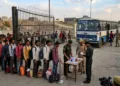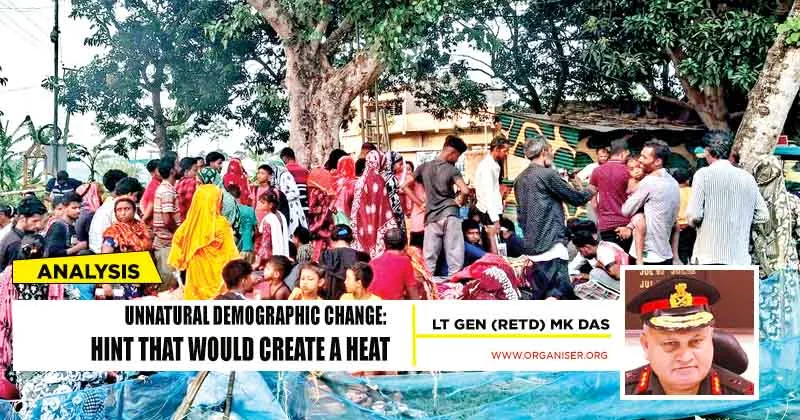
The images of a large number of illegal migrants in West Bengal queuing up to return to Bangladesh is another indication of change in the State. West Bengal and its people had almost given up their hope against such illegal immigration from Bangladesh. They witnessed their land, scarce resources and habitat slowly being encroached by such migrants, with the full State protection of the Left Front Government, followed by the TMC Government. Almost a half century of the rightful citizens of West Bengal was wasted in mollycoddling the illegal migrants from Bangladesh, purely for vote bank politics.
Seeking Refuge in Bharat
The history of illegal immigration in West Bengal has been an ongoing process, spanning from the 1947 Partition to the present day. During the 1971 war, an estimated one crore people fled East Pakistan to seek refuge in India to escape genocide by the Pakistani Army. Even after Bangladesh came into being, illegal migration into West Bengal continued largely unchecked. At that point of time, it was political instability and lack of development in Bangladesh that was the main driver of illegal migration. The situation changed in West Bengal when the Left Front, dominated by the CPI(M) came to power for the first time in June 1977 and continued in power till May 2011.
The issue of illegal immigration from Bangladesh has to be seen from the era post assassination of their tallest leader, Sheikh Mujibur Rahman on August 15, 1975. Bangladesh plunged into political instability and the coup of 1977 gave control to Army Chief Zia-ur-Rahman who formed Bangladesh Nationalist Party (BNP) as the main rival of then ruling Awami League. Now Bangladesh is ruled by his son, PM Tarique Rahman. The post Mujib era in Bangladesh saw strong emphasis on Islamic identity rather than being a Bengali. Thereafter, there was a gradual transition of Bangladesh into a radicalised Islamic state. This became more prominent when the BNP aligned with highly radicalised Jamaat-e-Islami. Jamaat in Bangladesh always had the backing of Pakistan and thus Pakistan indirectly gained a foothold in Bangladesh. In the past, the BNP rule in Bangladesh has given shelter and camps to many insurgents operating in India’s North East.
The change in the power structure in West Bengal coincided with the change in the power structure in Bangladesh. In the year of 1977, there was a major shift to the pattern of illegal migration into India, particularly into the state of West Bengal. In the year 1977, Zia-ur-Rahman became the first head of state to visit China, paving the way for economic and defence partnership between the two countries. The Left Front Government in West Bengal was ideologically aligned to the Communists and had a more pro-China stance. Thus, Pakistan and China were able to get a foothold inside Bangladesh right from the late 1970s. Pakistan particularly exploited the vulnerability of the Indo-Bangladesh border to push a large strength of radicalised youth into India.
Betraying Bengalis
The Left Front Government in West Bengal initially downplayed the seriousness of illegal immigration into the State. The Government quickly realised that the Muslim immigrants were a favourable vote bank for them, particularly in the border districts of West Bengal with Bangladesh. The Muslim vote bank was one of the key factors to keep the Left Front in power from 1977 to 2011, an uninterrupted reign of 34 years. The illegal immigration from Bangladesh, particularly the Muslims suited the vote bank politics of the Left Front Government is evident from the fact that just 500 km of 2200 km of Indo-Bangladesh border was fenced during their tenure in power. Even the 500 km of fencing was of inferior quality, which could easily be breached by the infiltrators.
It was the PM Vajpayee Government that implemented the ‘One Border One Force’ policy in the year 2002. Before that the para-military forces were assigned roles as per the immediate requirement. As a result, the Indo-Bangladesh border was relatively neglected. When the 2002 policy was adopted, the Indo-Bangladesh border was to be guarded exclusively by the BSF. During my military career, I have spent considerable time in the North East including Sikkim and in West Bengal from the year 1995 onwards. During my various tours and public interactions, it was evident that the ruling Left Front Government in West Bengal had legitimised illegal immigration from Bangladesh. The State of illegal immigration into Congress ruled Assam was similar.
Though Mamta Banerjee led TMC Government came to power in the year 2011 on the plank of opposing illegal immigration from Bangladesh, it quickly realised the electoral power of such a captive vote bank. The TMC Government was seen as pro-Muslim and thus it is easy to visualise their role in further promoting illegal migrants, particularly Muslims and Rohingyas into West Bengal. TMC went to the extent of operating syndicates for providing fake IDs to the illegal migrants. In fact, many of the illegal migrants are now in possession of every conceivable proof of Indian citizenship, including Aadhar Cards and Voter Identity Cards. No wonder that the ruling TMC government opposed the Special Intensive Revision of the voter list by the ECI from the year 2025 onwards.
The TMC Government in West Bengal tried to put the blame of illegal migration from Bangladesh on the BSF. During the TMC rule, BSF was denied land allotment for the border fencing. Once PM Modi came to power in the year 2014, Mamta Banerjee hardened her government’s stance to empower the BSF to prevent illegal immigration into the state. In fact, it was the pressure from the Home Minister Amit Shah that TMC government began allotment of land in small parcels for the border fencing. Even after the push from the central government, Mamta Banerjee still did not make the land available for 569 km of border fencing with Bangladesh.
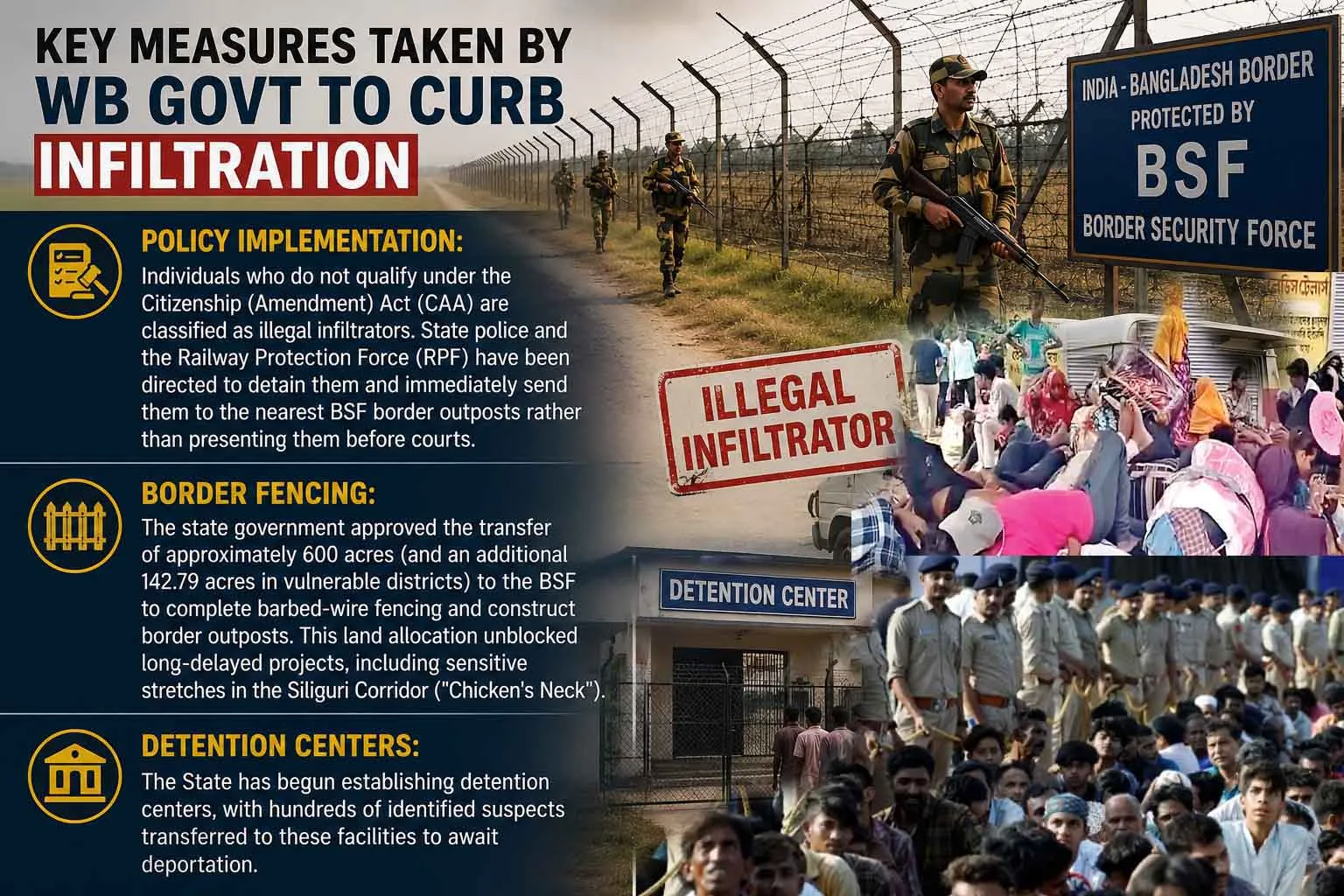
Within a week of coming to power, CM Suvendu Adhikari has allotted 600 hectares of land to the BSF for the border fencing. Home Minister Amit Shah has announced that smart border fencing that leverages technology will be erected along the Indo- Bangladesh border. The approach of the new government in West Bengal towards illegal immigration from Bangladesh is in stark contrast with the previous TMC government. The mere approach of the new BJP government in West Bengal would now become a major deterrent for any future infiltration from Bangladesh. All those syndicates that facilitated illegal immigration would also have vanished.
With the landslide victory of CM Suvendu Adhikari-led BJP Government in West Bengal in May this year, it is clear that the people of the State have voted against illegal immigration from Bangladesh. It is indeed heartening to see a large strength of illegal migrants queuing up on the Indo-Bangladesh border to go back to their country of origin. Bangladesh is likely to delay such deportation to the extent possible. As it is, the Bangladesh Government has not decided on the long pending request of the Government of India towards the list of illegal migrants forwarded earlier. Home Minister Amit Shah has also urged the illegal migrants to volunteer to go back to Bangladesh. But given the political situation in Bangladesh and pressure of the Jamaat elements, Bangladesh is going to take its time to permit formal deportation.
The country as such has seen through the false narrative of both the Communists and TMC Governments that either denied any illegal immigration or downplayed it as an economic phenomenon. The adverse security implications of such a large-scale illegal immigration from Bangladesh into West Bengal and rest of India’s North East are impossible to ascertain. It can be safely deduced that such illegal immigration has caused immense damage to the security situation of the region. Even the vulnerable Siliguri Corridor was further compromised under the TMC rule. Such was the gravity of the situation around the Siliguri Corridor that the Suvendu Adhikari Government had to promptly hand over 121 hectares of land and seven crucial highways to the Central Government.
No need Politicise Deportation
I would like to caution our countrymen that the process of ‘Detection, Delete/Detention and Deportation’ of illegal migrants from Bangladesh is going to be a painstakingly slow one. No country, least of all Bangladesh, is going to take it kindly that its citizens have to return to the country. But the Government of India and the new West Bengal Government are firm in their resolve to deal with the issue of illegal immigration from Bangladesh. The opposition in India is going to politicise the issue for their narrow political gains. In the interest of the security of the nation, let us join our hands to end the malaise of illegal immigration and give our
genuine citizens their due share of resources, prosperity and development.