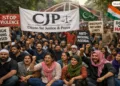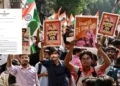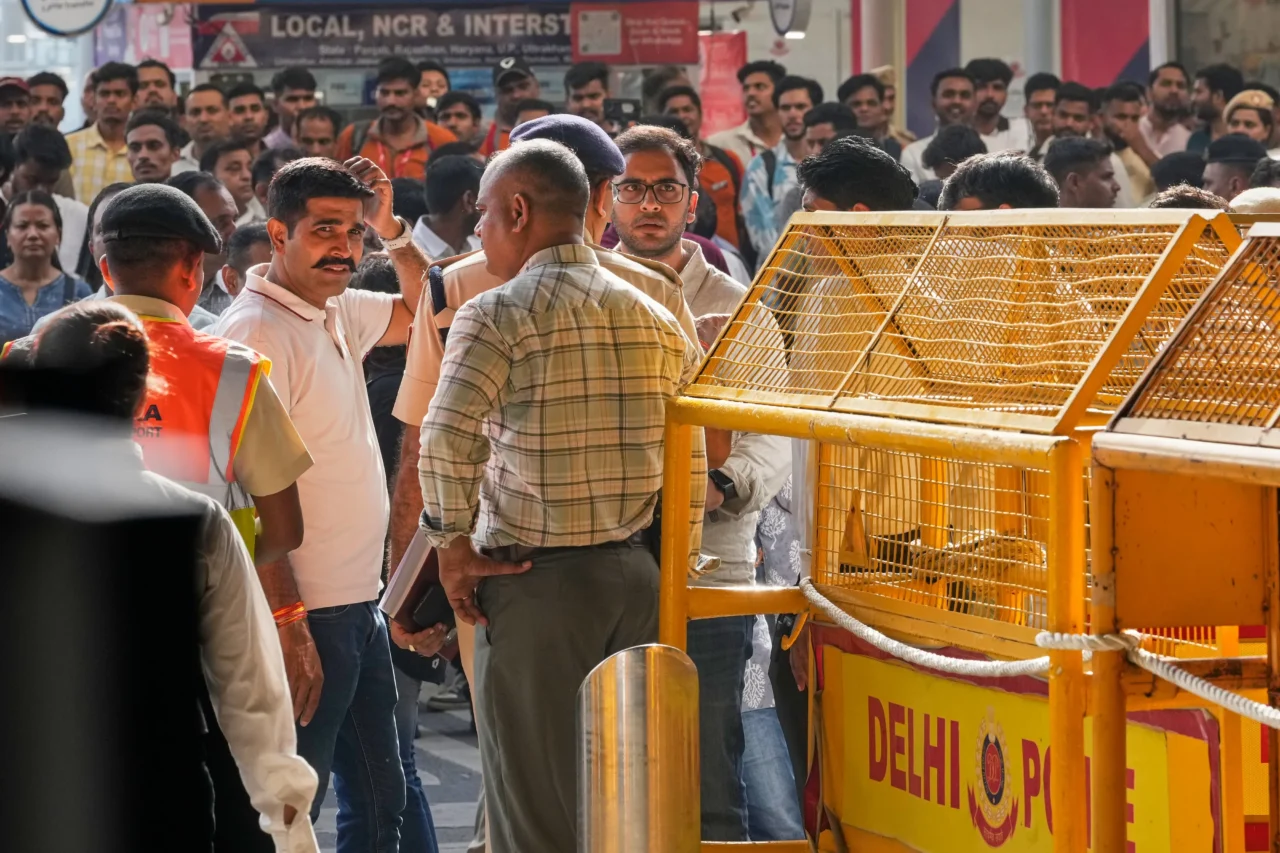
The Cockroach Janta Party (CJP), founded by social media influencer Abhijeet Dipke, organised a protest at Delhi’s Jantar Mantar on June 6, urging supporters to gather in large numbers and participate in what was projected as a demonstration against alleged irregularities in examinations and broader issues concerning students.
Ahead of the event, Dipke had appealed to students and young people through social media platforms, where the organisation claims a substantial digital following.
However, despite the extensive online mobilisation campaign, the turnout remained limited to a few hundred participants, a figure significantly smaller than the movement’s claimed online reach.
Protest Witnesses ‘Azadi’ Slogans
One of the most discussed aspects of the gathering was the raising of “Azadi” slogans by a section of participants.
Videos from the protest showed groups chanting slogans such as “BJP se Azadi”, “Modi se Azadi”, and “Hum leke rahenge Azadi”.
The slogans immediately triggered debate because the demonstration had originally been promoted around concerns regarding examination leaks and educational reforms.
Many questioned the connection between the protest’s stated objective and the political slogans being raised at the venue.
Notably, the language and style of the slogans resembled those heard during previous Left-backed demonstrations and campus protests.
Questions Over Protest’s Core Agenda
Interactions with several participants reportedly revealed confusion regarding the central purpose of the demonstration.
According to ground reports, many attendees appeared unable to clearly explain the demands being raised by the organisers or the specific reforms they sought.
Some participants cited examination leaks, while others described the gathering as a protest against the broader “system”. Several individuals reportedly shifted between different groups and banners without articulating a clear objective.
The apparent lack of consensus over the protest’s core agenda raised questions about whether the event was driven by a unified cause or by a broader anti-establishment sentiment.
Controversy Over Handling of the National Flag
Ahead of the protest, CJP spokesperson Ashutosh Ranka had urged supporters to carry the Indian tricolour, books and flowers.
Videos circulated online later sparked controversy after some alleged that the national flag was not being handled with appropriate respect at parts of the demonstration.
The allegations quickly became a point of discussion on social media, with users debating whether the conduct seen in the videos amounted to disrespect towards the national flag.
No official complaint regarding the matter had been reported at the time of writing.
Remarks on Hindu Beliefs Draw Criticism
Another incident that drew attention involved comments made by an elderly participant during an interaction with reporters.
According to videos circulating online, the individual made dismissive remarks regarding Hindu religious figures and epics, including references to Bhagwan Ram and the Pandavas.
The comments generated criticism from several quarters, with many arguing that the protest was increasingly becoming a platform for anti-Hindu rhetoric unrelated to the stated objective of educational reform.
The organisers have not officially commented on the remarks made by individual participants.
Ground interactions also highlighted instances where participants appeared unable to answer basic questions about the protest.
One individual reportedly described a personal notebook as his “constitution” and declined to explain its contents in detail when questioned.
Another participant stated that he was protesting against corruption in the education system but could not offer any specific solution or explain what policy changes he wanted.
A third attendee cited the NEET examination controversy as the reason for attending but reportedly struggled to answer questions regarding other examination-related issues.
These interactions were widely shared on social media and became part of the larger debate surrounding the protest’s effectiveness and clarity of purpose.
Social Media Reach Fails to Translate Into Mass Mobilisation
The protest also reignited discussion about the gap between online popularity and physical mobilisation.
Despite the movement’s substantial social media presence and repeated calls by founder Abhijeet Dipke for supporters to assemble in large numbers, the gathering remained relatively modest in scale.
Reports noted that the event highlighted the challenges faced by digital-first movements attempting to convert online engagement into sustained real-world activism.
The June 6 demonstration was intended to establish the Cockroach Janta Party as a significant force in public mobilisation.
Instead, the event has generated debate over its messaging, leadership, objectives and ability to maintain focus on specific issues.
As the movement seeks to expand its influence, the Jantar Mantar protest is likely to remain a key reference point in assessing whether the organisation can evolve beyond social media activism into a structured political or social movement.