Kolkata witnessed a major administrative and logistical shift during Eid-ul-Adha (Bakrid) celebrations on Thursday, May 28, 2026, as public roads across the city remained largely clear following directives issued by the West Bengal government against conducting religious prayers on public thoroughfares.
Visuals from several parts of Kolkata showed uninterrupted vehicular movement during the Eid Namaz hours. In Raja Bazar, one of the city’s traditionally crowded localities during Bakrid prayers, roads remained open with normal traffic movement continuing throughout the morning. In previous years, large gatherings for Namaz were commonly seen on the roads in the area.
#WATCH | No Namaz was offered on the roads in Kolkata’s famous Raja Bazar area this year during #Bakrid.
In previous years, a large number of people used to offer Namaz on the roads in the same area.
This year, after the change of government in West Bengal, the Raja Bazar road… pic.twitter.com/unetIEuLpC
— Organiser Weekly (@eOrganiser) May 28, 2026
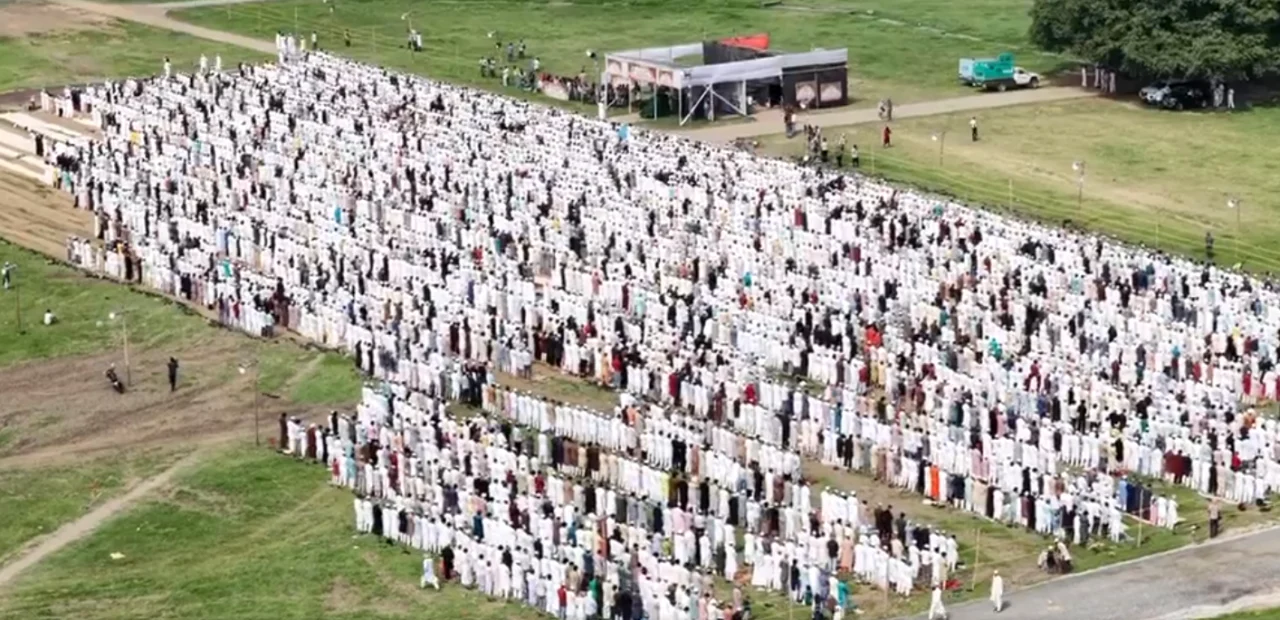
For the first time in decades, the central Eid Namaz in Kolkata was shifted away from the iconic Red Road. On May 28, 2026, thousands of worshippers gathered at the Brigade Parade Ground for Eid-ul-Adha prayers instead.
The first ever Eid when Calcutta's important Red Road isn't blocked for Namaz. pic.twitter.com/nbGDNZj6Mk
— Sudhanidhi Bandyopadhyay (@SudhanidhiB) May 28, 2026
At Park Circus, Eid prayers were held inside the Park Circus Maidan instead of on adjoining roads. The surrounding traffic routes remained open to commuters during the prayer gathering.
Eid Namaz held at Brigade Parade Ground in Kolkata instead of Red Road for the first time .
The first ever Eid when Calcutta's important Red Road isn't blocked for Namaz. pic.twitter.com/cbA5r44lZZ
— Rishi Bagree (@rishibagree) May 28, 2026
Meanwhile, in Siliguri, Muslims in large numbers gathered at Kanchanjunga Stadium to offer Eid-Ul-Adha prayers.
#WATCH | West Bengal | Siliguri Police Commissioner Syed Waquar Raza says, "The namaz was held peacefully. The festival will be celebrated well. Namaz being held on roads has not been reported from anywhere. We are taking many initiatives regarding traffic management in the… pic.twitter.com/DNUQUITbdk
— ANI (@ANI) May 28, 2026
West Bengal Chief Minister Suvendu Adhikari had earlier issued instructions against road blockades during religious events.
Speaking to media, on traffic during Eid-Ul- Adha 2026 celebrations, West Bengal Minister Dilip Ghosh says, “Everybody has the right to celebrate festivals, but that should not come in the way of others’ daily lives. Our govt has decided that anyone can appeal to the police for space to celebrate, and the police will decide when and where it will be held. This Eid, Brigade ground has been allotted, it is a big space, celebrate there, but no program will be allowed on the roads.”
#WATCH | Kolkata: On traffic during Eid-Ul- Adha 2026 celebrations, West Bengal Minister Dilip Ghosh says, “Everybody has the right to celebrate festivals, but that should not come in the way of others’ daily lives. Our govt has decided that anyone can appeal to the police for… pic.twitter.com/cGieGntv9O
— ANI (@ANI) May 28, 2026
As per reports, Kolkata Police had requested the Calcutta Khilafat Committee to relocate the congregation from Red Road in order to avoid traffic congestion and large-scale disruption in the city centre. The committee reportedly agreed to the proposal, while the authorities issued a No Objection Certificate (NOC) permitting the use of the Maidan grounds for the gathering.
Police personnel and security forces were deployed across key intersections and sensitive locations in Kolkata to monitor traffic movement and ensure compliance with the administration’s directives.
In a departure from the previous administration’s multi-day holiday practice, the state government restricted the Eid-ul-Adha (Bakrid) holiday to a single day on Thursday, May 28, 2026, while government offices and commercial establishments functioned normally in the lead-up to the festival.
The developments are being viewed by many as part of the BJP government’s stated policy of “appeasement to none”, with the administration emphasising that religious celebrations should not disrupt public movement or essential services.
During the previous 15 years of Chief Minister Mamata Banerjee-led Trinamool Congress rule, as well as under earlier Communist governments, several roads in Kolkata and other parts of West Bengal frequently witnessed large congregational Namaz gatherings during Eid celebrations, leading to traffic standstills and road blockades for hours. The situation often affected public transportation, emergency movement, media operations, and other essential services.
This year, with prayers shifted to designated grounds and open spaces, many residents experienced uninterrupted traffic movement and what officials described as peaceful festival celebrations without disruption to daily public life.