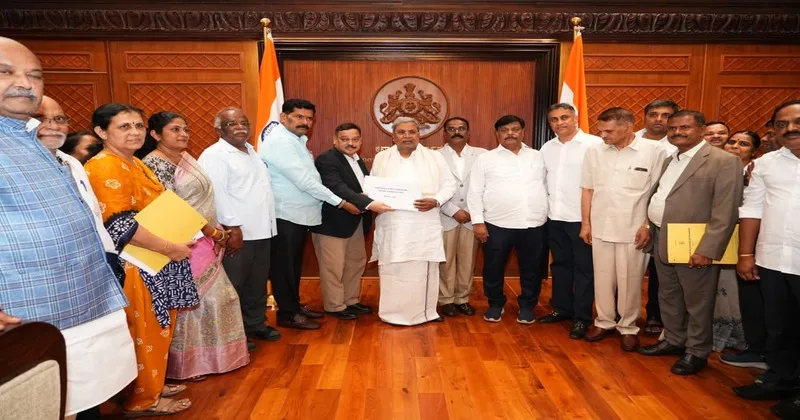
Bengaluru: Bringing an end to nearly nine years of political debate and intense speculation, Karnataka Chief Minister Siddaramaiah on Wednesday officially received the much-discussed Karnataka caste census report, formally known as the “Social and Educational Survey Report”, prepared by the State Backwards Classes Commission.
The development assumes major political significance as the report was submitted just a day before Siddaramaiah was expected to step down from the Chief Minister’s post under the Congress party’s internal power-sharing arrangement. With this, Siddaramaiah has earned the distinction of being the Chief Minister under whose tenure the long-pending caste census report was formally accepted by the government.
The report, which has remained at the centre of Karnataka politics for years, has now revealed startling demographic details. According to the findings, Muslims constitute the single largest community in Karnataka in terms of population, overtaking dominant communities such as Lingayats and Vokkaligas.
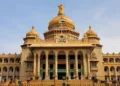
The survey report was handed over to the Chief Minister at his office in Vidhana Soudha by State Backwards Classes Commission Chairman K. Jayaprakash Hegde and Commission officials. Sources familiar with the findings stated that the report categorises communities based on social, educational and economic indicators collected during the extensive survey process conducted across the state.
Muslims top population chart
As per the caste census findings, Muslims account for nearly 14 per cent of Karnataka’s population, translating to around 75.25 lakh people. The report identifies the Muslim community as the largest social group in the state.
The revelation is expected to trigger fresh political debates in Karnataka, where caste arithmetic plays a decisive role in electoral politics and reservation policies. Political observers believe the report could significantly influence future discussions on reservation restructuring, welfare allocation and representation in government institutions.
Lingayats, Vokkaligas next in line
The report further states that the Veerashaiva-Lingayat community constitutes around 11 per cent of the state’s population, with an estimated population between 60 and 65 lakh, making it the second-largest community in Karnataka.
The Vokkaliga community has reportedly been estimated at around 10 per cent, with a population between 55 and 60 lakh, emerging as the third-largest community in the state.
Meanwhile, the Kuruba community, traditionally considered politically influential due to Siddaramaiah’s association with it, has been estimated at nearly 8 per cent, with a population between 40 and 45 lakh, making it the fourth-largest community in Karnataka.
Apart from these communities, the report is also believed to contain detailed data regarding Scheduled Castes, Scheduled Tribes, Other Backward Classes (OBCs), minorities and smaller caste groups across Karnataka.
300-page report submitted
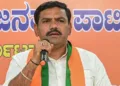
Speaking to reporters after submitting the report, Backwards Classes Commission Chairman K. Jayaprakash Hegde said the survey process had been completed comprehensively and honestly.
He stated that the report runs into nearly 300 pages and includes extensive social, educational and economic data collected from across Karnataka. However, he refrained from disclosing complete details before the government officially studies and accepts the findings.
Hegde explained that the report submission was initially scheduled for May 30, but was advanced because of an upcoming government holiday on May 29. He also clarified that translation work and compilation of data had taken considerable time.
“We have completed the survey sincerely and scientifically. Some people may not have participated in the survey process, which could have marginally affected the numbers. Still, we have submitted an honest and detailed report to the government,” he said.
Reservation debate likely to intensify
The report is also expected to reignite the debate surrounding reservations for Muslims in Karnataka. Historical records show that the issue has remained contentious for decades.
In 1974, the Havanur Commission had reportedly stated that Muslims, Lingayats and Christians should not be granted reservation benefits, arguing that Muslims constituted a religion and were not socially neglected as a caste group.
However, after legal challenges in the Karnataka High Court and the Supreme Court, the apex court in 1985 reportedly observed that Muslims were educationally, socially and economically backward and therefore eligible to be considered under backward class reservations.
Subsequent commissions, including the Venkataswamy Commission and the Chinnappa Reddy Commission, also treated Muslims as a backward class category for reservation purposes.
Sources in the Backward Classes Commission indicated that both the Kantharaju Commission and the latest commission under Jayaprakash Hegde continued to consider Muslims within the backward class framework while preparing the social and educational survey.
Political storm expected
The release of the caste census findings is expected to trigger sharp reactions from political parties and dominant caste groups across Karnataka. While backward class organisations and minority groups may demand greater representation and enhanced reservation benefits based on the report, dominant communities are likely to seek re-evaluation of existing quotas and political representation.
The Congress government is expected to study the report carefully before taking any policy decisions, as any move based on the findings could have far-reaching social and political consequences in the state ahead of future elections.