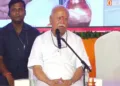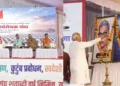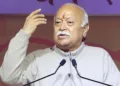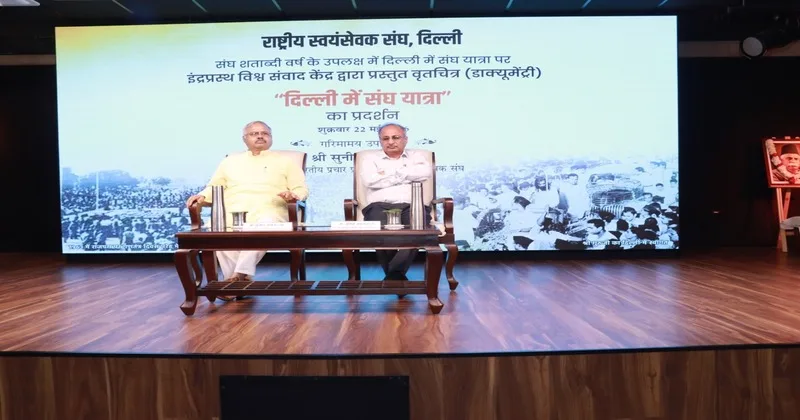
New Delhi: “The Sangh expanded rapidly and deeply across Delhi and the entire Punjab region between 1942 and 1947,” said Sunil Ambekar, Akhil Bharatiya Prachar Pramukh of Rashtriya Swayamsevak Sangh while addressing the gathering at the screening of the documentary “Delhi Mein Sangh Yatra” in the Delhi on May 22, 2026. The screening was organised by Indraprastha Vishwa Samvad Kendra.
He remarked that despite this growth, the organisational strength at the time of Partition was not sufficient, “otherwise the Partition of the country would not have happened.”
Referring to the documentary, he stated that as per the directions of Shri Guruji, Hindu families trapped in the newly created Pakistan were to be protected until the last person reached safety. He noted that countless swayamsevaks sacrificed their lives during relief and rescue operations amid Partition violence, while large refugee camps were organised for displaced families. He also recalled that during the first fortnight of August 1947, when turmoil gripped the region, Shri Guruji was present in Karachi guiding swayamsevaks engaged in relief and protection work.
Sunil Ambekar said that if Dr Keshav Baliram Hedgewar had intended to pursue electoral politics, he could have formed a political party. Instead, he founded the RSS with the objective of cultural awakening, social organisation, and national reconstruction through character building and self-confidence in society.
He further noted that RSS work in Delhi began during the lifetime of Dr Hedgewar himself, linking Delhi deeply with the century-long journey of the Sangh. He said that through various historical developments in independent India, Delhi remained central both politically and socially, and RSS activities in the capital continued through its shakha-based organisational framework aimed at social and cultural unity.
On the occasion, Delhi Prant Sanghchalak Dr Anil Agrawal said that continuity and adaptability remain key features of Sangh work.
Delhi Prant Prachar Pramukh Ritesh Agrawal said that the documentary traces the journey of the RSS in Delhi from its inception to its expansion through historical accounts, memories, and archival material. He said the film depicts the beginning of the Sangh in Delhi, its role during Partition, and the growth of organisational activities from the first shakha to the present-day expansion across the capital. He also referred to the special publication “Rashtra Seva Ke 100 Varsh” released under the initiative Apni Delhi Apni Baat during the Sangh’s centenary year.
He informed that more than 60 senior karyakartas were formally and informally interviewed for the documentary and publication, while over 85 books, newspaper archives, articles, and historical records were studied. More than 100 hours of video footage, including archival speeches and interviews of former RSS functionaries and Sarsanghchalaks, were also reviewed during the research process.
The programme was attended by several senior RSS functionaries, including Delhi Prant Pracharak Vishal Ji, Delhi Prant Sah Karyavah Rajesh Ji and Akhil Bharatiya Vyavastha Toli Member Dilip Ji.