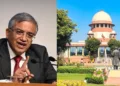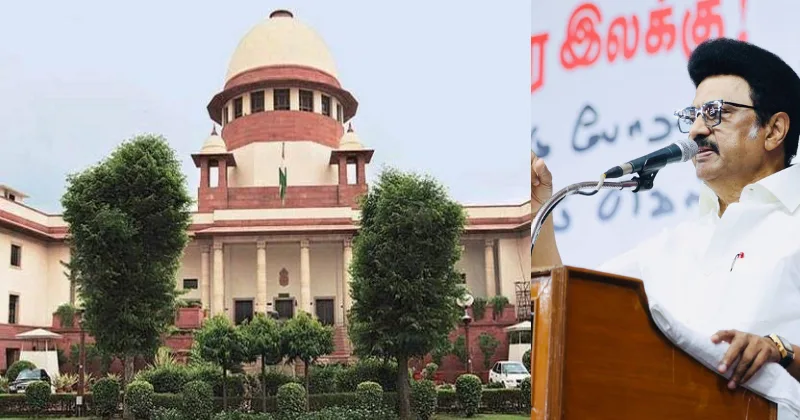
A Supreme Court bench comprising Justices J.K. Maheswari and Vijay Bishnoi announced that both had recused themselves from an election petition challenging the victory of M.K. Stalin in the Kolathur Assembly constituency.
In the 2011 Tamil Nadu Assembly election, Stalin defeated AIADMK candidate Saidai S. Duraisamy, then the Chennai Mayor, by a narrow margin of 2,739 votes. He accused Stalin of corrupt practices ahead of the 2011 elections. A civil election petition was filed against former Chief Minister and DMK president M.K. Stalin by his opponent, who had lost the poll. Many thought that it would come back to haunt the party and its leader nearly 15 years later, when the Supreme Court reserved its orders in February this year.
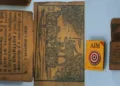
Saidai Duraisamy had filed Election Petition (No. 1 of 2011) in the Madras High Court, alleging corrupt practices by Stalin and DMK workers under Section 123 of the Representation of the People Act, 1951. The petitioner claimed that Stalin and DMK leaders had distributed cash and gifts, which are barred under the rules of the Election Commission of India (ECI). He also alleged that the DMK printed and distributed booth slips with DMK symbols added to them and that the candidate exceeded the prescribed expenditure limit.
In March 2015, the Madras High Court had accepted electronic evidence produced by Duraisamy, but in November 2015 the Supreme Court set aside the HC order accepting such evidence.
An apex court bench led by Justice J. Chelameswar said that the admissibility of the evidence would be decided during the final hearings of the election case.
In June 2017, the Madras High Court dismissed the case. At that time, Justice M. Venugopal had noted that the allegations raised against Stalin were not proved beyond reasonable doubt.
Following this, Saidai Duraisamy approached the Supreme Court after the Madras High Court dismissed the case.
In February 2022, Stalin’s lawyers made an urgent mention, but it was not considered.
Before a bench led by Chief Justice of India N.V. Ramana, senior advocate Kapil Sibal and Tamil Nadu Additional Advocate-General Amit Anand Tiwari said that the appeal had been pending since 2017. Even after it was mentioned, the case did not reach a logical conclusion.
In January 2026, the apex court agreed to examine a short legal point on whether electronic evidence is admissible under Section 65B of the Indian Evidence Act. It included videos and photographs contained in compact discs (CDs). It said that the court would also consider whether the content in the CDs was proved beyond reasonable doubt.
After a three-year gap since 2022, the case was regularly listed for hearing towards the end of September last year and through January and February this year.
Earlier, the appeal was heard by Justice Surya Kant (now CJI) on September 19 before it was transferred to a bench led by Justice Maheswari on September 25, 2025.
On February 19, 2026, the bench reserved judgment in the petition.
In an unexpected turn of events, the bench of Justices Maheswari and Vijay Bishnoi, which had heard the appeal in detail for several days in January and February and had reserved orders, has now withdrawn from delivering the verdict in the matter.
The bench, in a brief order dated May 15, which was circulated in the public domain on May 21, 2026, said: “The matter is released and be listed for re-hearing before a bench of which none of us (Justices J.K. Maheswari and Vijay Bishnoi) is a member after obtaining appropriate orders from the Chief Justice of India.”
2011 Kolathur Challenge by Saidai Sa Duraisamy …. pic.twitter.com/Rh7yJm71AZ
— S.Sundararajan (@s_sundararajan) May 21, 2026
Interestingly, the apex court has moved into its annual summer vacation by the end of May, and June would have only partial working days for the court. Justice Maheswari is to retire on June 28 this year.
Lawyers said: “It was not a part-heard case. Orders have been reserved. At this stage, assigning it to a new bench would take time in hearing the case as it has to start from scratch. It is a waste of the precious time of the court and delays justice.”
Stalin’s counsel, Kapil Sibal, had said that the allegations were baseless and that the opponent, Duraisamy, had no evidence of any wrongdoing on the part of the DMK leader. He argued that mere preponderance of probabilities would not prove a charge of corrupt practice, including bribery of voters in favour of a candidate under Section 123 of the 1951 Act.